Best Healthcare Learning Platforms for April 2026: Complete Guide
Best Healthcare Learning Platforms for April 2026: Complete Guide
Find the best healthcare learning platforms for 2026. Compare top solutions for clinical training, compliance, and staff development. Updated April 2026.
The standard setup for healthcare learning platforms hasn't kept pace with how clinical staff actually work. Organizations invest in large course libraries, send out login links, and hope busy teams find time between patient care and documentation to engage with training. Frontline staff are short on time. Newer training tools close that gap by delivering content directly inside existing workflows. This guide breaks down which systems are doing that well in 2026.
TLDR:
Healthcare learning tools deliver training to clinical staff, but most require portal logins that drive completion rates to 20-30%.
Some newer systems automate healthcare training end-to-end via SMS, Teams, and Slack, achieving 95%+ completion rates.
AI agents surface knowledge gaps, create courses from your protocols, and deliver training in staff workflows.
Healthcare orgs using certain modern learning tools deploy training 8x faster and see measurable outcomes like 34% manager effectiveness gains.
End-to-end automation across analysis, creation, delivery, and reporting is increasingly reducing reliance on manual training processes.
What Are Healthcare Learning Platforms?
Healthcare learning tools are digital systems that deliver training, compliance education, and professional development to healthcare workers, covering physicians, nurses, CNAs, and support staff who all require ongoing education to work safely and legally.
Staying current on clinical protocols, OIG compliance guidance, and patient safety standards is mandatory. These systems manage that burden by tracking certifications, delivering continuing education credits, and keeping teams aligned on the latest care standards.
How We Ranked Healthcare Learning Platforms
Here's what we looked at when ranking each option.
Delivery method: Does training reach employees where they already work, or does it require logging into a separate portal?
Content creation: Can you build courses quickly with AI, or are you limited to a static library?
Engagement and completion rates: Are employees actually finishing what they start?
Compliance and credentialing management: Does the system track certifications and continuing education automatically?
Integrations: Does it connect with messaging tools like Teams or SMS, or with existing HR systems?
Speed to deploy: How fast can you get new training out to staff?
Analytics: Can you tie training activity to real outcomes, or are you just tracking completion checkboxes?
In practice, delivery method and engagement carry the most weight, per healthcare workforce trends in 2026 and C-suite priorities. A solution nobody uses solves nothing.
Platform | Delivery Method | Content Creation | Completion Rate | Best For |
|---|---|---|---|---|
Arist | SMS, Teams, Slack (push-first) | AI-generated from your protocols | 95%+ | Frontline and clinical staff across all care settings |
Relias | Portal login required | Extensive pre-built healthcare course libraries | 20-30% | Compliance libraries for hospitals and long-term care |
Healthcare Academy | Portal login required | Clinician-built course library | 20-30% | Skilled nursing and post-acute care organizations |
Degreed | Portal login required | Aggregated from multiple sources | Low | Enterprise skills mapping and career development |
LinkedIn Learning | Portal login required | Video course marketplace | Low | Corporate and administrative healthcare roles |
Skillsoft | Portal login required | 7,000+ courses across business and IT | Low | Broad professional development for enterprise teams |
OpenSesame | Typically used with an existing LMS or other standards-compatible learning platform | Third-party marketplace content | Low | Supplementing an existing LMS with vetted content |
Best Overall Healthcare Learning Solution: Arist
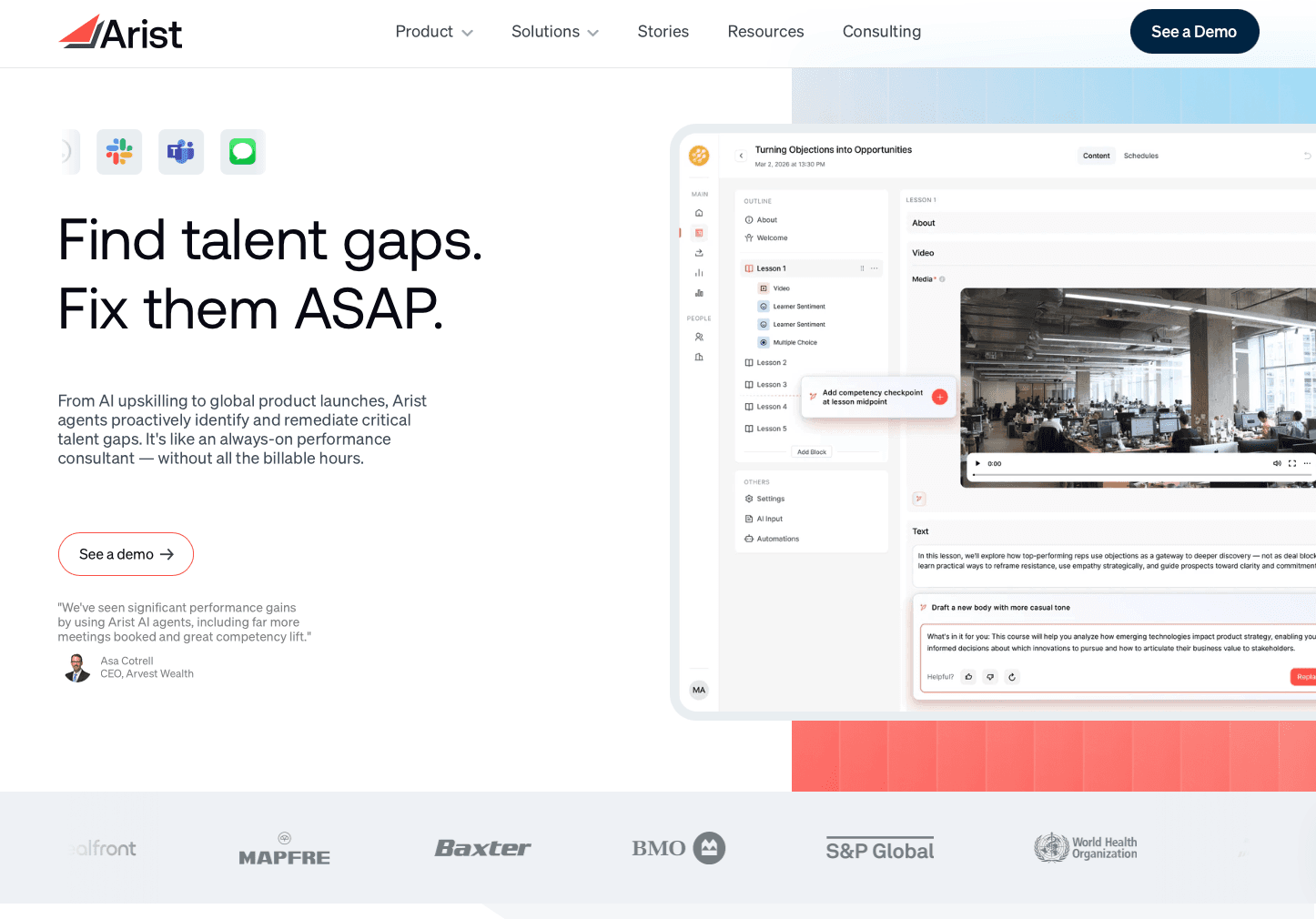
Arist is an AI-powered solution that automates complete training flows: needs analysis, creation, delivery, and analytics. Where traditional healthcare LMS options require portal logins, Arist delivers training directly in Teams, Slack, and SMS. No new logins. Training arrives where staff already communicate.
What Arist Offers
AI voice and messaging agents that interview employees to surface knowledge gaps in real time
Instant course creation from clinical protocols, compliance docs, and training materials in 40+ languages
Push-first delivery via SMS, Teams, and Slack, achieving completion rates far above the 20-30% typical of legacy LMS systems
Medical-grade content verification with line-by-line anchoring built for regulatory submissions
End-to-end automation that can reduce reliance on legacy LMS workflows, static content libraries, and manual training design
Healthcare organizations using Arist have trained thousands of employees 8x faster than traditional methods. One healthcare organization improved manager effectiveness scores by 34% and cut new manager turnover by 28% within six months. The solution covers everything from frontline CNA onboarding to AI upskilling, with built-in wage and hour compliance for frontline staff.
Arist is the only solution that fully automates healthcare training from gap identification through content creation, compliant delivery, and performance analytics. For healthcare teams where speed and accuracy genuinely matter, that difference is real.
Relias Learning
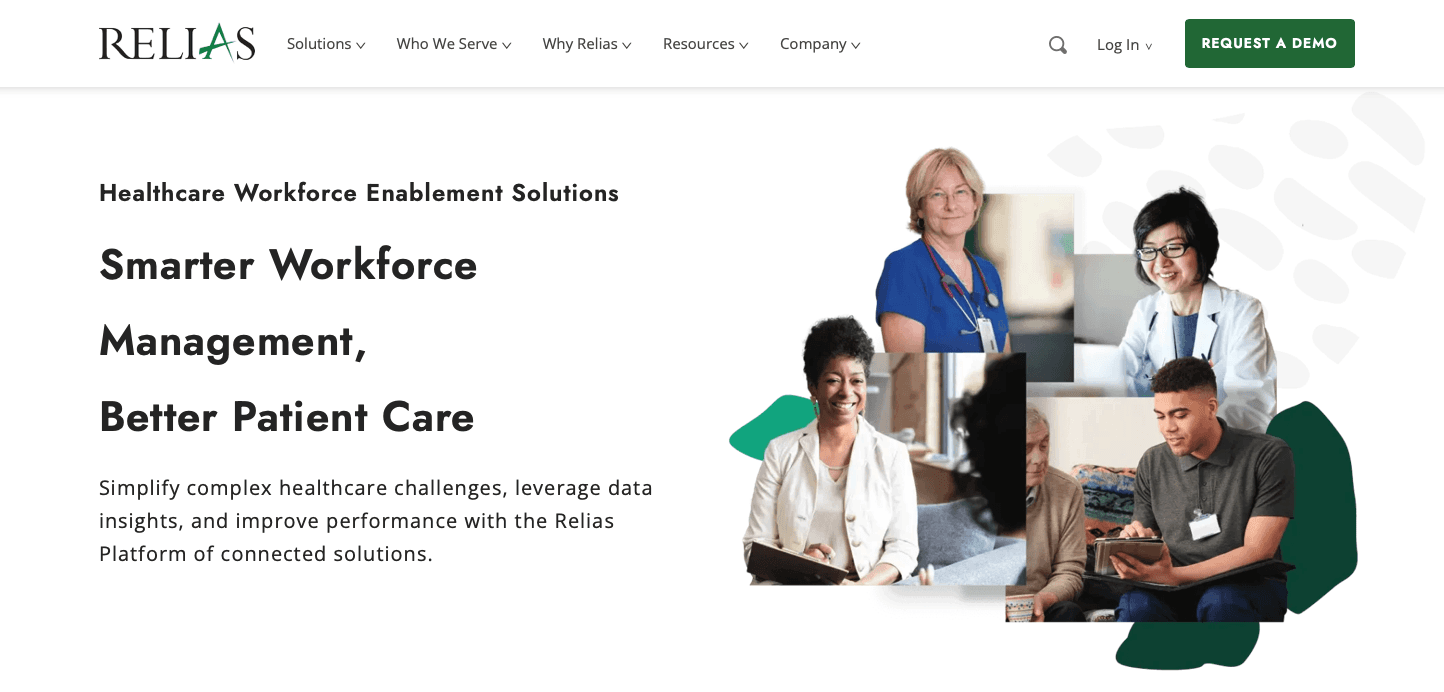
Relias is a healthcare-focused LMS serving hospitals, long-term care facilities, and behavioral health organizations, known for its depth of pre-built compliance content.
What They Offer
Extensive healthcare-specific course libraries covering nursing, behavioral health, and clinical compliance
Mobile app for course access and completion tracking
HRIS integration with automated training plan assignment
Competency assessments and certification prep for a range of nursing specialties
Good for: Organizations that need extensive off-the-shelf compliance libraries and are comfortable with traditional LMS workflows.
Limitation: Employees must log into a separate portal to access training, there's no AI-powered content creation for custom organizational needs, and the catalog-first model doesn't adapt to your internal protocols or materials.
Bottom line: Relias covers pre-built healthcare compliance content well. But employees still have to find the portal, log in, and choose to engage. That friction shows up in completion rates.
Healthcare Academy
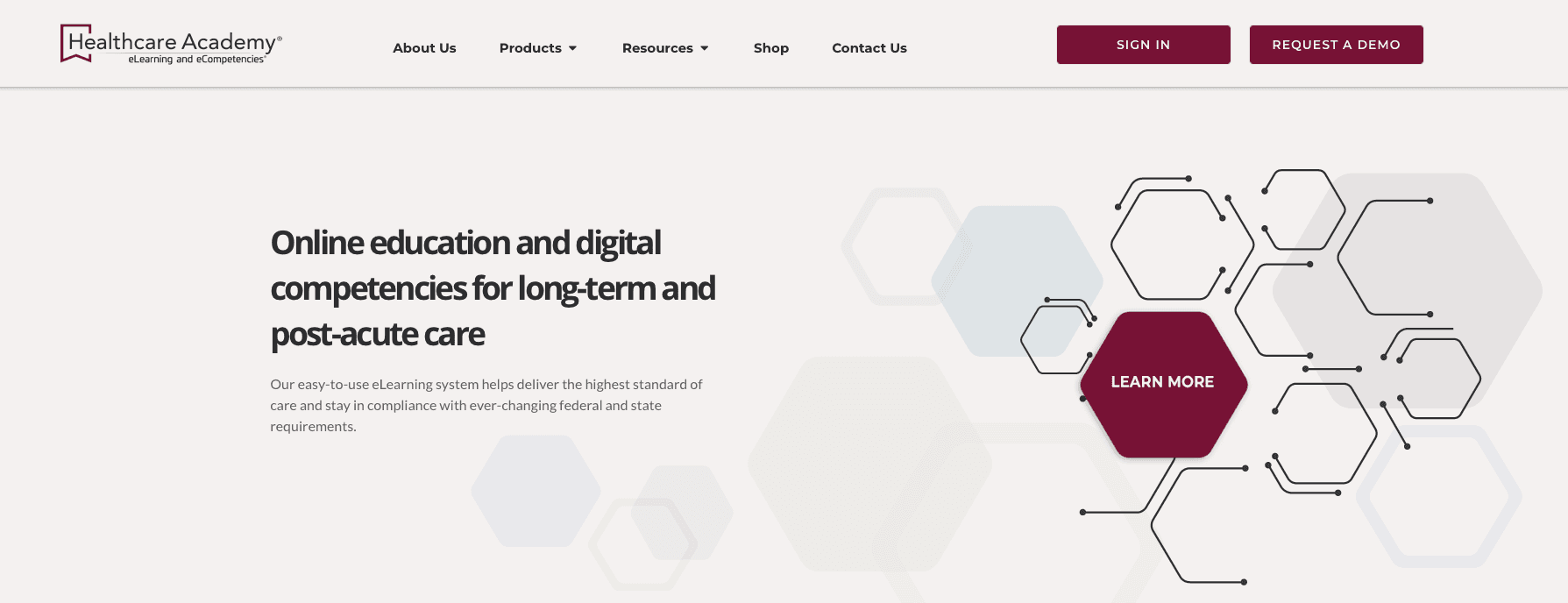
Healthcare Academy offers eLearning course libraries and competency assessments built for long-term care and post-acute settings.
What They Offer
Course libraries spanning skilled nursing, assisted living, and CNA training developed by clinicians with long-term care experience
Digital skills checklists for competency assessment and gap identification
Cost-effective pricing suited to post-acute care organizations
Good for: Skilled nursing facilities and post-acute care organizations that need affordable, sector-specific course libraries with basic competency tools.
Limitation: Training is limited to passive course consumption through a traditional LMS interface, with no messaging-based delivery, no AI content creation, and no proactive gap analysis across large workforces.
Bottom line: Healthcare Academy works well for post-acute care teams that need affordable, clinician-built content. For organizations that need training pushed directly to staff and built from internal protocols, the catalog model falls short.
Degreed
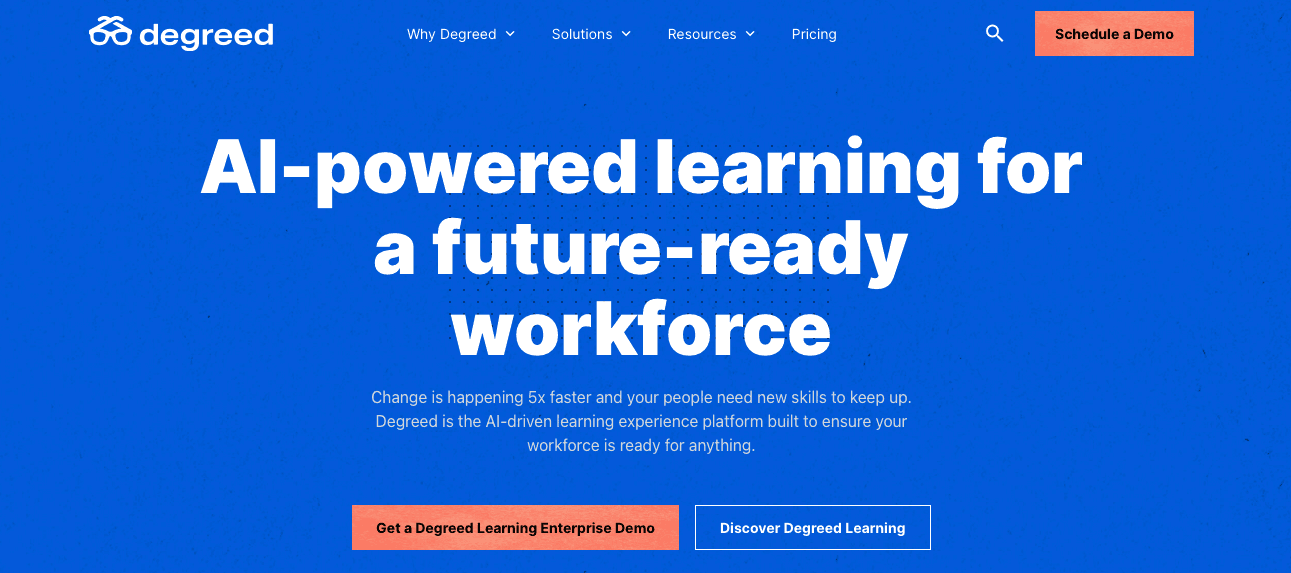
Degreed is a learning experience system built around content aggregation, skills frameworks, and career development for enterprise organizations.
What They Offer
Content aggregation pulling from multiple learning sources into a unified catalog
Skills taxonomy and career pathing tools for professional development tracking
Social learning features for peer knowledge sharing
Mobile access to aggregated learning content
Good for: Large enterprises focused on skills mapping and career development frameworks for corporate healthcare roles with reliable device access.
Limitation: Requires portal login and self-directed content discovery instead of push-first delivery, not designed for frontline or app-averse healthcare workers, and typically achieves the low engagement rates common to catalog-based systems.
Bottom line: Degreed suits organizations focused on skills frameworks and content curation. For healthcare staff who need to complete training, a tool that pushes lessons via SMS, Teams, or Slack performs far better.
LinkedIn Learning
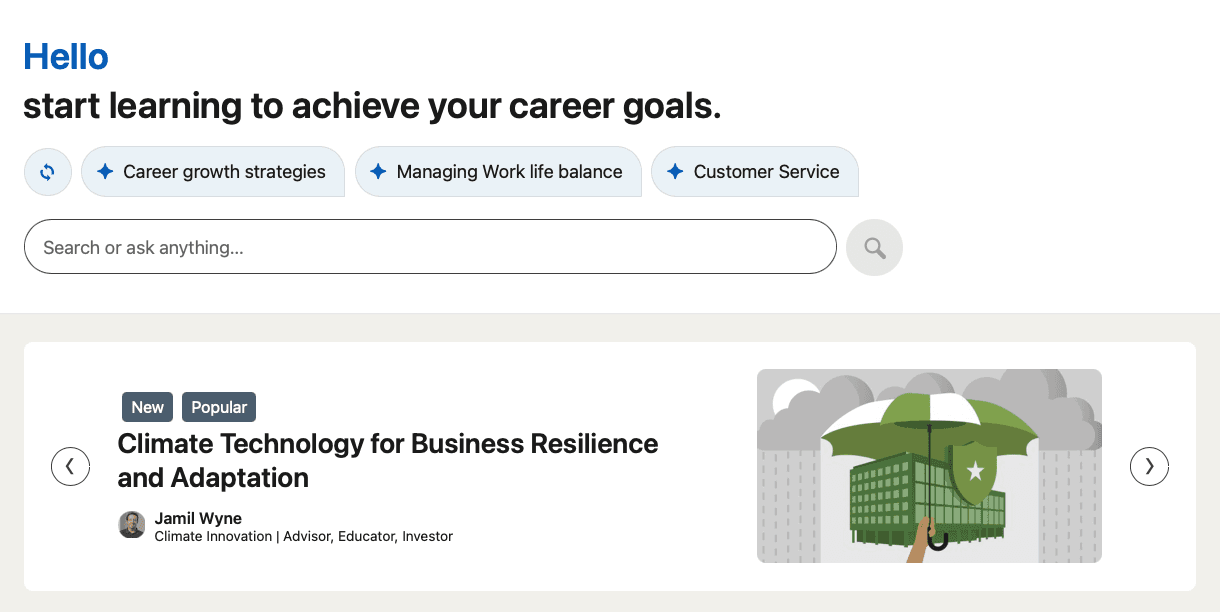
LinkedIn Learning is a video course marketplace with thousands of self-paced courses spanning business, tech, and professional skills.
What They Offer
Self-paced video courses covering leadership, business skills, and technology topics
Large catalog suited to administrative and corporate healthcare roles
Mobile access and LinkedIn integration for tracking professional development
Good for: Healthcare administrators and corporate staff seeking general professional development in leadership, business, and tech topics.
Limitation: Long-form video is poorly suited to nurses and frontline staff with limited time between patient care. There is no push delivery via SMS or Teams, no AI creation of custom content from clinical protocols, and the generic catalog lacks healthcare-specific clinical training.
Bottom line: LinkedIn Learning works for corporate healthcare roles with reliable desk time. Many healthcare workers have limited uninterrupted time for long-form video courses between patient rounds, and this model does not account for that.
Skillsoft
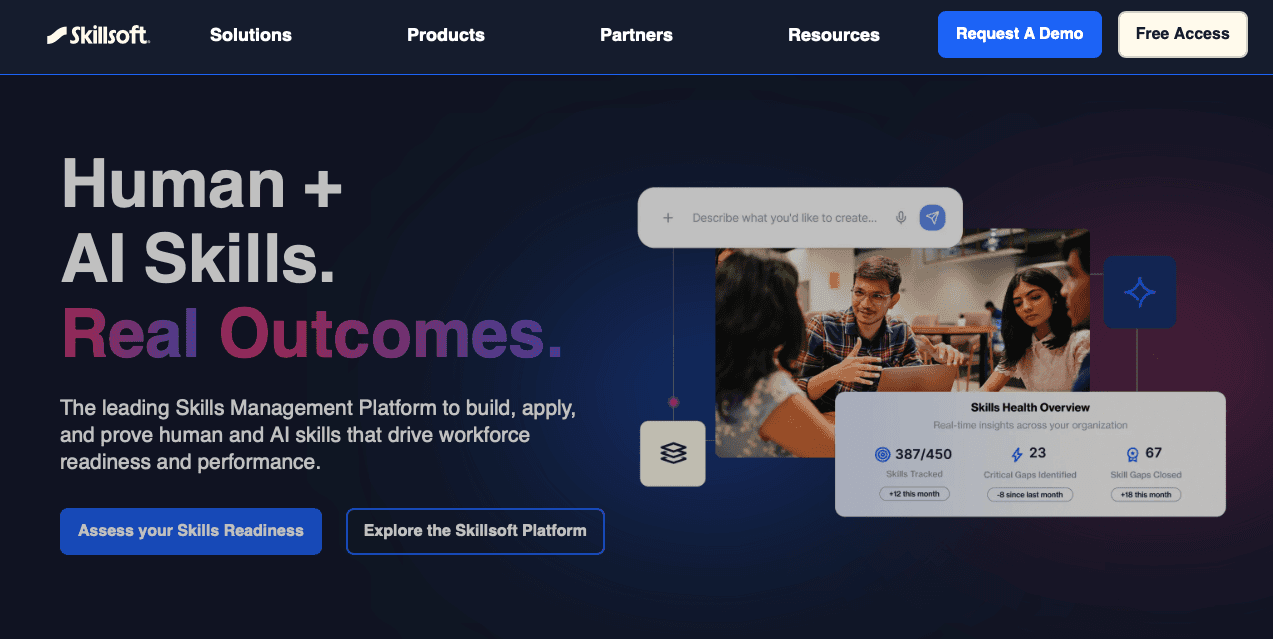
Skillsoft is an enterprise learning content library covering business skills, tech, compliance, and leadership development.
What They Offer
Library of 7,000+ courses covering IT, compliance, leadership, and business skills
Adaptive learning tech for personalized content recommendations
Practice labs and simulations for technical skill development
Integration capabilities with HRIS and existing enterprise systems
Good for: Large healthcare organizations needing broad-based professional development across IT, compliance, and leadership for administrative and corporate roles.
Limitation: Portal-based access requiring a separate login instead of in-workflow delivery, generic content not specific to clinical healthcare operations, no AI creation from organizational materials, and self-paced video courses that see low engagement among frontline staff.
Bottom line: Skillsoft works for enterprises seeking wide professional development libraries. For healthcare organizations needing targeted clinical and compliance training delivered where staff already work, that catalog model falls short.
OpenSesame
OpenSesame is a curated marketplace connecting organizations with third-party eLearning providers across compliance, professional development, and skills training.
What They Offer
A marketplace of thousands of courses from multiple content providers across compliance, safety, and professional skills topics
SCORM-compatible content designed for LMS integration, typically as part of existing learning infrastructure
Flexible purchasing options covering individual courses or subscription access
Good for: Organizations looking to supplement an existing LMS with vetted third-party content for compliance or professional development gaps.
Limitation: No custom content creation from internal clinical protocols, no messaging-based push delivery, and passive course consumption that rarely fits clinical staff schedules.
Bottom line: OpenSesame extends an existing LMS with third-party content. It fills catalog gaps but does nothing to close the delivery problem that keeps completion rates low in the first place.
Why Arist Is the Best Healthcare Learning Solution
The pattern across every other option in this list is the same: employees log in, browse a catalog, and hope something sticks. That model was built for a world where nobody questioned a 20% completion rate.
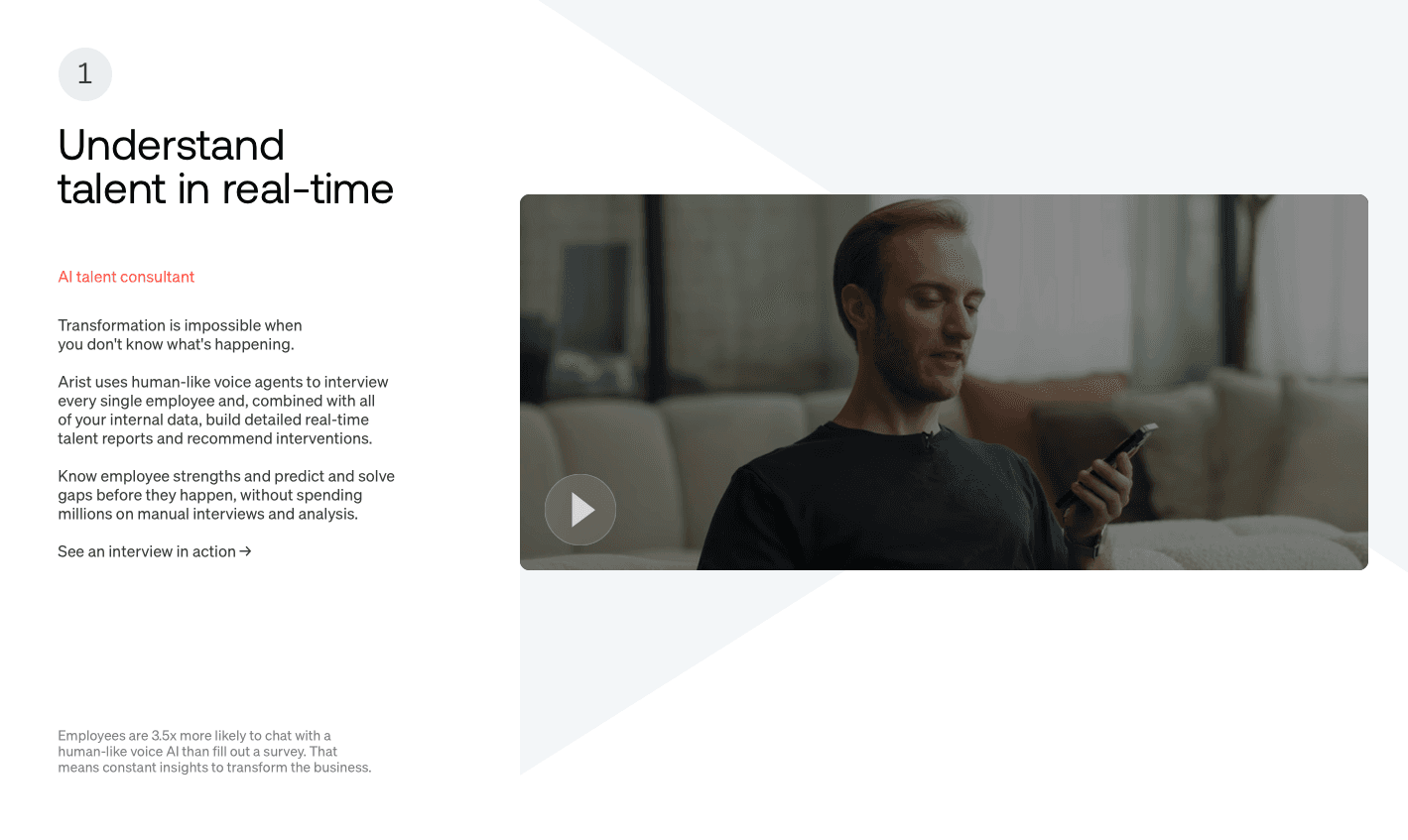
Arist works differently. AI voice agents interview staff to surface real knowledge gaps, Creator builds personalized training directly from your clinical protocols and compliance docs, and Smart Routing pushes it to employees via SMS, Teams, or Slack without asking anyone to find a portal. The result is 95%+ completion versus the 20-30% most healthcare LMS tools quietly accept as normal, and deployment that runs 8x faster than traditional methods.
If you're comparing healthcare learning options in 2026, the question is whether your staff will actually complete training, whether you can build content from your own materials quickly, and whether your analytics connect back to real clinical outcomes. Arist is the only solution in this comparison that answers yes to all three.
FAQs
How do you choose the right healthcare learning tool for your organization?
Start with how your staff actually works. If your team is frontline-heavy with limited computer access, you need SMS or Teams delivery, not portal-based learning. Then look at whether you can build custom content from your own clinical protocols quickly, whether the system tracks certifications automatically, and whether completion rates are actually measured and reported transparently.
What completion rates should you expect from healthcare training in 2026?
Traditional LMS tools see 20-30% completion at best, often much lower. Healthcare compliance training programs using flexible, messaging-based delivery routinely achieve 85-95% completion because training arrives where staff already communicate. If your vendor won't share their actual completion rates, that tells you what you need to know.
How fast can you deploy new compliance training to healthcare staff?
With AI-powered content creation and messaging delivery, you can build courses from clinical protocols and push them to thousands of staff in hours instead of weeks. Traditional methods involving instructional design, packaging, approvals, and LMS uploads can take several weeks for the same deployment. Speed matters most when regulatory requirements change or new clinical protocols roll out mid-quarter.
Final Thoughts on Selecting Healthcare Training Technology
Healthcare learning platforms succeed or fail on one factor: whether staff complete the training. Systems built around logins and catalogs continue to struggle with that reality, while delivery inside existing workflows performs far better. Arist brings together AI-driven content creation, in-workflow delivery, and performance analytics that align with how healthcare teams operate today.
The standard setup for healthcare learning platforms hasn't kept pace with how clinical staff actually work. Organizations invest in large course libraries, send out login links, and hope busy teams find time between patient care and documentation to engage with training. Frontline staff are short on time. Newer training tools close that gap by delivering content directly inside existing workflows. This guide breaks down which systems are doing that well in 2026.
TLDR:
Healthcare learning tools deliver training to clinical staff, but most require portal logins that drive completion rates to 20-30%.
Some newer systems automate healthcare training end-to-end via SMS, Teams, and Slack, achieving 95%+ completion rates.
AI agents surface knowledge gaps, create courses from your protocols, and deliver training in staff workflows.
Healthcare orgs using certain modern learning tools deploy training 8x faster and see measurable outcomes like 34% manager effectiveness gains.
End-to-end automation across analysis, creation, delivery, and reporting is increasingly reducing reliance on manual training processes.
What Are Healthcare Learning Platforms?
Healthcare learning tools are digital systems that deliver training, compliance education, and professional development to healthcare workers, covering physicians, nurses, CNAs, and support staff who all require ongoing education to work safely and legally.
Staying current on clinical protocols, OIG compliance guidance, and patient safety standards is mandatory. These systems manage that burden by tracking certifications, delivering continuing education credits, and keeping teams aligned on the latest care standards.
How We Ranked Healthcare Learning Platforms
Here's what we looked at when ranking each option.
Delivery method: Does training reach employees where they already work, or does it require logging into a separate portal?
Content creation: Can you build courses quickly with AI, or are you limited to a static library?
Engagement and completion rates: Are employees actually finishing what they start?
Compliance and credentialing management: Does the system track certifications and continuing education automatically?
Integrations: Does it connect with messaging tools like Teams or SMS, or with existing HR systems?
Speed to deploy: How fast can you get new training out to staff?
Analytics: Can you tie training activity to real outcomes, or are you just tracking completion checkboxes?
In practice, delivery method and engagement carry the most weight, per healthcare workforce trends in 2026 and C-suite priorities. A solution nobody uses solves nothing.
Platform | Delivery Method | Content Creation | Completion Rate | Best For |
|---|---|---|---|---|
Arist | SMS, Teams, Slack (push-first) | AI-generated from your protocols | 95%+ | Frontline and clinical staff across all care settings |
Relias | Portal login required | Extensive pre-built healthcare course libraries | 20-30% | Compliance libraries for hospitals and long-term care |
Healthcare Academy | Portal login required | Clinician-built course library | 20-30% | Skilled nursing and post-acute care organizations |
Degreed | Portal login required | Aggregated from multiple sources | Low | Enterprise skills mapping and career development |
LinkedIn Learning | Portal login required | Video course marketplace | Low | Corporate and administrative healthcare roles |
Skillsoft | Portal login required | 7,000+ courses across business and IT | Low | Broad professional development for enterprise teams |
OpenSesame | Typically used with an existing LMS or other standards-compatible learning platform | Third-party marketplace content | Low | Supplementing an existing LMS with vetted content |
Best Overall Healthcare Learning Solution: Arist
Arist is an AI-powered solution that automates complete training flows: needs analysis, creation, delivery, and analytics. Where traditional healthcare LMS options require portal logins, Arist delivers training directly in Teams, Slack, and SMS. No new logins. Training arrives where staff already communicate.
What Arist Offers
AI voice and messaging agents that interview employees to surface knowledge gaps in real time
Instant course creation from clinical protocols, compliance docs, and training materials in 40+ languages
Push-first delivery via SMS, Teams, and Slack, achieving completion rates far above the 20-30% typical of legacy LMS systems
Medical-grade content verification with line-by-line anchoring built for regulatory submissions
End-to-end automation that can reduce reliance on legacy LMS workflows, static content libraries, and manual training design
Healthcare organizations using Arist have trained thousands of employees 8x faster than traditional methods. One healthcare organization improved manager effectiveness scores by 34% and cut new manager turnover by 28% within six months. The solution covers everything from frontline CNA onboarding to AI upskilling, with built-in wage and hour compliance for frontline staff.
Arist is the only solution that fully automates healthcare training from gap identification through content creation, compliant delivery, and performance analytics. For healthcare teams where speed and accuracy genuinely matter, that difference is real.
Relias Learning
Relias is a healthcare-focused LMS serving hospitals, long-term care facilities, and behavioral health organizations, known for its depth of pre-built compliance content.
What They Offer
Extensive healthcare-specific course libraries covering nursing, behavioral health, and clinical compliance
Mobile app for course access and completion tracking
HRIS integration with automated training plan assignment
Competency assessments and certification prep for a range of nursing specialties
Good for: Organizations that need extensive off-the-shelf compliance libraries and are comfortable with traditional LMS workflows.
Limitation: Employees must log into a separate portal to access training, there's no AI-powered content creation for custom organizational needs, and the catalog-first model doesn't adapt to your internal protocols or materials.
Bottom line: Relias covers pre-built healthcare compliance content well. But employees still have to find the portal, log in, and choose to engage. That friction shows up in completion rates.
Healthcare Academy
Healthcare Academy offers eLearning course libraries and competency assessments built for long-term care and post-acute settings.
What They Offer
Course libraries spanning skilled nursing, assisted living, and CNA training developed by clinicians with long-term care experience
Digital skills checklists for competency assessment and gap identification
Cost-effective pricing suited to post-acute care organizations
Good for: Skilled nursing facilities and post-acute care organizations that need affordable, sector-specific course libraries with basic competency tools.
Limitation: Training is limited to passive course consumption through a traditional LMS interface, with no messaging-based delivery, no AI content creation, and no proactive gap analysis across large workforces.
Bottom line: Healthcare Academy works well for post-acute care teams that need affordable, clinician-built content. For organizations that need training pushed directly to staff and built from internal protocols, the catalog model falls short.
Degreed
Degreed is a learning experience system built around content aggregation, skills frameworks, and career development for enterprise organizations.
What They Offer
Content aggregation pulling from multiple learning sources into a unified catalog
Skills taxonomy and career pathing tools for professional development tracking
Social learning features for peer knowledge sharing
Mobile access to aggregated learning content
Good for: Large enterprises focused on skills mapping and career development frameworks for corporate healthcare roles with reliable device access.
Limitation: Requires portal login and self-directed content discovery instead of push-first delivery, not designed for frontline or app-averse healthcare workers, and typically achieves the low engagement rates common to catalog-based systems.
Bottom line: Degreed suits organizations focused on skills frameworks and content curation. For healthcare staff who need to complete training, a tool that pushes lessons via SMS, Teams, or Slack performs far better.
LinkedIn Learning
LinkedIn Learning is a video course marketplace with thousands of self-paced courses spanning business, tech, and professional skills.
What They Offer
Self-paced video courses covering leadership, business skills, and technology topics
Large catalog suited to administrative and corporate healthcare roles
Mobile access and LinkedIn integration for tracking professional development
Good for: Healthcare administrators and corporate staff seeking general professional development in leadership, business, and tech topics.
Limitation: Long-form video is poorly suited to nurses and frontline staff with limited time between patient care. There is no push delivery via SMS or Teams, no AI creation of custom content from clinical protocols, and the generic catalog lacks healthcare-specific clinical training.
Bottom line: LinkedIn Learning works for corporate healthcare roles with reliable desk time. Many healthcare workers have limited uninterrupted time for long-form video courses between patient rounds, and this model does not account for that.
Skillsoft
Skillsoft is an enterprise learning content library covering business skills, tech, compliance, and leadership development.
What They Offer
Library of 7,000+ courses covering IT, compliance, leadership, and business skills
Adaptive learning tech for personalized content recommendations
Practice labs and simulations for technical skill development
Integration capabilities with HRIS and existing enterprise systems
Good for: Large healthcare organizations needing broad-based professional development across IT, compliance, and leadership for administrative and corporate roles.
Limitation: Portal-based access requiring a separate login instead of in-workflow delivery, generic content not specific to clinical healthcare operations, no AI creation from organizational materials, and self-paced video courses that see low engagement among frontline staff.
Bottom line: Skillsoft works for enterprises seeking wide professional development libraries. For healthcare organizations needing targeted clinical and compliance training delivered where staff already work, that catalog model falls short.
OpenSesame
OpenSesame is a curated marketplace connecting organizations with third-party eLearning providers across compliance, professional development, and skills training.
What They Offer
A marketplace of thousands of courses from multiple content providers across compliance, safety, and professional skills topics
SCORM-compatible content designed for LMS integration, typically as part of existing learning infrastructure
Flexible purchasing options covering individual courses or subscription access
Good for: Organizations looking to supplement an existing LMS with vetted third-party content for compliance or professional development gaps.
Limitation: No custom content creation from internal clinical protocols, no messaging-based push delivery, and passive course consumption that rarely fits clinical staff schedules.
Bottom line: OpenSesame extends an existing LMS with third-party content. It fills catalog gaps but does nothing to close the delivery problem that keeps completion rates low in the first place.
Why Arist Is the Best Healthcare Learning Solution
The pattern across every other option in this list is the same: employees log in, browse a catalog, and hope something sticks. That model was built for a world where nobody questioned a 20% completion rate.
Arist works differently. AI voice agents interview staff to surface real knowledge gaps, Creator builds personalized training directly from your clinical protocols and compliance docs, and Smart Routing pushes it to employees via SMS, Teams, or Slack without asking anyone to find a portal. The result is 95%+ completion versus the 20-30% most healthcare LMS tools quietly accept as normal, and deployment that runs 8x faster than traditional methods.
If you're comparing healthcare learning options in 2026, the question is whether your staff will actually complete training, whether you can build content from your own materials quickly, and whether your analytics connect back to real clinical outcomes. Arist is the only solution in this comparison that answers yes to all three.
FAQs
How do you choose the right healthcare learning tool for your organization?
Start with how your staff actually works. If your team is frontline-heavy with limited computer access, you need SMS or Teams delivery, not portal-based learning. Then look at whether you can build custom content from your own clinical protocols quickly, whether the system tracks certifications automatically, and whether completion rates are actually measured and reported transparently.
What completion rates should you expect from healthcare training in 2026?
Traditional LMS tools see 20-30% completion at best, often much lower. Healthcare compliance training programs using flexible, messaging-based delivery routinely achieve 85-95% completion because training arrives where staff already communicate. If your vendor won't share their actual completion rates, that tells you what you need to know.
How fast can you deploy new compliance training to healthcare staff?
With AI-powered content creation and messaging delivery, you can build courses from clinical protocols and push them to thousands of staff in hours instead of weeks. Traditional methods involving instructional design, packaging, approvals, and LMS uploads can take several weeks for the same deployment. Speed matters most when regulatory requirements change or new clinical protocols roll out mid-quarter.
Final Thoughts on Selecting Healthcare Training Technology
Healthcare learning platforms succeed or fail on one factor: whether staff complete the training. Systems built around logins and catalogs continue to struggle with that reality, while delivery inside existing workflows performs far better. Arist brings together AI-driven content creation, in-workflow delivery, and performance analytics that align with how healthcare teams operate today.
Related Resources

Article
AI Upskilling: A Practical Guide for Building Your Team in June 2026
Learn how to build AI upskilling programs that drive behavior change. Practical guide with frameworks, metrics, and proven strategies for June 2026.
Read more
Article
Salesforce Training for Beginners: Complete June 2026 Guide
Complete Salesforce training for beginners in June 2026. Learn Trailhead, certifications, admin paths, and career options with this full overview.
Read more
Bring real impact to your people
We care about solving meaningful problems and being thought partners first and foremost. Arist is used and loved by the Fortune 500 — and we'd love to support your goals.
Curious to get a demo or free trial? We'd love to chat:

Bring real impact to your people
We care about solving meaningful problems and being thought partners first and foremost. Arist is used and loved by the Fortune 500 — and we'd love to support your goals.
Curious to get a demo or free trial? We'd love to chat:
Bring real impact to your people
We care about solving meaningful problems and being thought partners first and foremost. Arist is used and loved by the Fortune 500 — and we'd love to support your goals.
Curious to get a demo or free trial? We'd love to chat: