Top Enablement Orchestration Platforms (March 2026)
Top Enablement Orchestration Platforms (March 2026)

Compare the top enablement orchestration platforms in March 2026. See which systems automate training from gap analysis to delivery and analytics.
Managing a training rollout often requires coordinating several vendors at once. Large enterprises can spend millions of dollars annually across surveys, authoring tools, content libraries, delivery systems, and analytics dashboards to run enablement programs. An enablement orchestration platform replaces that fragmented stack by running the full workflow inside one system using AI agents that identify skill gaps, generate training from existing materials, and deliver it through channels employees already use like SMS, Teams, Slack, or WhatsApp. To help buyers compare options, we reviewed six systems based on automation across the full cycle, delivery channels, deployment speed, AI capabilities, integrations, and workforce coverage.
TLDR:
Enablement orchestration platforms aim to consolidate fragmented enablement tools (often 5+ platforms) into a unified AI-driven system.
Most solutions focus only on sales or content management, requiring you to stitch together multiple vendors.
Some leading enablement orchestration platforms fully automate the complete workflow: AI-powered gap analysis, content generation, multi-channel delivery, and business outcome analytics.
Traditional approaches require 9+ months and multiple platforms; other platforms can deploy complete training in 48 hours.
Certain advanced enablement orchestration platforms support enterprise-wide use cases including compliance, frontline workers, and global teams while displacing $2.4M+ in fragmented tool spend.
What Are Enablement Orchestration Platforms?
Unlike learning management systems or sales-only tools, these systems coordinate needs analysis, content creation, delivery, and analytics in one workflow.
These systems automate across the entire loop. They identify skill gaps through AI-driven interviews, generate content from existing materials, route training through the channels employees already use, and measure impact on business outcomes.
Large enterprises can spend millions of dollars per year on enablement across HR, IT, and sales functions. This spending is distributed across learning design agencies, authoring tools like Articulate, content libraries like LinkedIn Learning, learning experience platforms like Degreed and Skillsoft, employee listening platforms like Perceptyx, assessment platforms like Workera, and learning design headcount. Enablement orchestration platforms can reduce reliance on many of these fragmented budget categories by automating more of the workflow in one system.
How We Ranked These Systems
We compared each system across six criteria: end-to-end automation (whether they handle gap analysis through measurement, or just one piece), delivery flexibility (can they reach employees in SMS, Teams, Slack, and WhatsApp), deployment speed (hours vs. weeks to launch new training), AI content generation (from existing materials without manual authoring), enterprise integrations (HRIS sync, SSO, collaboration tools), and workforce coverage (whether they work for both deskless and desk-based teams).
Platform | End-to-End Automation | Delivery Channels | Deployment Speed | Workforce Coverage |
|---|---|---|---|---|
Arist | Full cycle: gap analysis, content generation, delivery, analytics via Agent Suite | SMS, Teams, Slack, WhatsApp | 48 hours from gap identification to live training | Enterprise-wide: compliance, frontline, sales, onboarding |
Letter AI | AI training and coaching for sales deals | CRM integration, AI copilot | Weeks for setup and content creation | Sales teams only |
Qstream | Quiz-based reinforcement only, requires pre-built content | Email and mobile-based assessments | Depends on existing content availability | Sales-focused knowledge retention |
Seismic | Content management and buyer engagement tracking | CRM integration, content repository | Weeks for content organization and integration | Sales teams only |
Highspot | Sales collateral organization and buyer analytics | CRM integration, content search | Weeks for content setup and CRM sync | Revenue teams only |
Mindtickle | Sales readiness programs and call coaching | Learning paths, call recording integration | Months for certification programs and integrations | Sales organizations only |
Arist
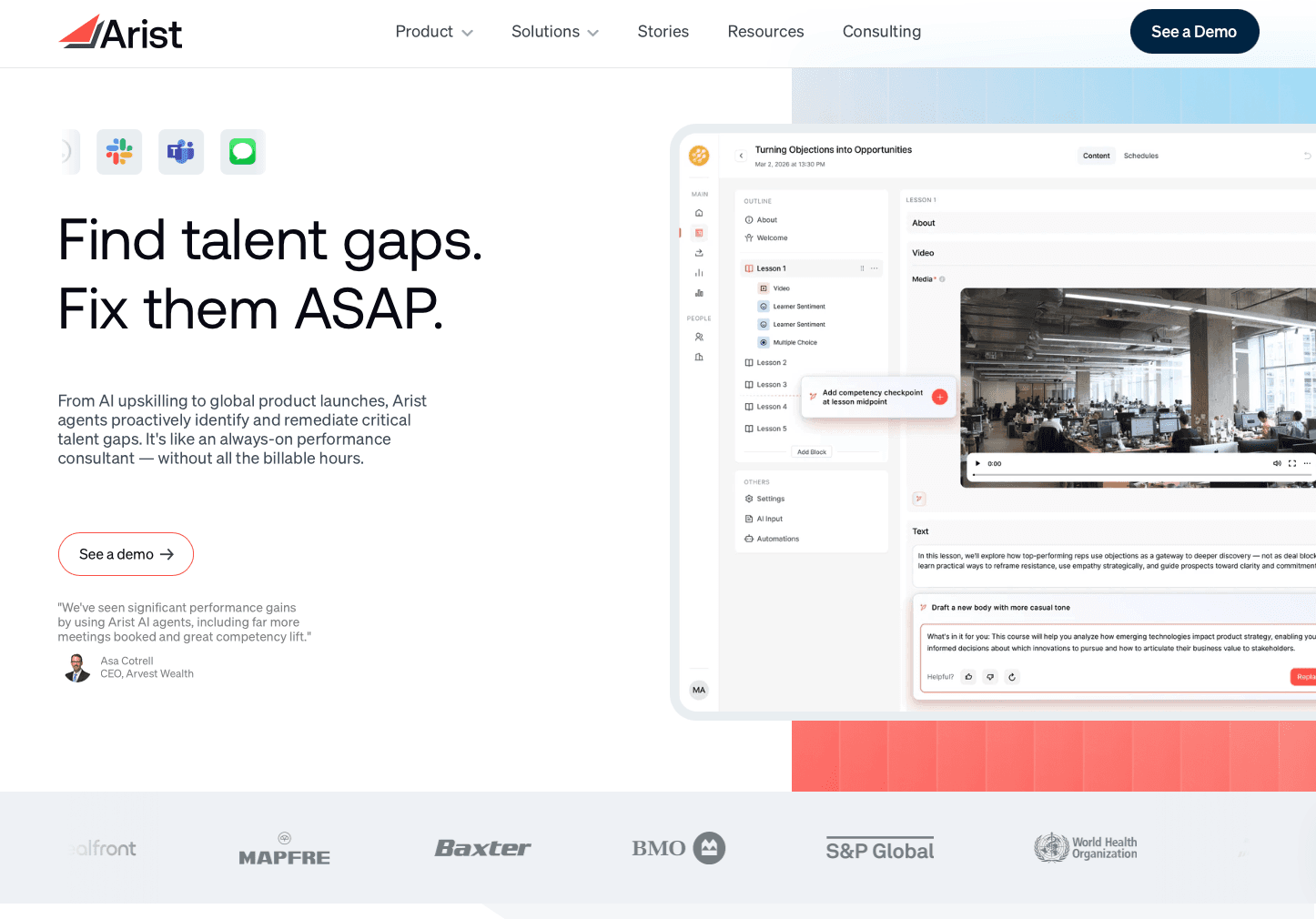
The Agent Suite consists of six integrated AI agents (Needs Analysis, Creator, Referencing, Smart Routing, Analytics + AI Insights, and Teammate) working together to automate every stage of enablement. The system interviews employees to find skill gaps, generates training content from your existing materials using agentic course creation, verifies accuracy, routes content intelligently, and delivers it directly inside the tools your teams already use like Teams, Slack, SMS, or WhatsApp.
Arist is one of the few platforms designed to automate enablement from needs analysis through analytics. The Agent Suite deploys complete training in 48 hours from skill gap identification to live training delivery and replaces dozens of tools and processes with one end-to-end system. It conducts voice or text interviews at scale, builds role-specific content from thousands of pages of source material in hours, automatically verifies all information with line-by-line citations, routes training based on employee data and critical moments of need, and ties everything back to business outcomes like revenue impact or time saved. This directly displaces the legacy tech stack including learning design agencies, authoring tools, content libraries, learning experience platforms, employee listening platforms, and assessment platforms.
Arist operates as a three-layer system. The Agent Layer consists of six integrated AI agents (Needs Analysis, Creator, Referencing, Smart Routing, Analytics + AI Insights, and Teammate) that manage the complete enablement workflow. The Infrastructure Layer includes the Core Platform for building, scheduling, routing, and tracking, plus Messaging Systems that deliver content directly through SMS, Teams, Slack, and WhatsApp. This architecture supports end-to-end orchestration within a single platform, allowing Arist to replace the entire fragmented tech stack with one unified system that implements effective employee training methods across the organization.
Letter AI
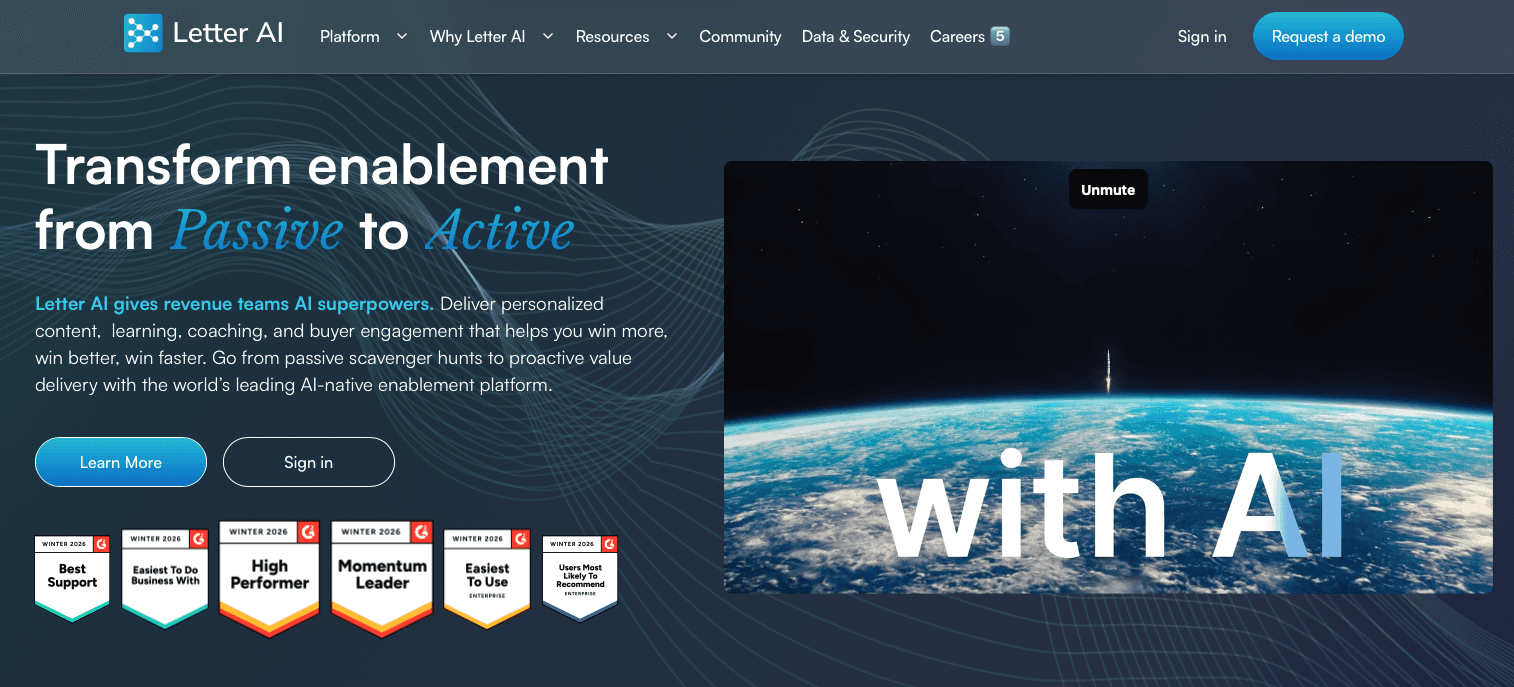
Letter AI is an AI-native revenue enablement solution built for B2B sales teams. They introduced Letter Compass in early 2026 to provide deal-specific guidance by connecting CRM data with training content.
What They Offer
AI-powered training and coaching with interactive role-play scenarios
Content creation using AI to generate FAQ documents and battle cards
Deal-level enablement through Letter Compass
AI copilot for real-time help during sales meetings
Letter AI serves mid-market to enterprise B2B sales organizations that need to rapidly build sales training with AI assistance. However, Letter AI is a sales-only tool that serves only sales use cases and does not extend to compliance, onboarding, frontline training, or broader organizational enablement needs. The platform lacks enterprise-wide capabilities for workforce training beyond revenue teams and does not handle faster product launches requiring coordinated training rollouts or product launch training programs that need full-cycle orchestration.
Qstream
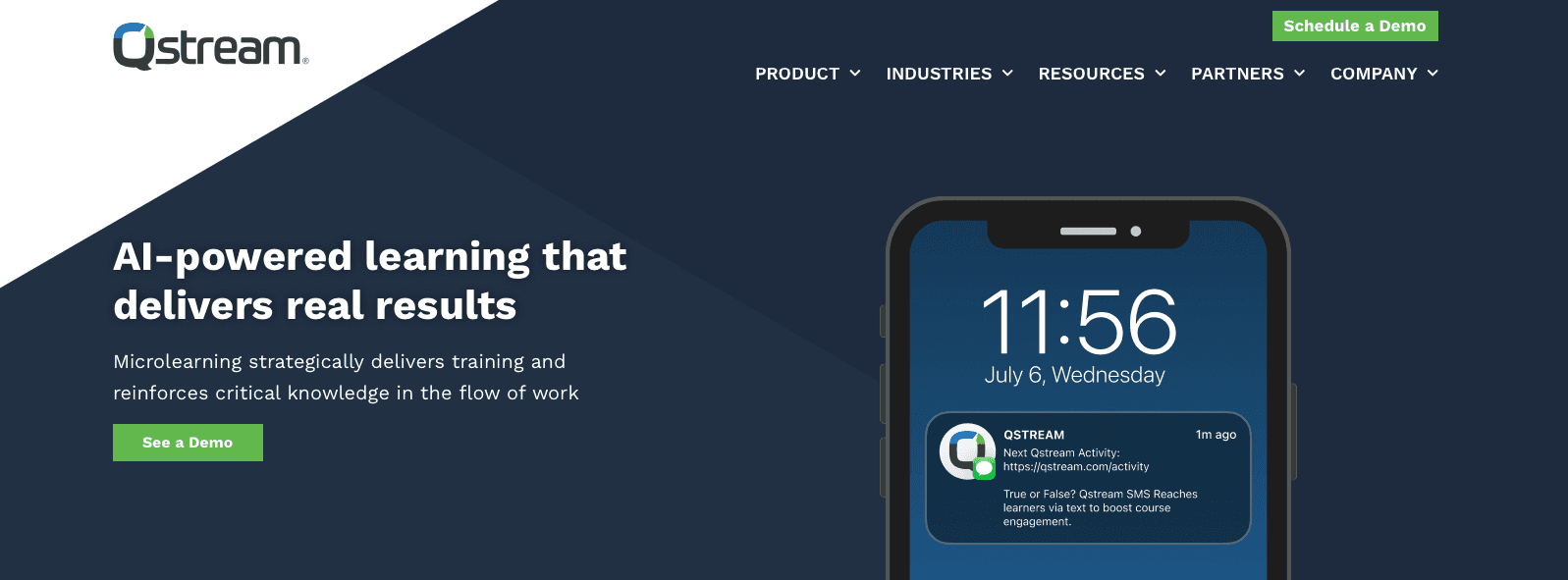
Qstream is a spaced repetition solution focused on quiz-based reinforcement for sales readiness. The system sends recurring assessments to measure and improve knowledge retention through repeated testing.
What They Offer
Spaced repetition quizzes that reinforce learning over time
Micro-assessments for measuring knowledge retention
Sales team readiness tools for assessing performance
Analytics reporting on knowledge gaps and team readiness
Qstream works well for sales organizations that already have training content created and need a reinforcement layer through regular quizzing.
However, Qstream does not create training content and relies on pre-existing materials created by the organization. It lacks native messaging delivery through SMS, Slack, Teams, or WhatsApp and provides no AI conversion pipeline to generate training from existing documents. The quiz-only experience focuses on knowledge retention instead of full behavior change.
Seismic
Seismic provides sales content management and buyer engagement capabilities for revenue teams. The system organizes sales collateral, pitch decks, and training materials in a searchable repository that connects with CRM tools.
What They Offer
Sales content management with searchable repository for collateral and pitch materials
Buyer engagement analytics tracking prospect interactions with shared content
Integration with CRM and sales engagement systems
Content governance and version control for sales materials
Seismic serves sales-led organizations needing centralized content management with CRM integration and governance requirements. Seismic primarily focuses on sales enablement use cases and does not extend to compliance, onboarding, frontline training, or broader organizational enablement needs. Learning happens outside daily workflow, requiring manual content access instead of messaging-native delivery.
Highspot
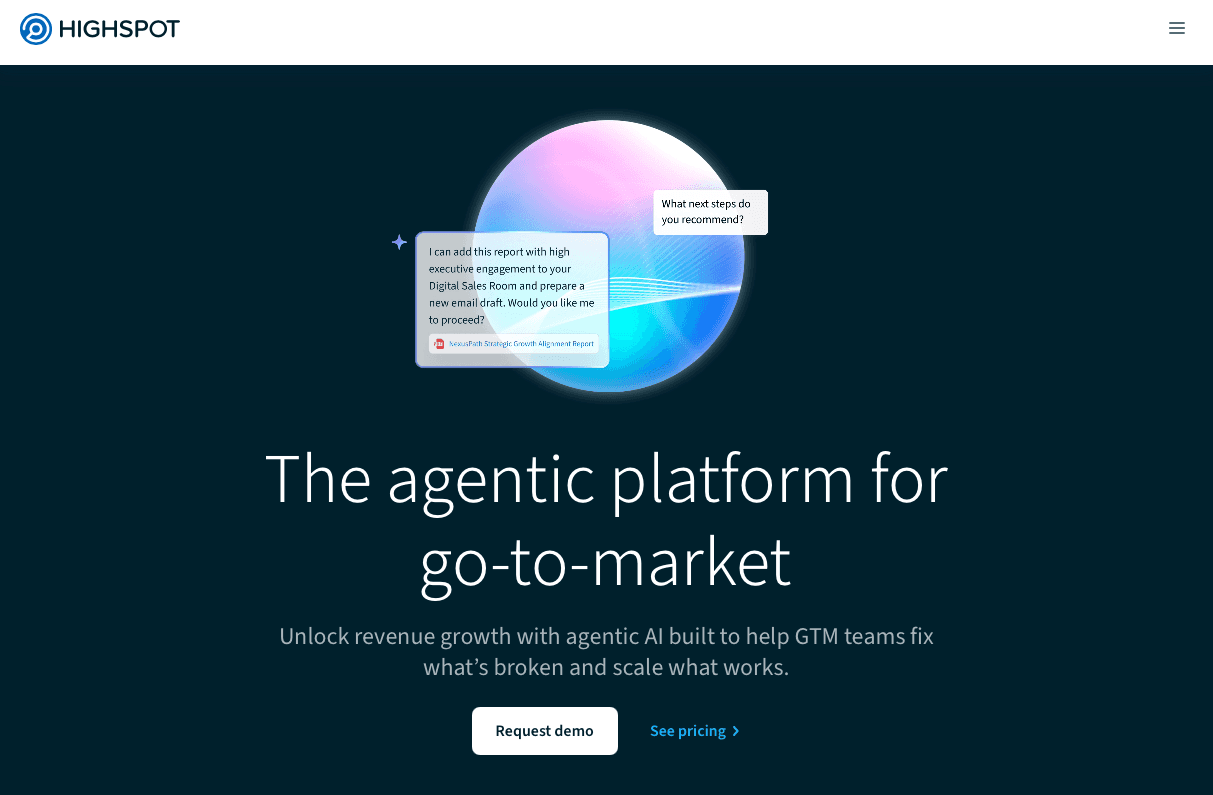
Highspot combines sales content management with buyer engagement analytics. The system organizes sales materials and provides analytics on content effectiveness during the sales process.
What They Offer
Sales collateral organization with AI-powered search capabilities
Pitch guidance and content recommendations for sales reps
Buyer engagement tracking showing how prospects consume shared content
Integration with major CRM and sales engagement tools
Highspot works well for enterprise sales teams that need content management with buyer engagement insights to understand which materials move deals forward. However, Highspot is a revenue-only tool that serves sales use cases and does not extend to compliance, onboarding, frontline training, or broader organizational enablement needs. The system lacks capabilities for enterprise-wide training beyond revenue teams.
Mindtickle
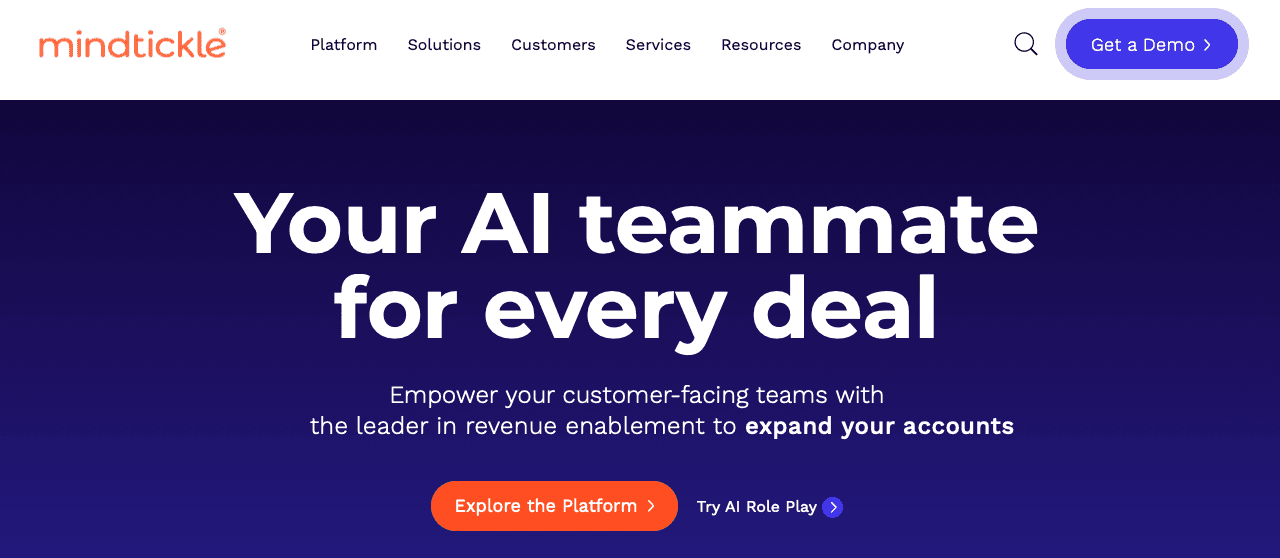
Mindtickle is a sales readiness solution that combines training, coaching, and conversation intelligence focused on revenue team performance. The system provides learning paths and analytics for sales organizations.
What They Offer
Sales-specific learning paths and certification programs
Call recording and conversation intelligence for coaching
Role-play and simulation exercises for sales skills
Sales readiness scoring and performance analytics
Mindtickle works well for large sales organizations that need readiness programs with conversation intelligence, call coaching, and certification tracking for revenue teams.
However, Mindtickle is a revenue enablement platform focused primarily on sales readiness that serves only sales use cases and does not extend to compliance, onboarding, frontline training, or broader organizational enablement needs. The platform lacks capabilities for enterprise-wide training beyond revenue teams. Learning content sits outside the daily workflow instead of being delivered through messaging tools employees use. The platform also has limited AI-powered content generation from existing materials and no native delivery to SMS or WhatsApp.
Why Arist Is the Best Enablement Orchestration System
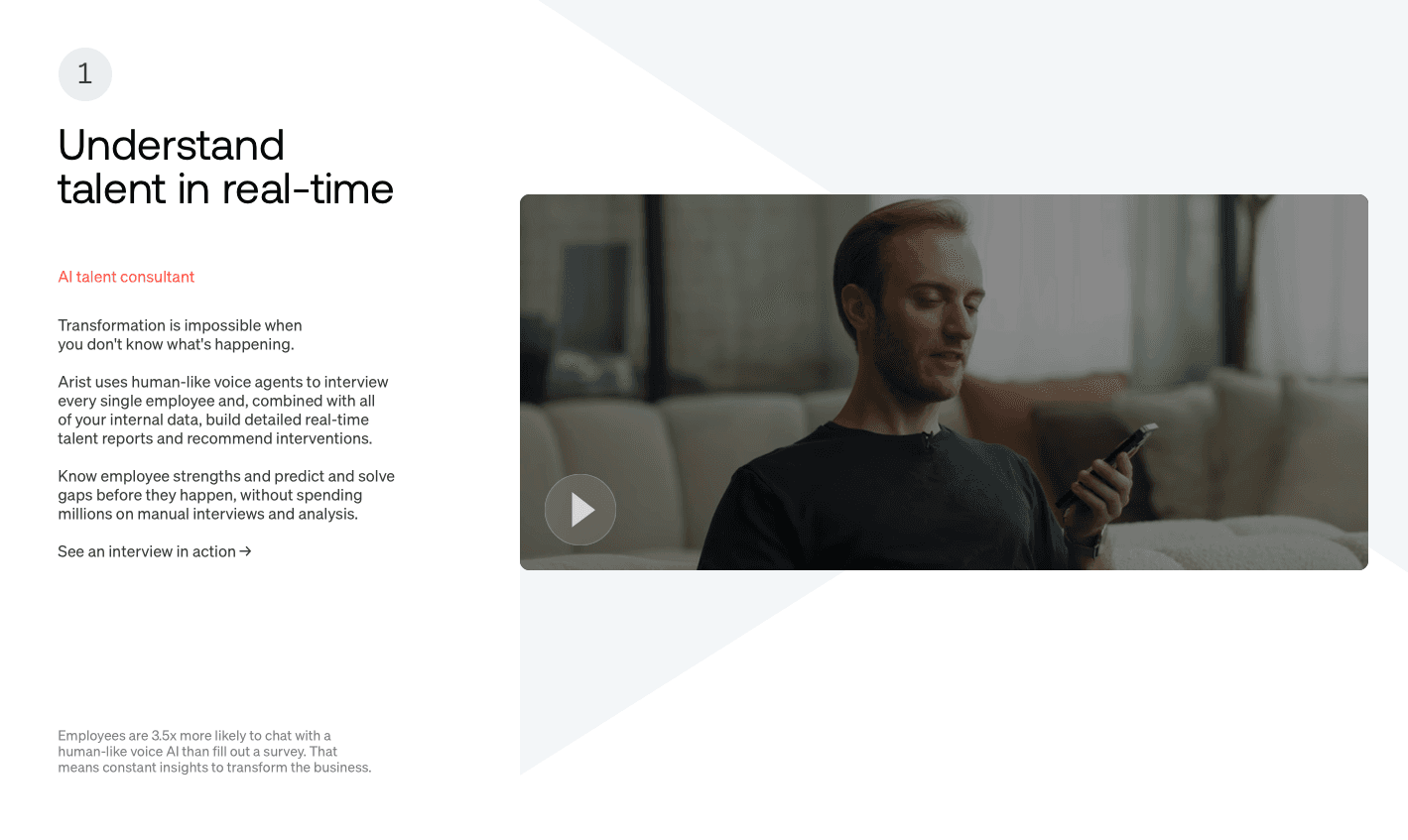
Arist is one of the few systems designed to automate the complete enablement cycle through AI agents. While Letter AI and Mindtickle focus exclusively on sales, and Qstream requires pre-built content, Arist's Agent Suite conducts employee interviews to identify gaps, generates training from your existing documents, and delivers it inside SMS, Teams, Slack, and WhatsApp. Enterprise workflow automation through agentic AI represents the future of scalable people operations.
Many other options still require multiple tools or manual steps. Seismic and Highspot primarily focus on sales content management and buyer engagement instead of end-to-end workforce training automation. Qstream reinforces but doesn't create. The learning tech market is changing around AI, yet most vendors still force you to author, route, and analyze separately. Arist collapses that fragmented workflow into one system that deploys in 48 hours from gap identification to live delivery and reaches deskless workers where they already work.
FAQs
Can these systems generate training content from my existing materials?
Arist and Letter AI offer AI-powered content generation that converts existing documents, presentations, and materials into structured training. Qstream, Seismic, Highspot, and Mindtickle require you to manually create or upload pre-built content; they organize and deliver materials but don't generate training from your collateral automatically.
How long does implementation take for enablement orchestration systems?
Arist deploys training in 48 hours from skill gap identification to live training delivery. Traditional systems typically require weeks to months for content creation, technical integration, and rollout planning. Sales-focused platforms like Mindtickle involve longer setup for call recording integrations and certification program configuration before teams can begin training.
What's the difference between sales enablement tools and enablement orchestration systems?
Sales enablement tools like Seismic, Highspot, and Mindtickle focus exclusively on revenue teams and content management for sellers. Enablement orchestration systems handle training across your entire organization (including compliance, onboarding, frontline workers, and employee development) while automating the complete workflow from needs analysis through measurement.
Final Thoughts on Enterprise Enablement Orchestration
Choosing the right system depends on how much of the training workflow it actually manages. Many tools handle only one layer such as content management, reinforcement, or sales coaching, leaving teams to coordinate multiple vendors and manual handoffs. A true enablement orchestration platform runs the full cycle from skill gap identification to training generation, delivery through channels employees already use, and measurement of business outcomes. Arist shows how this model works by using AI agents to coordinate gap analysis, content creation, delivery, and analytics inside one workflow. Organizations assessing this category should review Arist to see how quickly it can move from identifying a gap to launching training and measuring results.
Managing a training rollout often requires coordinating several vendors at once. Large enterprises can spend millions of dollars annually across surveys, authoring tools, content libraries, delivery systems, and analytics dashboards to run enablement programs. An enablement orchestration platform replaces that fragmented stack by running the full workflow inside one system using AI agents that identify skill gaps, generate training from existing materials, and deliver it through channels employees already use like SMS, Teams, Slack, or WhatsApp. To help buyers compare options, we reviewed six systems based on automation across the full cycle, delivery channels, deployment speed, AI capabilities, integrations, and workforce coverage.
TLDR:
Enablement orchestration platforms aim to consolidate fragmented enablement tools (often 5+ platforms) into a unified AI-driven system.
Most solutions focus only on sales or content management, requiring you to stitch together multiple vendors.
Some leading enablement orchestration platforms fully automate the complete workflow: AI-powered gap analysis, content generation, multi-channel delivery, and business outcome analytics.
Traditional approaches require 9+ months and multiple platforms; other platforms can deploy complete training in 48 hours.
Certain advanced enablement orchestration platforms support enterprise-wide use cases including compliance, frontline workers, and global teams while displacing $2.4M+ in fragmented tool spend.
What Are Enablement Orchestration Platforms?
Unlike learning management systems or sales-only tools, these systems coordinate needs analysis, content creation, delivery, and analytics in one workflow.
These systems automate across the entire loop. They identify skill gaps through AI-driven interviews, generate content from existing materials, route training through the channels employees already use, and measure impact on business outcomes.
Large enterprises can spend millions of dollars per year on enablement across HR, IT, and sales functions. This spending is distributed across learning design agencies, authoring tools like Articulate, content libraries like LinkedIn Learning, learning experience platforms like Degreed and Skillsoft, employee listening platforms like Perceptyx, assessment platforms like Workera, and learning design headcount. Enablement orchestration platforms can reduce reliance on many of these fragmented budget categories by automating more of the workflow in one system.
How We Ranked These Systems
We compared each system across six criteria: end-to-end automation (whether they handle gap analysis through measurement, or just one piece), delivery flexibility (can they reach employees in SMS, Teams, Slack, and WhatsApp), deployment speed (hours vs. weeks to launch new training), AI content generation (from existing materials without manual authoring), enterprise integrations (HRIS sync, SSO, collaboration tools), and workforce coverage (whether they work for both deskless and desk-based teams).
Platform | End-to-End Automation | Delivery Channels | Deployment Speed | Workforce Coverage |
|---|---|---|---|---|
Arist | Full cycle: gap analysis, content generation, delivery, analytics via Agent Suite | SMS, Teams, Slack, WhatsApp | 48 hours from gap identification to live training | Enterprise-wide: compliance, frontline, sales, onboarding |
Letter AI | AI training and coaching for sales deals | CRM integration, AI copilot | Weeks for setup and content creation | Sales teams only |
Qstream | Quiz-based reinforcement only, requires pre-built content | Email and mobile-based assessments | Depends on existing content availability | Sales-focused knowledge retention |
Seismic | Content management and buyer engagement tracking | CRM integration, content repository | Weeks for content organization and integration | Sales teams only |
Highspot | Sales collateral organization and buyer analytics | CRM integration, content search | Weeks for content setup and CRM sync | Revenue teams only |
Mindtickle | Sales readiness programs and call coaching | Learning paths, call recording integration | Months for certification programs and integrations | Sales organizations only |
Arist
The Agent Suite consists of six integrated AI agents (Needs Analysis, Creator, Referencing, Smart Routing, Analytics + AI Insights, and Teammate) working together to automate every stage of enablement. The system interviews employees to find skill gaps, generates training content from your existing materials using agentic course creation, verifies accuracy, routes content intelligently, and delivers it directly inside the tools your teams already use like Teams, Slack, SMS, or WhatsApp.
Arist is one of the few platforms designed to automate enablement from needs analysis through analytics. The Agent Suite deploys complete training in 48 hours from skill gap identification to live training delivery and replaces dozens of tools and processes with one end-to-end system. It conducts voice or text interviews at scale, builds role-specific content from thousands of pages of source material in hours, automatically verifies all information with line-by-line citations, routes training based on employee data and critical moments of need, and ties everything back to business outcomes like revenue impact or time saved. This directly displaces the legacy tech stack including learning design agencies, authoring tools, content libraries, learning experience platforms, employee listening platforms, and assessment platforms.
Arist operates as a three-layer system. The Agent Layer consists of six integrated AI agents (Needs Analysis, Creator, Referencing, Smart Routing, Analytics + AI Insights, and Teammate) that manage the complete enablement workflow. The Infrastructure Layer includes the Core Platform for building, scheduling, routing, and tracking, plus Messaging Systems that deliver content directly through SMS, Teams, Slack, and WhatsApp. This architecture supports end-to-end orchestration within a single platform, allowing Arist to replace the entire fragmented tech stack with one unified system that implements effective employee training methods across the organization.
Letter AI
Letter AI is an AI-native revenue enablement solution built for B2B sales teams. They introduced Letter Compass in early 2026 to provide deal-specific guidance by connecting CRM data with training content.
What They Offer
AI-powered training and coaching with interactive role-play scenarios
Content creation using AI to generate FAQ documents and battle cards
Deal-level enablement through Letter Compass
AI copilot for real-time help during sales meetings
Letter AI serves mid-market to enterprise B2B sales organizations that need to rapidly build sales training with AI assistance. However, Letter AI is a sales-only tool that serves only sales use cases and does not extend to compliance, onboarding, frontline training, or broader organizational enablement needs. The platform lacks enterprise-wide capabilities for workforce training beyond revenue teams and does not handle faster product launches requiring coordinated training rollouts or product launch training programs that need full-cycle orchestration.
Qstream
Qstream is a spaced repetition solution focused on quiz-based reinforcement for sales readiness. The system sends recurring assessments to measure and improve knowledge retention through repeated testing.
What They Offer
Spaced repetition quizzes that reinforce learning over time
Micro-assessments for measuring knowledge retention
Sales team readiness tools for assessing performance
Analytics reporting on knowledge gaps and team readiness
Qstream works well for sales organizations that already have training content created and need a reinforcement layer through regular quizzing.
However, Qstream does not create training content and relies on pre-existing materials created by the organization. It lacks native messaging delivery through SMS, Slack, Teams, or WhatsApp and provides no AI conversion pipeline to generate training from existing documents. The quiz-only experience focuses on knowledge retention instead of full behavior change.
Seismic
Seismic provides sales content management and buyer engagement capabilities for revenue teams. The system organizes sales collateral, pitch decks, and training materials in a searchable repository that connects with CRM tools.
What They Offer
Sales content management with searchable repository for collateral and pitch materials
Buyer engagement analytics tracking prospect interactions with shared content
Integration with CRM and sales engagement systems
Content governance and version control for sales materials
Seismic serves sales-led organizations needing centralized content management with CRM integration and governance requirements. Seismic primarily focuses on sales enablement use cases and does not extend to compliance, onboarding, frontline training, or broader organizational enablement needs. Learning happens outside daily workflow, requiring manual content access instead of messaging-native delivery.
Highspot
Highspot combines sales content management with buyer engagement analytics. The system organizes sales materials and provides analytics on content effectiveness during the sales process.
What They Offer
Sales collateral organization with AI-powered search capabilities
Pitch guidance and content recommendations for sales reps
Buyer engagement tracking showing how prospects consume shared content
Integration with major CRM and sales engagement tools
Highspot works well for enterprise sales teams that need content management with buyer engagement insights to understand which materials move deals forward. However, Highspot is a revenue-only tool that serves sales use cases and does not extend to compliance, onboarding, frontline training, or broader organizational enablement needs. The system lacks capabilities for enterprise-wide training beyond revenue teams.
Mindtickle
Mindtickle is a sales readiness solution that combines training, coaching, and conversation intelligence focused on revenue team performance. The system provides learning paths and analytics for sales organizations.
What They Offer
Sales-specific learning paths and certification programs
Call recording and conversation intelligence for coaching
Role-play and simulation exercises for sales skills
Sales readiness scoring and performance analytics
Mindtickle works well for large sales organizations that need readiness programs with conversation intelligence, call coaching, and certification tracking for revenue teams.
However, Mindtickle is a revenue enablement platform focused primarily on sales readiness that serves only sales use cases and does not extend to compliance, onboarding, frontline training, or broader organizational enablement needs. The platform lacks capabilities for enterprise-wide training beyond revenue teams. Learning content sits outside the daily workflow instead of being delivered through messaging tools employees use. The platform also has limited AI-powered content generation from existing materials and no native delivery to SMS or WhatsApp.
Why Arist Is the Best Enablement Orchestration System
Arist is one of the few systems designed to automate the complete enablement cycle through AI agents. While Letter AI and Mindtickle focus exclusively on sales, and Qstream requires pre-built content, Arist's Agent Suite conducts employee interviews to identify gaps, generates training from your existing documents, and delivers it inside SMS, Teams, Slack, and WhatsApp. Enterprise workflow automation through agentic AI represents the future of scalable people operations.
Many other options still require multiple tools or manual steps. Seismic and Highspot primarily focus on sales content management and buyer engagement instead of end-to-end workforce training automation. Qstream reinforces but doesn't create. The learning tech market is changing around AI, yet most vendors still force you to author, route, and analyze separately. Arist collapses that fragmented workflow into one system that deploys in 48 hours from gap identification to live delivery and reaches deskless workers where they already work.
FAQs
Can these systems generate training content from my existing materials?
Arist and Letter AI offer AI-powered content generation that converts existing documents, presentations, and materials into structured training. Qstream, Seismic, Highspot, and Mindtickle require you to manually create or upload pre-built content; they organize and deliver materials but don't generate training from your collateral automatically.
How long does implementation take for enablement orchestration systems?
Arist deploys training in 48 hours from skill gap identification to live training delivery. Traditional systems typically require weeks to months for content creation, technical integration, and rollout planning. Sales-focused platforms like Mindtickle involve longer setup for call recording integrations and certification program configuration before teams can begin training.
What's the difference between sales enablement tools and enablement orchestration systems?
Sales enablement tools like Seismic, Highspot, and Mindtickle focus exclusively on revenue teams and content management for sellers. Enablement orchestration systems handle training across your entire organization (including compliance, onboarding, frontline workers, and employee development) while automating the complete workflow from needs analysis through measurement.
Final Thoughts on Enterprise Enablement Orchestration
Choosing the right system depends on how much of the training workflow it actually manages. Many tools handle only one layer such as content management, reinforcement, or sales coaching, leaving teams to coordinate multiple vendors and manual handoffs. A true enablement orchestration platform runs the full cycle from skill gap identification to training generation, delivery through channels employees already use, and measurement of business outcomes. Arist shows how this model works by using AI agents to coordinate gap analysis, content creation, delivery, and analytics inside one workflow. Organizations assessing this category should review Arist to see how quickly it can move from identifying a gap to launching training and measuring results.
Related Resources

Article
AI Upskilling: A Practical Guide for Building Your Team in June 2026
Learn how to build AI upskilling programs that drive behavior change. Practical guide with frameworks, metrics, and proven strategies for June 2026.
Read more
Article
Salesforce Training for Beginners: Complete June 2026 Guide
Complete Salesforce training for beginners in June 2026. Learn Trailhead, certifications, admin paths, and career options with this full overview.
Read more
Bring real impact to your people
We care about solving meaningful problems and being thought partners first and foremost. Arist is used and loved by the Fortune 500 — and we'd love to support your goals.
Curious to get a demo or free trial? We'd love to chat:

Bring real impact to your people
We care about solving meaningful problems and being thought partners first and foremost. Arist is used and loved by the Fortune 500 — and we'd love to support your goals.
Curious to get a demo or free trial? We'd love to chat:
Bring real impact to your people
We care about solving meaningful problems and being thought partners first and foremost. Arist is used and loved by the Fortune 500 — and we'd love to support your goals.
Curious to get a demo or free trial? We'd love to chat: