Highspot Reviews and Alternatives (February 2026)
Highspot Reviews and Alternatives (February 2026)
Compare top Highspot alternatives in February 2026. Find faster, simpler sales enablement solutions with better adoption rates and AI-powered features.
Highspot reviews and alternatives have become a common search for revenue leaders who expected faster impact from their sales enablement investment. While Highspot is widely recognized in the category, many teams report long rollouts, heavy content governance requirements, and uneven rep adoption after launch. As sales cycles grow more complex and quotas tighten, organizations are looking for solutions that connect content, coaching, and skill reinforcement without months of setup. A newer wave of AI sales enablement software takes a different approach by converting existing materials into ongoing, personalized learning delivered directly in the flow of work. If you’re reassessing Highspot or comparing other options, it’s worth understanding how today’s alternatives stack up in both usability and performance outcomes.
TLDR:
The sales enablement market will reach $12.78 billion by 2030, favoring easy-to-use solutions over complex systems.
Highspot implementations can take several weeks to months, while other solutions convert materials into training in minutes.
Many sales teams report challenges with Highspot’s interface and adoption rates.
Some AI-powered alternatives reduce ongoing administrative needs, while Highspot often requires dedicated admins.
Apps can now deliver personalized learning via SMS, Slack, and email without app downloads or system logins.
What Is Highspot and How Does it Work?
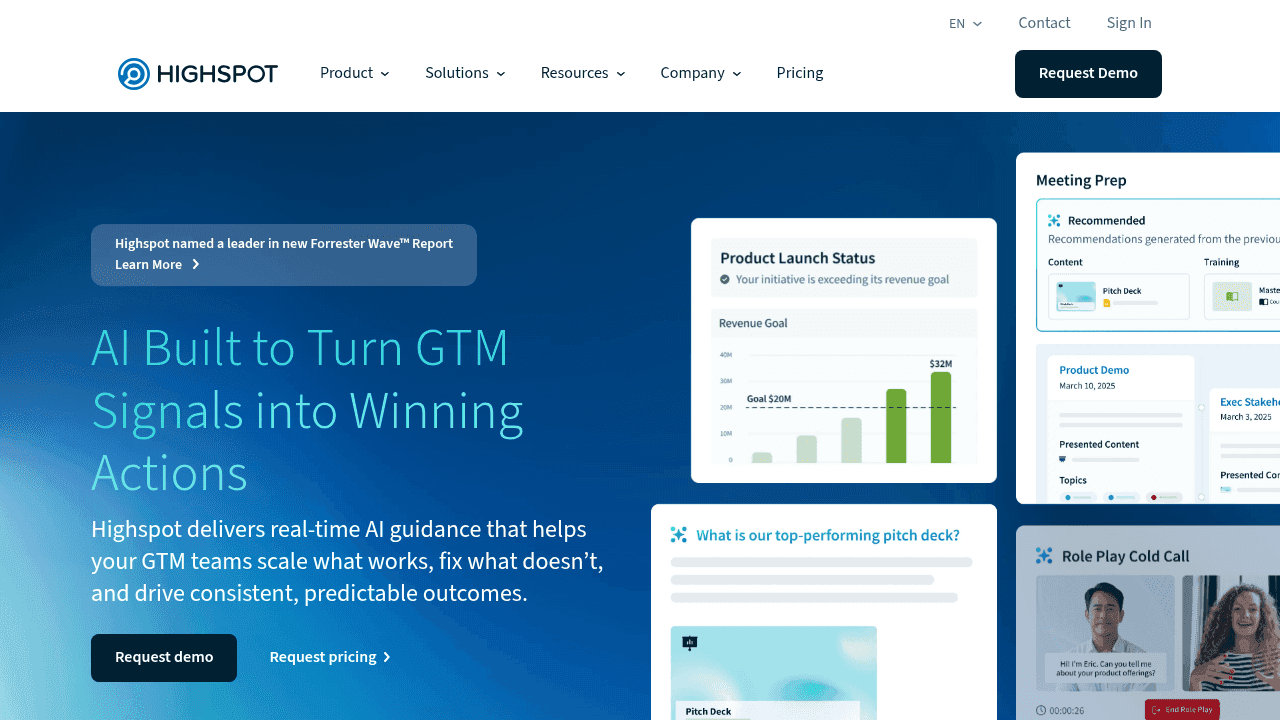
Highspot is a sales enablement product that provides content management and buyer engagement functionality for sales teams. The system operates as a centralized repository where sales representatives can access marketing materials, sales collateral, and training content through a web-based interface. Highspot targets mid-market to enterprise organizations with complex sales processes requiring structured content management and team coordination.
The product operates through content libraries where marketing teams upload materials that sales reps can search, customize, and share with prospects. Sales reps access content through desktop and mobile interfaces, with search functionality that surfaces materials based on buyer persona, sales stage, and other contextual factors. The system tracks engagement metrics when content is shared externally, providing visibility into buyer interactions with materials.
According to Grand View Research, the sales enablement market is expected to reach $12.78 billion by 2030, driven by organizations seeking better sales productivity and revenue growth. However, many companies struggle with implementation complexity and user adoption challenges that limit their return on investment.
Highspot positions itself as an enterprise-grade solution, but this comes with trade-offs. The system often requires dedicated administrators and extensive training programs to achieve meaningful adoption across sales teams.
Highspot Key Limitations and Gaps
Highspot requires extensive setup and configuration time before teams can effectively use the system. The complexity of the interface creates major learning curves, with users reporting difficulty moving through the array of features and finding specific functionality. Training requirements extend beyond basic onboarding, requiring ongoing support to maintain user adoption. Without continuous learning built into the platform itself, organizations often see engagement drop over time.
Content management becomes unwieldy at scale, with users struggling to locate relevant materials despite search functionality. The system lacks intelligent content personalization, requiring manual customization for different buyer types and sales scenarios. Performance tracking provides basic metrics but lacks actionable insights for continuous improvement.
Integration limitations restrict workflow automation, often requiring manual data entry across connected systems. The modular pricing structure creates unexpected costs as organizations need additional features. Training features remain superficial compared to dedicated learning systems, limiting skill development opportunities for sales teams.
According to TrustRadius reviews, some users frequently cite complexity and poor user experience as major drawbacks. Many organizations invest months in implementation only to see low adoption rates among their sales teams.
The training component falls particularly short. Unlike dedicated learning management systems, Highspot treats training as a secondary feature instead of a core function. This approach limits the depth and effectiveness of skill development programs.
Companies looking into sales enablement training software often find that specialized solutions deliver better learning outcomes than all-in-one systems that try to do everything.
Arist
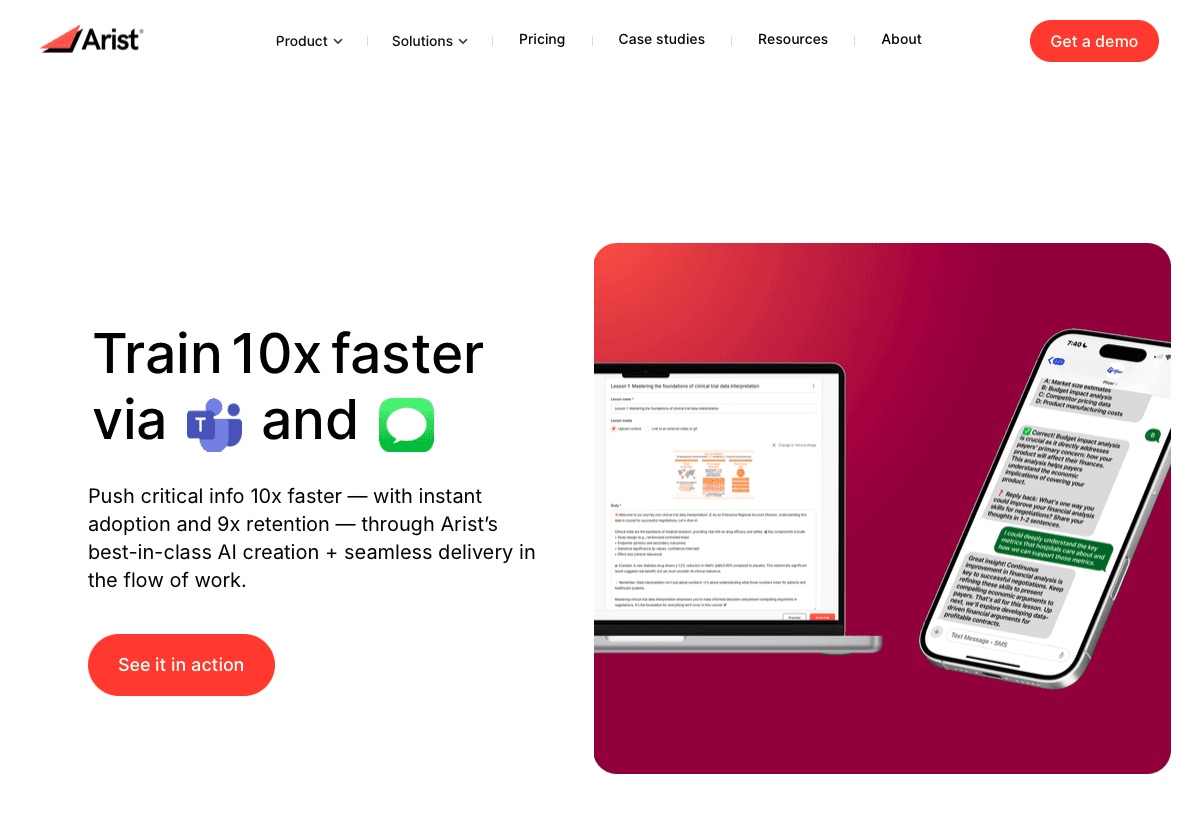
A newer category of AI-driven enablement solutions takes a fundamentally different approach from traditional content repositories. Instead of requiring teams to manually upload, tag, and govern large content libraries, these systems ingest existing documents and automatically convert them into structured learning, coaching prompts, and rep communications. Arist is a leading example of this model, using AI to turn static materials into personalized, spaced learning delivered directly through tools sales teams already use, such as Slack, Microsoft Teams, email, or SMS, reducing friction and increasing participation.
These solutions focus on continuous reinforcement through spaced learning, helping reps retain knowledge over time and apply it during live deals. Because content is generated and adapted using AI, organizations can launch new programs in days instead of months. For teams seeking measurable behavior change, strong completion rates, and minimal administrative lift, Arist represents a modern alternative to traditional enablement software.
Showpad
Showpad blends content management with sales training in a single system. It allows marketing and enablement teams to organize collateral, control messaging, and distribute materials across global sales organizations. The platform includes buyer engagement tracking, helping teams understand which assets are viewed and shared during active deals.
On the training side, Showpad offers structured learning paths, onboarding modules, and coaching tools designed to improve readiness. Its strength lies in connecting content usage with skill development, though implementation can require careful planning and ongoing governance to maintain content hygiene. Showpad is often a fit for mid-market and enterprise organizations that want a balance between content control and formal training programs.
Allego
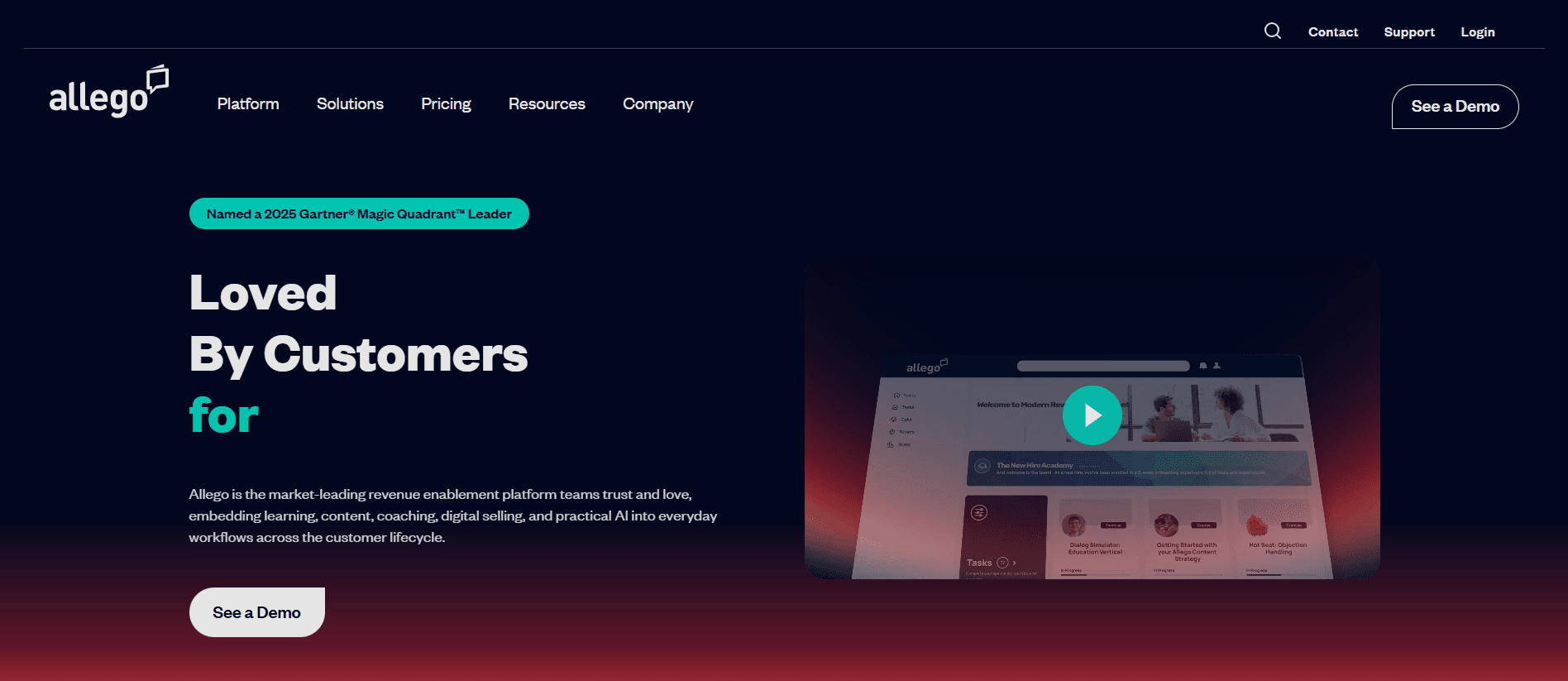
Allego is known for its strong focus on video-based learning and peer collaboration. Sales reps can record pitch practice, receive manager feedback, and share winning talk tracks across the team. This user-generated content model encourages knowledge sharing and helps surface best practices from top performers.
In addition to video coaching, Allego includes content management and learning modules that support onboarding and product training. Its mobile-first design makes it accessible for field sales teams who need resources on demand. Organizations that value collaborative learning and real-world pitch practice often gravitate toward Allego, though success depends on active manager participation and coaching consistency.
Spekit
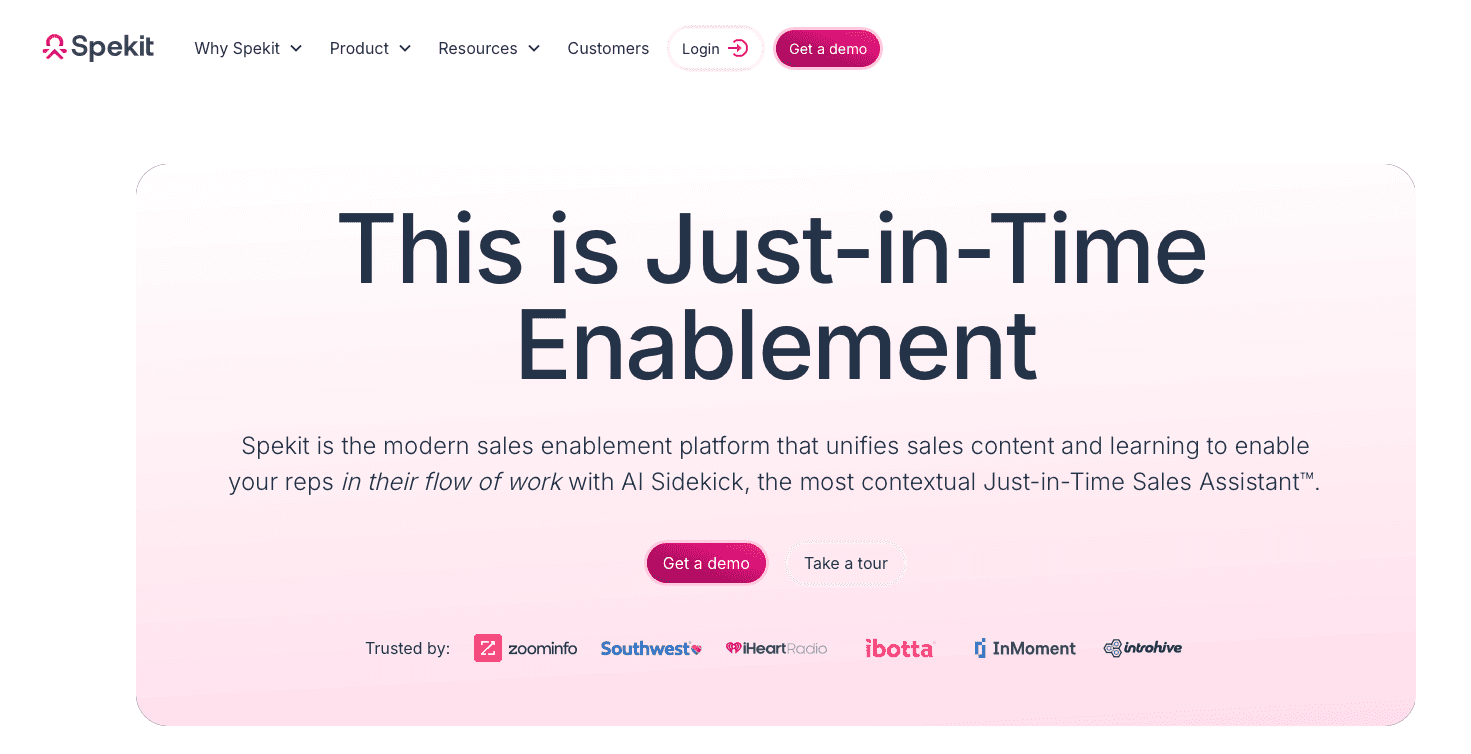
Spekit approaches enablement from within the workflow itself. Instead of asking reps to log into a separate system, Spekit delivers just-in-time guidance directly inside tools like Salesforce, Outreach, and other revenue platforms. Reps can access short content snippets, field definitions, and process guidance without leaving the applications they use daily. This approach aligns with learning in the flow of work principles that reduce context switching and improve knowledge retention.
This embedded learning model is especially useful for reinforcing CRM adoption and new process rollouts. Spekit is lighter weight than many traditional enablement systems and can be deployed quickly. However, it is less focused on structured skill development and formal training programs. Teams looking for contextual nudges and micro-learning within their tech stack may find Spekit attractive.
Mindtickle
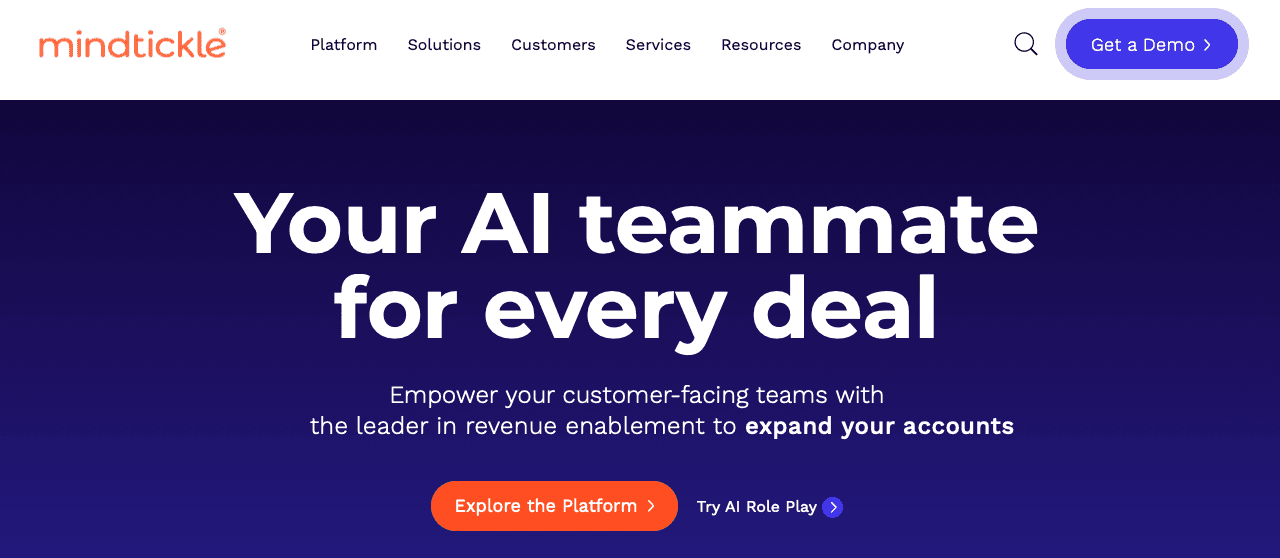
Mindtickle takes a training-first approach, focusing heavily on structured learning programs, assessments, and coaching frameworks. It is designed to improve sales readiness through certification paths, competency tracking, and measurable skill development. Managers can assess reps through pitch recordings, quizzes, and scorecards aligned to defined competencies.
While Mindtickle includes content access features, its primary value lies in formal learning programs and reinforcement cycles. Organizations with mature enablement teams and dedicated training resources often benefit most from its capabilities. For teams seeking rigorous skill measurement and coaching visibility, Mindtickle remains a strong contender among Highspot alternatives.
Bigtincan
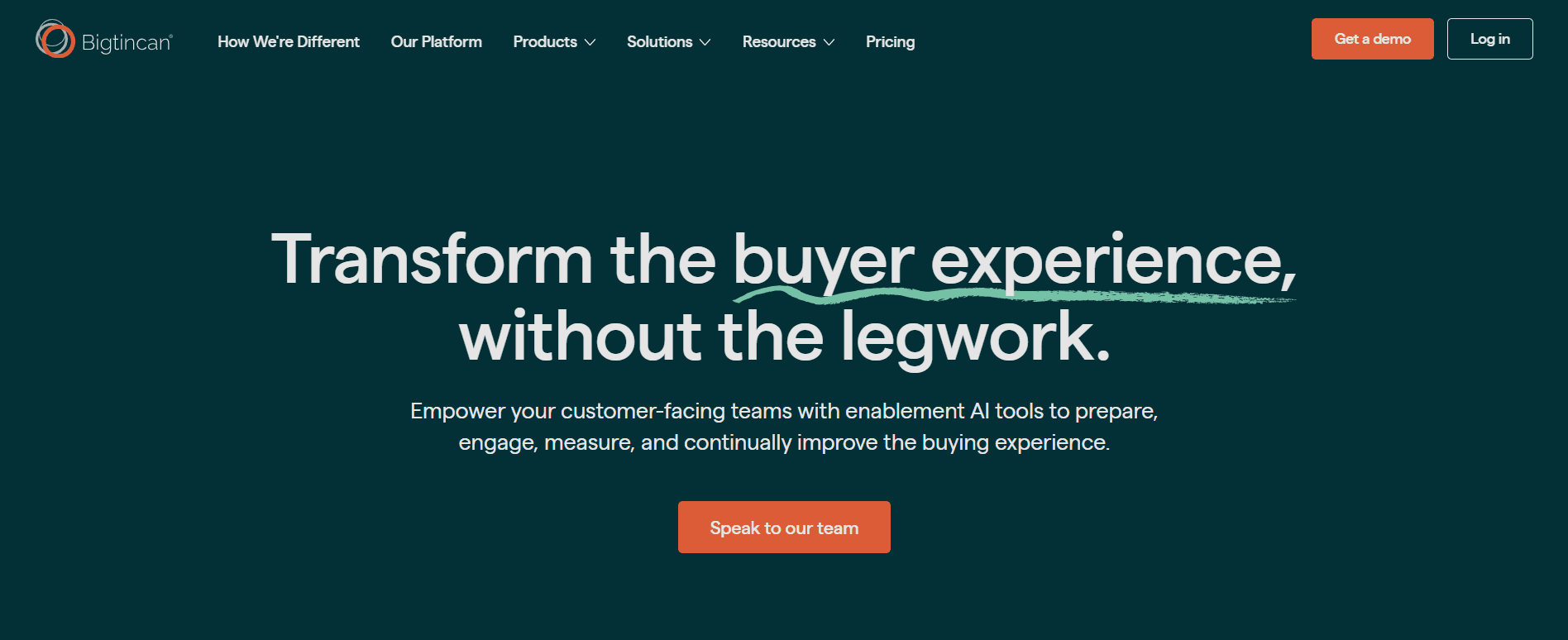
Bigtincan combines content management, sales training, and buyer engagement tools into a unified sales enablement suite. The platform supports content distribution, onboarding programs, and sales playbooks, while also offering AI-driven recommendations for relevant materials during deals.
Its strength lies in serving large, distributed sales teams that require centralized governance and structured enablement at scale. Bigtincan integrates with CRM systems and provides analytics on content usage and learning engagement. Like other enterprise-focused solutions, it may require more configuration and administrative oversight, but it can support complex global sales organizations that need a broad set of capabilities under one vendor.
Platform | Implementation Time | Primary Focus |
|---|---|---|
Highspot | Several weeks to months | Content management with complex governance |
Arist | 48 hours to live training | AI-powered learning via SMS, Slack, Teams |
Showpad | Requires careful planning | Content management with sales training |
Allego | Mobile-first deployment | Video-based learning and peer collaboration |
Spekit | Quick deployment | Just-in-time guidance inside workflow tools |
Mindtickle | Formal program setup required | Training-first with certification paths |
Bigtincan | Configuration for enterprise scale | Unified suite for distributed teams |
Why Arist Stands Out
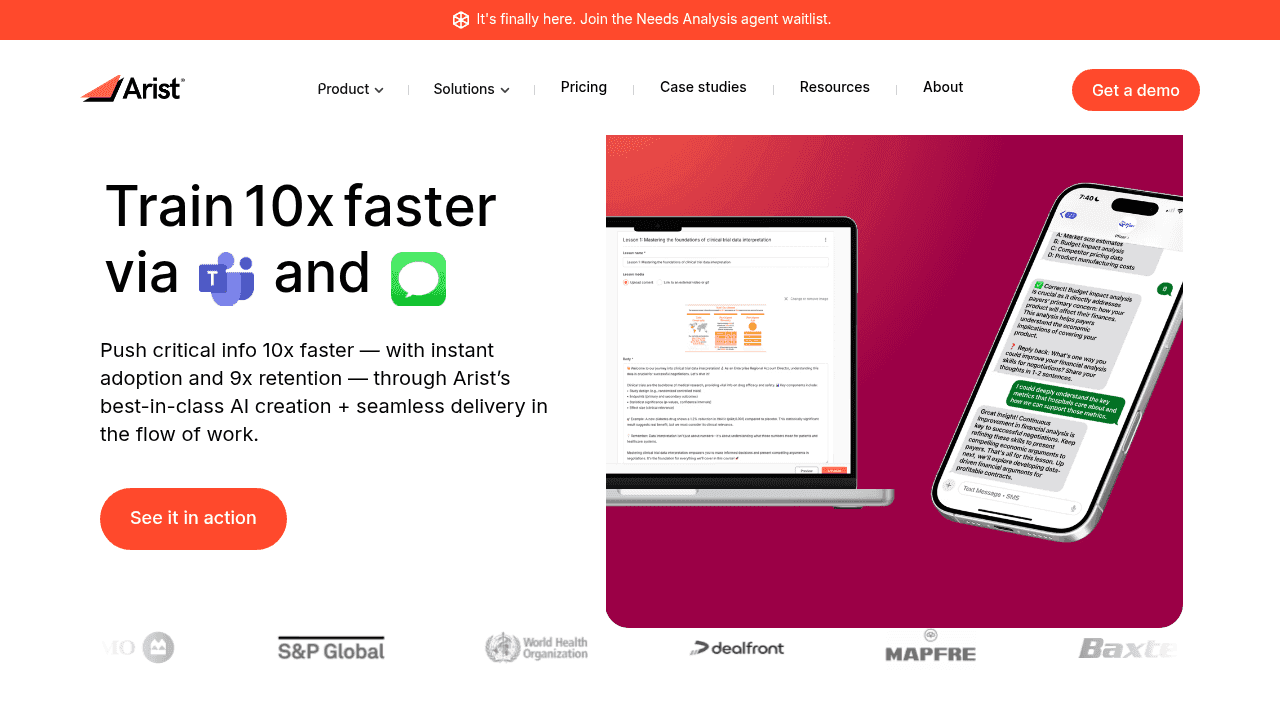
Arist runs the full enablement cycle from skill gap identification to content creation, delivery, and analytics. Its Agent Suite conducts AI-driven interviews, builds multi-format training from existing materials in hours, and deploys lessons through SMS, WhatsApp, Teams, and Slack. Teams can go from insight to live training in as little as 48 hours without adding another system.
Because learning happens inside tools employees already use, adoption rates outperform traditional LMS models. Spaced reinforcement combats rapid knowledge decay, while smart cohorts and automated triggers tailor content by role, region, and performance data. Training activity connects directly to metrics like win rates, CRM usage, and time to productivity. For specific tactics on how to improve learning outcomes, Arist applies evidence-based approaches that translate into measurable behavior change.
Built for global enterprises and regulated industries, Arist supports 50+ languages and compliant delivery to personal or corporate devices. Organizations such as Microsoft, Novo Nordisk, Novartis, and Eli Lilly use Arist to replace fragmented tool stacks with a single AI-driven enablement engine focused on measurable behavior change. Get a demo to see how Arist can work for your team.
FAQs
How long does Highspot implementation typically take compared to alternatives?
Highspot requires extensive setup and configuration that can take months before teams see meaningful results, while alternatives like Arist can deliver value in minutes through AI-powered content conversion that works with your existing materials.
What's the main difference between Highspot and AI-powered sales enablement tools?
Highspot requires sales reps to search through complex content libraries and move through multiple features, while AI-powered tools like Arist automatically deliver personalized, relevant training and information directly through channels teams already use like SMS, Slack, or email.
When should I consider switching from Highspot to an alternative?
If your team struggles with low user adoption, spends excessive time searching for content, or requires ongoing administrative support to maintain the system, it's time to look at alternatives that focus on ease of use and automation.
Why do many organizations experience poor user adoption with Highspot?
Highspot's complex interface creates steep learning curves, requires extensive training beyond basic onboarding, and forces users to move through multiple features to find relevant content, leading to frustration and abandonment among sales teams.
Can sales enablement tools integrate with existing CRM and workflow systems?
Yes, modern sales platforms offer integration features, but the key difference is automation level: while Highspot requires manual data entry across connected systems, advanced alternatives provide intelligent workflow automation that eliminates administrative overhead.
Final thoughts on Highspot and sales enablement alternatives
As you weigh Highspot reviews and alternatives, the key question is how quickly your enablement investment turns into real rep performance. Highspot may suit teams willing to manage complex rollouts and content systems, but many organizations are now looking for solutions that fit naturally into daily workflows and drive measurable skill growth from the start. Arist offers a modern approach by turning your existing materials into AI-powered, spaced learning delivered where reps already work, reducing ramp time and increasing adoption. If you’re ready to move beyond heavy implementations and toward faster impact, see how Arist’s AI sales enablement software can help your team perform at a higher level from day one.
Highspot reviews and alternatives have become a common search for revenue leaders who expected faster impact from their sales enablement investment. While Highspot is widely recognized in the category, many teams report long rollouts, heavy content governance requirements, and uneven rep adoption after launch. As sales cycles grow more complex and quotas tighten, organizations are looking for solutions that connect content, coaching, and skill reinforcement without months of setup. A newer wave of AI sales enablement software takes a different approach by converting existing materials into ongoing, personalized learning delivered directly in the flow of work. If you’re reassessing Highspot or comparing other options, it’s worth understanding how today’s alternatives stack up in both usability and performance outcomes.
TLDR:
The sales enablement market will reach $12.78 billion by 2030, favoring easy-to-use solutions over complex systems.
Highspot implementations can take several weeks to months, while other solutions convert materials into training in minutes.
Many sales teams report challenges with Highspot’s interface and adoption rates.
Some AI-powered alternatives reduce ongoing administrative needs, while Highspot often requires dedicated admins.
Apps can now deliver personalized learning via SMS, Slack, and email without app downloads or system logins.
What Is Highspot and How Does it Work?
Highspot is a sales enablement product that provides content management and buyer engagement functionality for sales teams. The system operates as a centralized repository where sales representatives can access marketing materials, sales collateral, and training content through a web-based interface. Highspot targets mid-market to enterprise organizations with complex sales processes requiring structured content management and team coordination.
The product operates through content libraries where marketing teams upload materials that sales reps can search, customize, and share with prospects. Sales reps access content through desktop and mobile interfaces, with search functionality that surfaces materials based on buyer persona, sales stage, and other contextual factors. The system tracks engagement metrics when content is shared externally, providing visibility into buyer interactions with materials.
According to Grand View Research, the sales enablement market is expected to reach $12.78 billion by 2030, driven by organizations seeking better sales productivity and revenue growth. However, many companies struggle with implementation complexity and user adoption challenges that limit their return on investment.
Highspot positions itself as an enterprise-grade solution, but this comes with trade-offs. The system often requires dedicated administrators and extensive training programs to achieve meaningful adoption across sales teams.
Highspot Key Limitations and Gaps
Highspot requires extensive setup and configuration time before teams can effectively use the system. The complexity of the interface creates major learning curves, with users reporting difficulty moving through the array of features and finding specific functionality. Training requirements extend beyond basic onboarding, requiring ongoing support to maintain user adoption. Without continuous learning built into the platform itself, organizations often see engagement drop over time.
Content management becomes unwieldy at scale, with users struggling to locate relevant materials despite search functionality. The system lacks intelligent content personalization, requiring manual customization for different buyer types and sales scenarios. Performance tracking provides basic metrics but lacks actionable insights for continuous improvement.
Integration limitations restrict workflow automation, often requiring manual data entry across connected systems. The modular pricing structure creates unexpected costs as organizations need additional features. Training features remain superficial compared to dedicated learning systems, limiting skill development opportunities for sales teams.
According to TrustRadius reviews, some users frequently cite complexity and poor user experience as major drawbacks. Many organizations invest months in implementation only to see low adoption rates among their sales teams.
The training component falls particularly short. Unlike dedicated learning management systems, Highspot treats training as a secondary feature instead of a core function. This approach limits the depth and effectiveness of skill development programs.
Companies looking into sales enablement training software often find that specialized solutions deliver better learning outcomes than all-in-one systems that try to do everything.
Arist
A newer category of AI-driven enablement solutions takes a fundamentally different approach from traditional content repositories. Instead of requiring teams to manually upload, tag, and govern large content libraries, these systems ingest existing documents and automatically convert them into structured learning, coaching prompts, and rep communications. Arist is a leading example of this model, using AI to turn static materials into personalized, spaced learning delivered directly through tools sales teams already use, such as Slack, Microsoft Teams, email, or SMS, reducing friction and increasing participation.
These solutions focus on continuous reinforcement through spaced learning, helping reps retain knowledge over time and apply it during live deals. Because content is generated and adapted using AI, organizations can launch new programs in days instead of months. For teams seeking measurable behavior change, strong completion rates, and minimal administrative lift, Arist represents a modern alternative to traditional enablement software.
Showpad
Showpad blends content management with sales training in a single system. It allows marketing and enablement teams to organize collateral, control messaging, and distribute materials across global sales organizations. The platform includes buyer engagement tracking, helping teams understand which assets are viewed and shared during active deals.
On the training side, Showpad offers structured learning paths, onboarding modules, and coaching tools designed to improve readiness. Its strength lies in connecting content usage with skill development, though implementation can require careful planning and ongoing governance to maintain content hygiene. Showpad is often a fit for mid-market and enterprise organizations that want a balance between content control and formal training programs.
Allego
Allego is known for its strong focus on video-based learning and peer collaboration. Sales reps can record pitch practice, receive manager feedback, and share winning talk tracks across the team. This user-generated content model encourages knowledge sharing and helps surface best practices from top performers.
In addition to video coaching, Allego includes content management and learning modules that support onboarding and product training. Its mobile-first design makes it accessible for field sales teams who need resources on demand. Organizations that value collaborative learning and real-world pitch practice often gravitate toward Allego, though success depends on active manager participation and coaching consistency.
Spekit
Spekit approaches enablement from within the workflow itself. Instead of asking reps to log into a separate system, Spekit delivers just-in-time guidance directly inside tools like Salesforce, Outreach, and other revenue platforms. Reps can access short content snippets, field definitions, and process guidance without leaving the applications they use daily. This approach aligns with learning in the flow of work principles that reduce context switching and improve knowledge retention.
This embedded learning model is especially useful for reinforcing CRM adoption and new process rollouts. Spekit is lighter weight than many traditional enablement systems and can be deployed quickly. However, it is less focused on structured skill development and formal training programs. Teams looking for contextual nudges and micro-learning within their tech stack may find Spekit attractive.
Mindtickle
Mindtickle takes a training-first approach, focusing heavily on structured learning programs, assessments, and coaching frameworks. It is designed to improve sales readiness through certification paths, competency tracking, and measurable skill development. Managers can assess reps through pitch recordings, quizzes, and scorecards aligned to defined competencies.
While Mindtickle includes content access features, its primary value lies in formal learning programs and reinforcement cycles. Organizations with mature enablement teams and dedicated training resources often benefit most from its capabilities. For teams seeking rigorous skill measurement and coaching visibility, Mindtickle remains a strong contender among Highspot alternatives.
Bigtincan
Bigtincan combines content management, sales training, and buyer engagement tools into a unified sales enablement suite. The platform supports content distribution, onboarding programs, and sales playbooks, while also offering AI-driven recommendations for relevant materials during deals.
Its strength lies in serving large, distributed sales teams that require centralized governance and structured enablement at scale. Bigtincan integrates with CRM systems and provides analytics on content usage and learning engagement. Like other enterprise-focused solutions, it may require more configuration and administrative oversight, but it can support complex global sales organizations that need a broad set of capabilities under one vendor.
Platform | Implementation Time | Primary Focus |
|---|---|---|
Highspot | Several weeks to months | Content management with complex governance |
Arist | 48 hours to live training | AI-powered learning via SMS, Slack, Teams |
Showpad | Requires careful planning | Content management with sales training |
Allego | Mobile-first deployment | Video-based learning and peer collaboration |
Spekit | Quick deployment | Just-in-time guidance inside workflow tools |
Mindtickle | Formal program setup required | Training-first with certification paths |
Bigtincan | Configuration for enterprise scale | Unified suite for distributed teams |
Why Arist Stands Out
Arist runs the full enablement cycle from skill gap identification to content creation, delivery, and analytics. Its Agent Suite conducts AI-driven interviews, builds multi-format training from existing materials in hours, and deploys lessons through SMS, WhatsApp, Teams, and Slack. Teams can go from insight to live training in as little as 48 hours without adding another system.
Because learning happens inside tools employees already use, adoption rates outperform traditional LMS models. Spaced reinforcement combats rapid knowledge decay, while smart cohorts and automated triggers tailor content by role, region, and performance data. Training activity connects directly to metrics like win rates, CRM usage, and time to productivity. For specific tactics on how to improve learning outcomes, Arist applies evidence-based approaches that translate into measurable behavior change.
Built for global enterprises and regulated industries, Arist supports 50+ languages and compliant delivery to personal or corporate devices. Organizations such as Microsoft, Novo Nordisk, Novartis, and Eli Lilly use Arist to replace fragmented tool stacks with a single AI-driven enablement engine focused on measurable behavior change. Get a demo to see how Arist can work for your team.
FAQs
How long does Highspot implementation typically take compared to alternatives?
Highspot requires extensive setup and configuration that can take months before teams see meaningful results, while alternatives like Arist can deliver value in minutes through AI-powered content conversion that works with your existing materials.
What's the main difference between Highspot and AI-powered sales enablement tools?
Highspot requires sales reps to search through complex content libraries and move through multiple features, while AI-powered tools like Arist automatically deliver personalized, relevant training and information directly through channels teams already use like SMS, Slack, or email.
When should I consider switching from Highspot to an alternative?
If your team struggles with low user adoption, spends excessive time searching for content, or requires ongoing administrative support to maintain the system, it's time to look at alternatives that focus on ease of use and automation.
Why do many organizations experience poor user adoption with Highspot?
Highspot's complex interface creates steep learning curves, requires extensive training beyond basic onboarding, and forces users to move through multiple features to find relevant content, leading to frustration and abandonment among sales teams.
Can sales enablement tools integrate with existing CRM and workflow systems?
Yes, modern sales platforms offer integration features, but the key difference is automation level: while Highspot requires manual data entry across connected systems, advanced alternatives provide intelligent workflow automation that eliminates administrative overhead.
Final thoughts on Highspot and sales enablement alternatives
As you weigh Highspot reviews and alternatives, the key question is how quickly your enablement investment turns into real rep performance. Highspot may suit teams willing to manage complex rollouts and content systems, but many organizations are now looking for solutions that fit naturally into daily workflows and drive measurable skill growth from the start. Arist offers a modern approach by turning your existing materials into AI-powered, spaced learning delivered where reps already work, reducing ramp time and increasing adoption. If you’re ready to move beyond heavy implementations and toward faster impact, see how Arist’s AI sales enablement software can help your team perform at a higher level from day one.
Related Resources

Article
AI Upskilling: A Practical Guide for Building Your Team in June 2026
Learn how to build AI upskilling programs that drive behavior change. Practical guide with frameworks, metrics, and proven strategies for June 2026.
Read more
Article
Salesforce Training for Beginners: Complete June 2026 Guide
Complete Salesforce training for beginners in June 2026. Learn Trailhead, certifications, admin paths, and career options with this full overview.
Read more
Bring real impact to your people
We care about solving meaningful problems and being thought partners first and foremost. Arist is used and loved by the Fortune 500 — and we'd love to support your goals.
Curious to get a demo or free trial? We'd love to chat:

Bring real impact to your people
We care about solving meaningful problems and being thought partners first and foremost. Arist is used and loved by the Fortune 500 — and we'd love to support your goals.
Curious to get a demo or free trial? We'd love to chat:
Bring real impact to your people
We care about solving meaningful problems and being thought partners first and foremost. Arist is used and loved by the Fortune 500 — and we'd love to support your goals.
Curious to get a demo or free trial? We'd love to chat: