7 Best Mobile Learning Platforms (April 2026)
7 Best Mobile Learning Platforms (April 2026)
Compare the 7 best mobile learning platforms in April 2026. See which tools deliver training through SMS, Teams, and Slack with 95%+ completion rates.
You're probably familiar with this pattern: you assign training, send reminders, and watch completion rates plateau somewhere between 10% and 30%. The usual explanation is that employees are too busy or don't care enough. The real issue is simpler. Every login, every app download, every step between an employee and the content creates a point where people drop off. Mobile learning platforms that deliver training directly through SMS, Teams, or Slack eliminate those steps entirely. They consistently hit completion rates above 90% while traditional systems struggle to break 30%.
TLDR:
Mobile learning that requires app downloads sees 20-30% completion; delivery via SMS, Teams, or Slack hits 95%+.
Some modern solutions automate needs analysis, content creation, delivery, and analytics in one workflow.
Wolters Kluwer trained 30,000 people in 3 weeks and saved $1.62M; Novartis cut creation time from 6 weeks to 4 hours.
Many tools still rely on apps, portals, or account-based access; Arist delivers training where employees already work daily.
Some platforms automate end-to-end enablement through AI agents, replacing 5+ disconnected platforms.
What Are Mobile Learning Platforms?
Mobile learning delivers training through smartphones, tablets, and messaging apps instead of desktop computers or dedicated portals. For frontline workers, field reps, and distributed teams who rarely sit at a desk, this distinction matters. 47% of organizations now use mobile devices in their training programs, but adoption alone doesn't equal effectiveness.
There is a gap between true mobile learning and a traditional LMS with a mobile app. The latter still requires employees to log in, search for content, and carve out dedicated time. The average LMS completion rate sits around 8%.
True mobile learning meets employees inside the tools they already use (SMS, Teams, and Slack) so training arrives in the flow of work. No new login. No separate app. No friction.
How We Ranked Mobile Learning Platforms
Every tool on this list was measured against one underlying question: does this actually get used?
Delivery channel flexibility (SMS, Teams, Slack, WhatsApp vs. app-only)
Whether frontline workers can access content without downloading anything
AI-powered content creation and personalization capabilities
Completion and engagement rates where data is publicly available
Speed from content creation to deployment
Integration with existing enterprise systems like HRIS and CRM
How much friction stands between an employee and the content
That last point carries the most weight. A solution requiring a separate login or a new app will lose to one that delivers training inside tools employees already check dozens of times a day.
Platform | Delivery Channel | Best For | Completion Rate |
|---|---|---|---|
Arist | SMS, Teams, Slack, WhatsApp | Enterprise teams needing end-to-end enablement without friction | 95%+ |
Axonify | iOS/Android app | Frontline workers in retail, manufacturing, hospitality | Not publicly reported |
Qstream | Email, mobile, Teams, SMS | Sales teams focused on quiz-based spaced repetition | Up to 170% retention lift |
Degreed | Web portal, mobile app | Large enterprises consolidating content from multiple providers | Not publicly reported |
Docebo | iOS/Android app (Go.Learn) | Mid-to-large enterprises serving employees, partners, and customers | Not publicly reported |
EdApp (SC Training) | iOS/Android app, link/QR code | Frontline teams needing fast deployment from a pre-built library | Not publicly reported |
LinkedIn Learning | Web portal, mobile app | Knowledge workers with time for self-directed video learning | Not publicly reported |
Best Overall Mobile Learning Solution: Arist
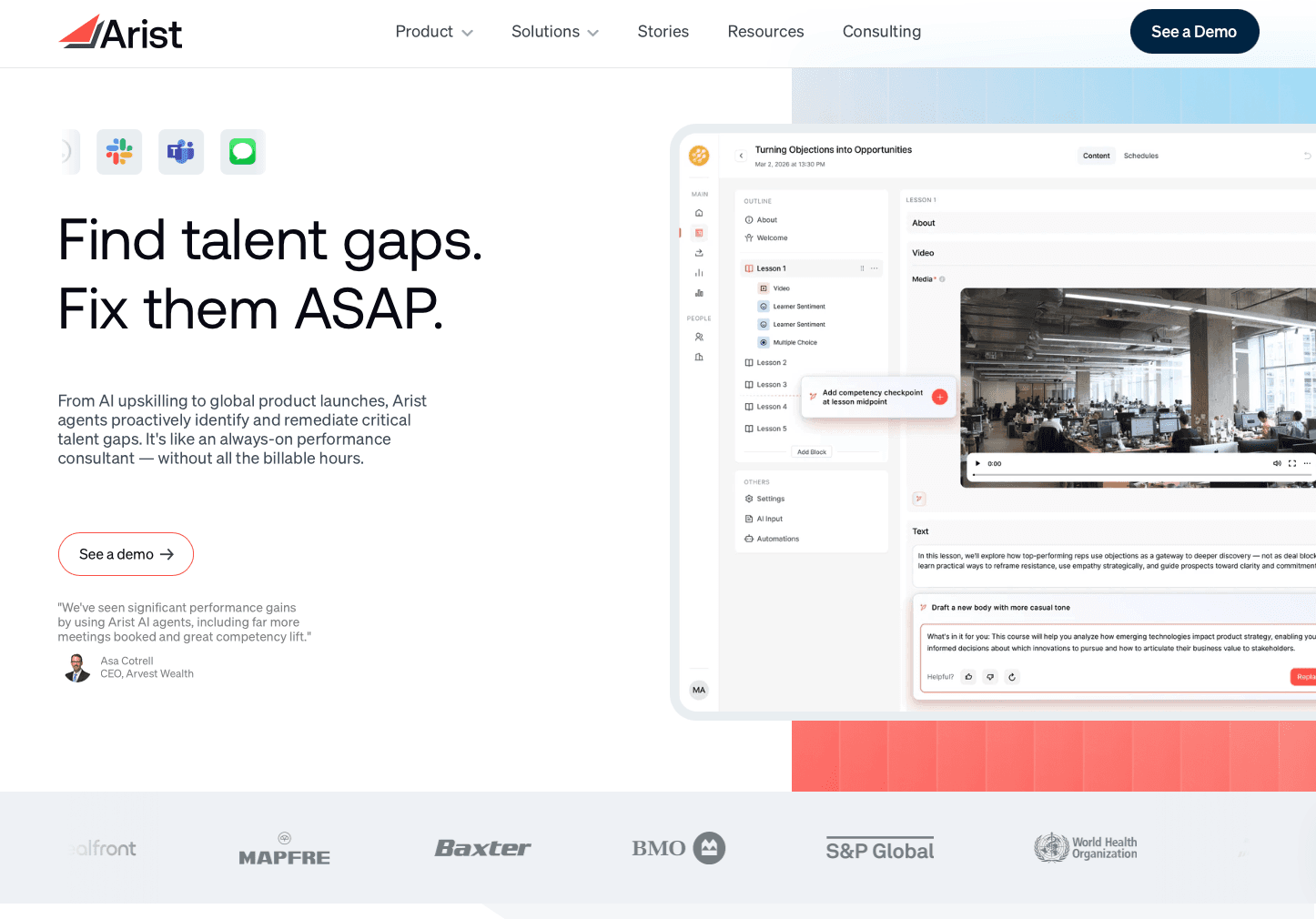
Arist handles the full workflow: needs analysis, content creation, delivery, and analytics in one connected system, with no handoffs between disconnected tools.
Training arrives through SMS, Teams, Slack, or WhatsApp. No new app. No separate login. Arist customers consistently see completion rates above 95%, compared to the 20-30% ceiling most LMS solutions hit.
What the AI Agents Actually Do
Six agents handle the work end-to-end:
Needs Analysis Agent interviews thousands of employees via voice or text, pulling CRM and HRIS data to surface skill gaps
Creator Agent builds personalized training content in hours across 40+ languages and multiple roles
Smart Routing Agent schedules and triggers delivery based on employee data, including wage and hour compliance for frontline teams
Analytics Agent tracks outcomes in real time and recommends next steps
Proven Results
Wolters Kluwer trained 30,000 people in three weeks and saved $1.62M. Novartis launched 140 programs with 70,000+ enrollments in six months, cutting creation time from six weeks to four hours. Medtronic saw 3x rep adoption after switching to in-the-flow-of-work delivery.
Arist is ISO 27001 and SOC 2 certified, WCAG 2.1 AA compliant, and maintains 99%+ uptime.
Axonify
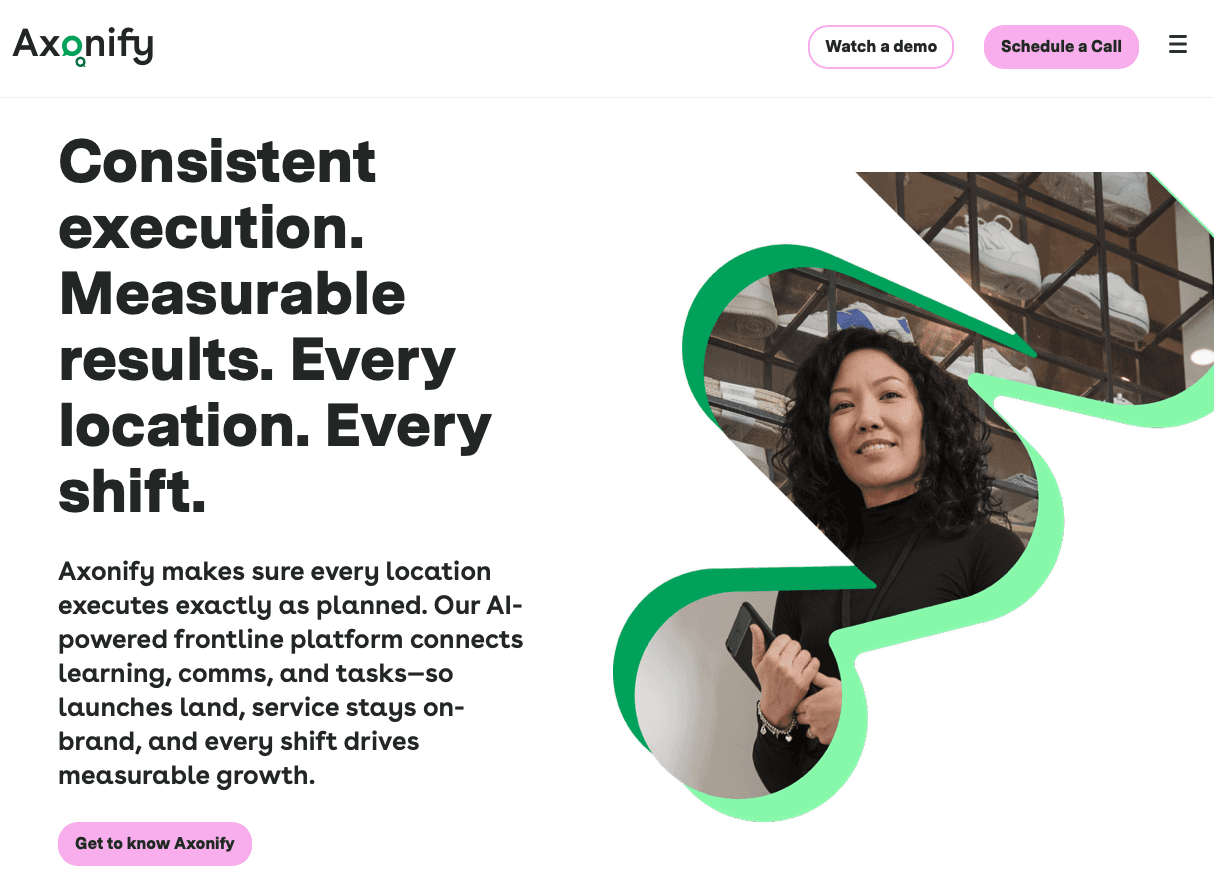
Axonify is built around short training sessions that adapt to individual knowledge gaps, adjusting what each employee sees based on what they don't know yet.
What They Offer
Pre-built 5-minute learning bursts designed to reinforce training over time through spaced repetition
Gamification through points, leaderboards, badges, and rewards to keep frontline workers engaged
Real-time analytics tracking knowledge retention and program effectiveness across teams
Mobile-optimized access designed for frontline and deskless workers with corporate training software
Good for: Retail, manufacturing, or hospitality organizations that want gamified reinforcement and can support an app-based deployment model.
Limitation: Axonify requires a dedicated iOS or Android app, which creates real adoption friction for distributed teams. There is no native delivery through SMS, Teams, or Slack.
Qstream
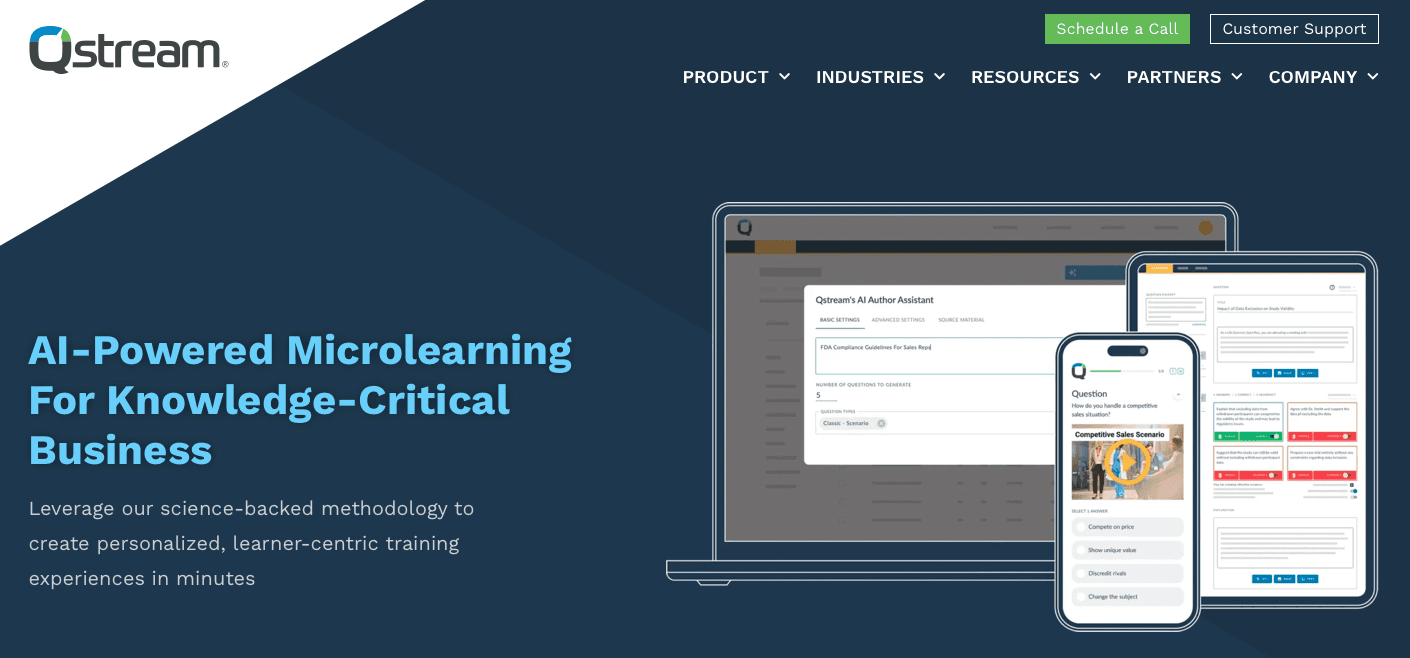
Qstream delivers short, scenario-based challenges using spaced repetition: questions resurface at calculated intervals so concepts stick instead of fade.
What They Offer
Gamified elements like points and leaderboards, with content delivered through email, mobile, or Microsoft Teams
An AI content generator that builds and customizes questions from uploaded materials
Proven to increase knowledge retention by up to 170% and improve sales proficiency by 17% on average
A recently launched SMS delivery channel, added in January 2026
Good for: Sales and training teams focused on quiz-based reinforcement who want an approach based on spaced repetition, a well-studied method for improving retention.
Limitation: Setup and integration can be time-consuming, and customization options feel limited for organizations with specific requirements. The strength is in out-of-the-box quiz delivery, not full training workflows.
Degreed
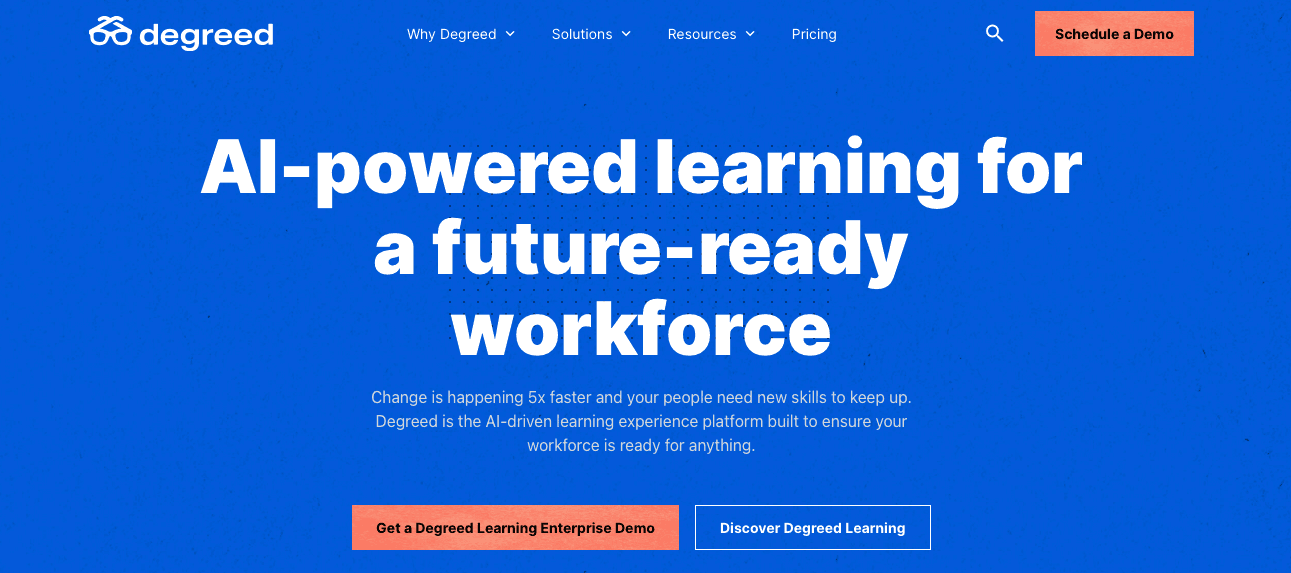
Degreed pulls content from multiple sources (internal libraries, external providers, articles, videos, and podcasts) into one place, then maps it to workforce capability gaps.
What They Offer
AI-powered skill intelligence to spot new trends and gaps across the workforce
Personalized learning pathways that aggregate internal and external content into one experience
Social learning elements, content curation tools, and integrations with major HR systems
A skills-first approach that connects learning directly to career development and upskilling needs
Good for: Large enterprises that want to consolidate content from multiple providers into a single skills-focused experience with strong analytics on capability development.
Limitation: Employees still log into a separate portal to access content. Degreed aggregates learning and has a Microsoft Teams app, but it is still mainly built around learning discovery, content aggregation, and skills tracking. That distinction matters when speed and adoption are the primary concerns.
Docebo
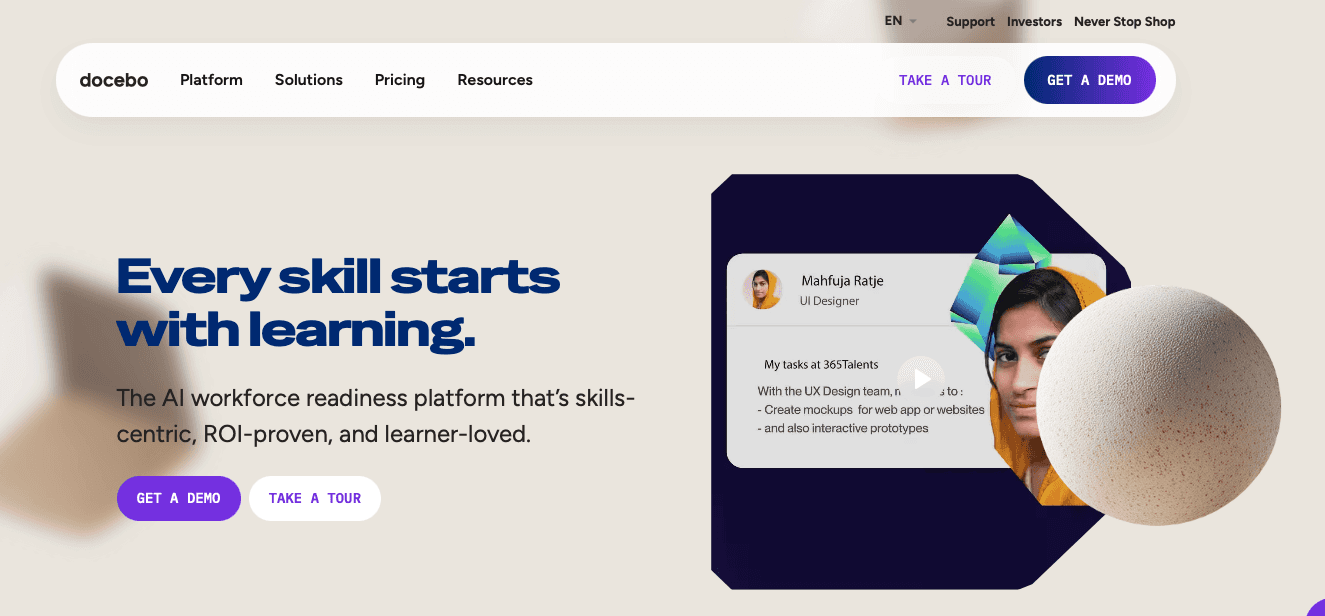
Docebo is an AI-powered learning system used by 3,900+ organizations, serving employees, partners, and customers from one place across onboarding, compliance, enablement, and customer education.
What They Offer
Go.Learn, a native mobile app free on iOS and Android, designed for on-the-go learning
AI-powered content creation tools with drag-and-drop editing, rephrase and translate features, and support for generating interactive assessments
Automated workflows for assignments, enrollments, and routine admin tasks, supporting 30 million learners across the base
Integrations with Microsoft 365, Salesforce, and other common enterprise systems
Good for: Mid-to-large enterprises that need a full-featured LMS to serve multiple audiences from one system, and are comfortable with app-based delivery.
Limitation: Some interactive elements lose fidelity moving from desktop to mobile, creating usability friction. Employees still need to download an app and log in separately, which quietly kills adoption before training even starts.
EdApp (SC Training)
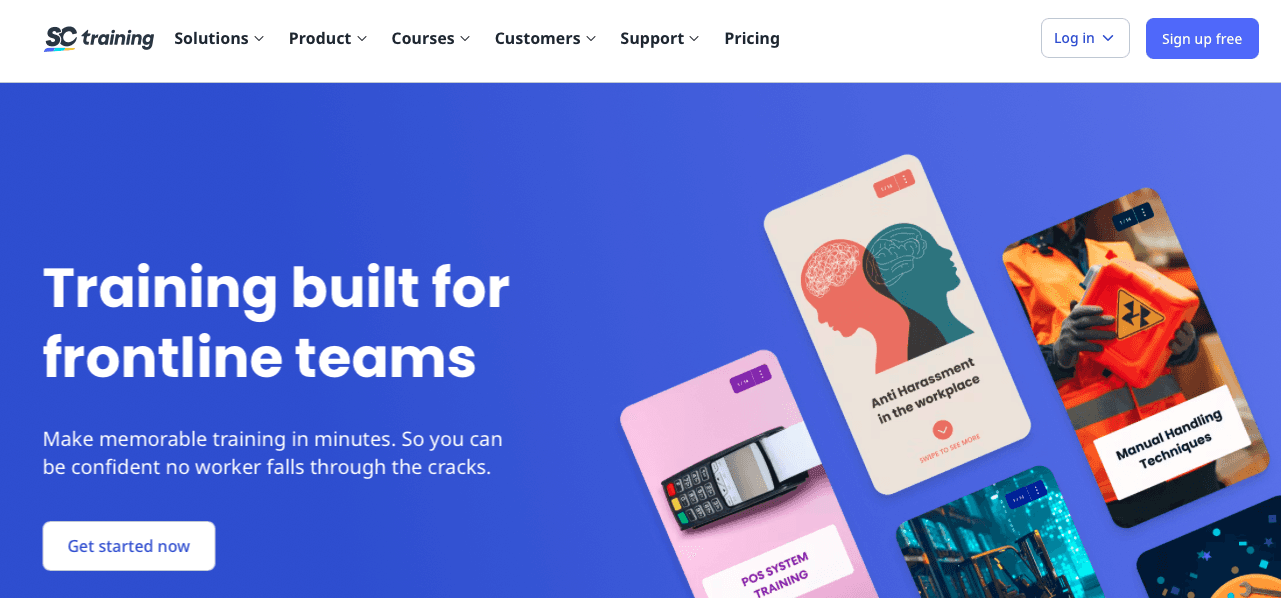
EdApp, now rebranded as SC Training, is a mobile-first learning system built around courses, lessons, and completion tracking, with the interface optimized for phones.
What They Offer
Over 1,000 editable courses built with industry partners and certified by subject matter experts, ready to customize and deploy quickly
An AI engine that converts documents and ideas into training content up to 3x faster, including first drafts, text rewrites, and narration
Translation into 100+ languages with a single click, removing the need for external translator costs
Shareable access via link or QR code, distributed through Slack, Teams, SMS, or a printed handout
Good for: Frontline teams in retail, hospitality, and manufacturing who need to move fast using a large pre-built course library.
Limitation: EdApp is structured as a course-based system. Learners may still be pushed into a separate EdApp or SC Training experience, which adds friction that quietly erodes adoption across distributed teams.
LinkedIn Learning
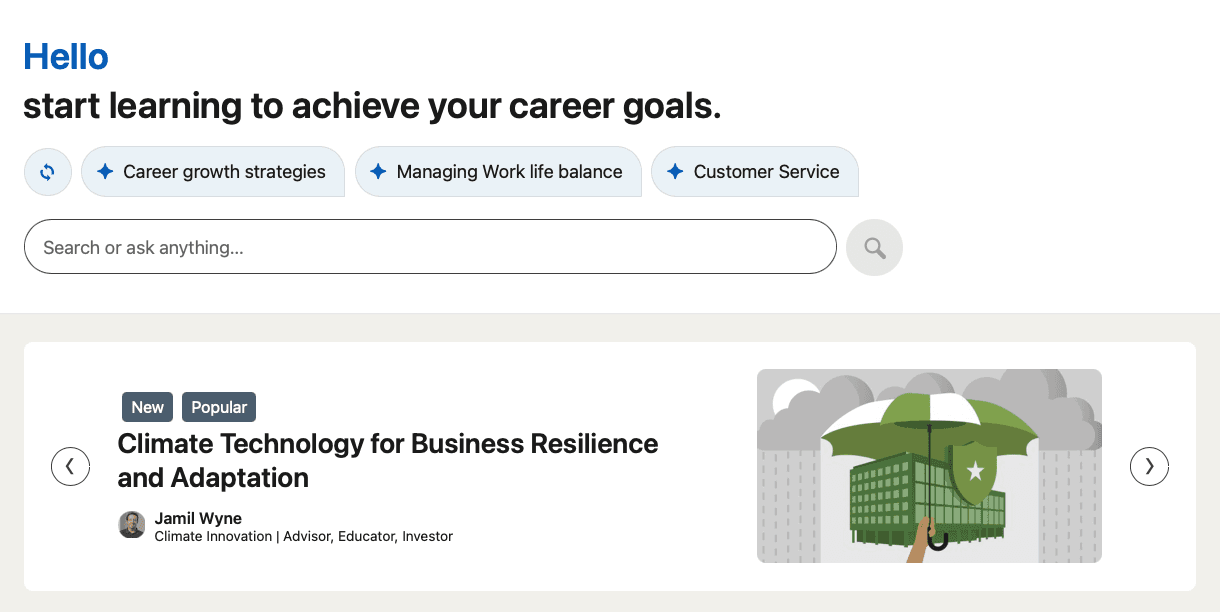
LinkedIn Learning gives employees access to a large catalog of expert-led video courses tied to their LinkedIn profiles, where completed courses appear as credentials.
What They Offer
Thousands of courses across business, tech, and creative skills, with new content added regularly
AI-driven recommendations based on job role and career path
LinkedIn profile integration so completed learning shows up as verifiable credentials
Organization-level analytics to track skill development across teams
Good for: Knowledge worker development programs where self-directed, on-demand learning fits the culture.
Limitation: Built around long-form video, which works for someone at a desk with an hour to spare. It does not work for frontline workers or field reps who need quick, targeted training mid-workday. No native delivery through SMS, Slack, or Teams, and employees usually access learning through LinkedIn Learning, a mobile app, or an LMS integration.
Why Arist Is the Best Mobile Learning Solution
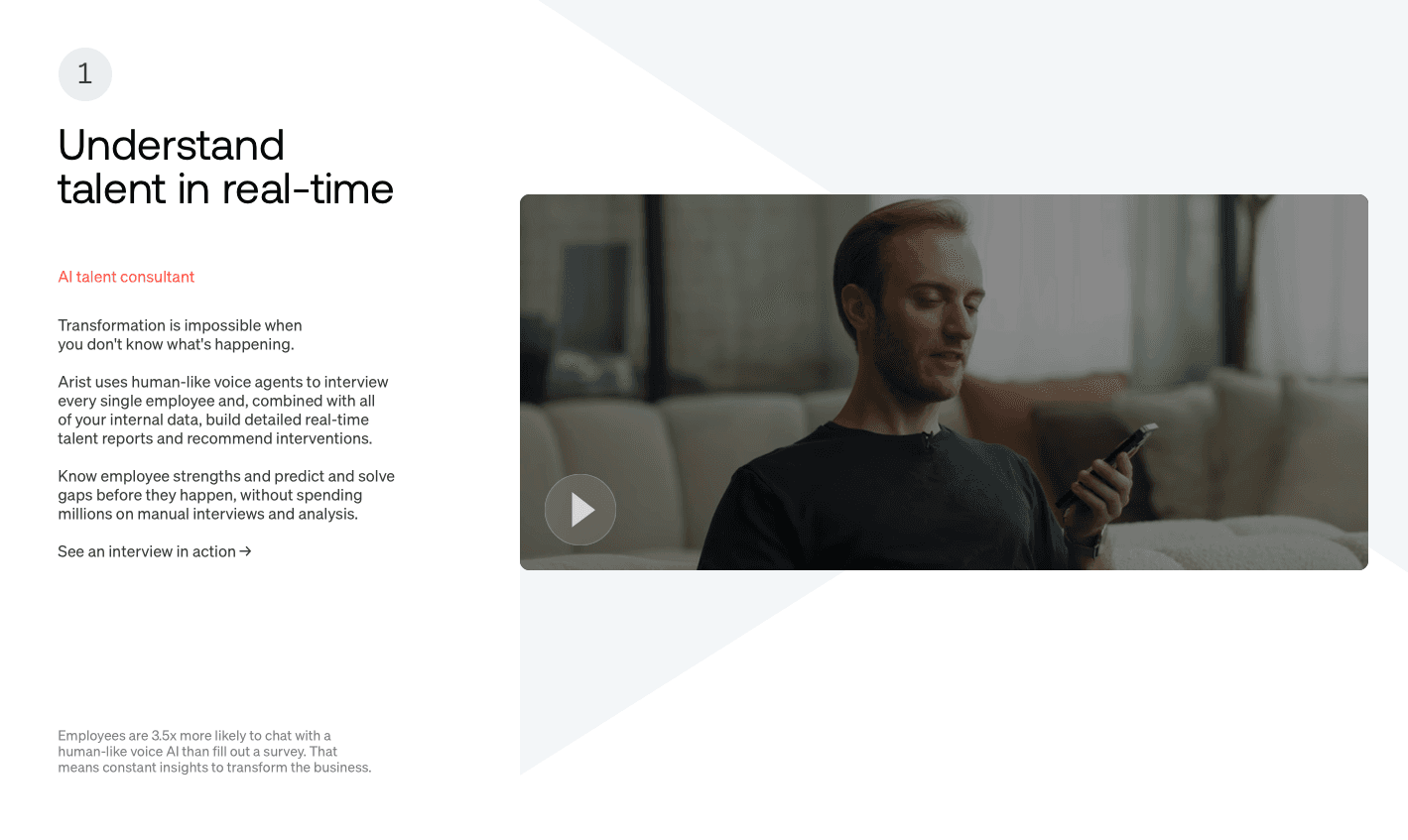
Most tools on this list solve one part of the problem. Arist solves all of it, from needs analysis through delivery and analytics, in one connected workflow.
Traditional employee training methods average around 50% completion. Mobile boosts that to roughly 85%. Arist pushes past both by removing the last remaining barrier: the login. No app to download. No portal to remember. Training arrives in SMS, Teams, or Slack, takes minutes to complete, and ties directly to measurable business outcomes like rep adoption, methodology adherence, and cost savings.
That is why completion rates consistently exceed 95%, and why clients like Wolters Kluwer and Novartis saw results in weeks instead of quarters.
FAQs
Which mobile learning tool works best for frontline workers?
Arist delivers training through SMS, Teams, and Slack without requiring any app download, which removes the biggest adoption barrier for frontline teams. Axonify and EdApp also focus on frontline workers but require separate apps, creating friction that quietly kills completion rates.
How do I choose between a traditional LMS and a true mobile learning tool?
If your team works at desks and has dedicated time for training, a traditional LMS might suffice. If they're in the field, on the floor, or constantly moving, choose a tool that delivers content inside messaging apps they already use daily: no separate login required.
What completion rates should I expect from different mobile learning approaches?
Traditional LMS systems average around 8% completion, mobile-optimized apps push that to 80-85%, and SMS or chat-based delivery (like Arist) consistently exceeds 95% because there's zero friction between the employee and the content.
Final Thoughts on Mobile Training Delivery
The gap between assigned training and completed training usually comes down to friction. As a mobile learning platform, Arist closes that gap by delivering through SMS, Teams, or Slack. No separate login, no app to download, no friction between the employee and the content. Your content gets seen, your teams get trained, and your completion rates prove it. That's the whole point.
You're probably familiar with this pattern: you assign training, send reminders, and watch completion rates plateau somewhere between 10% and 30%. The usual explanation is that employees are too busy or don't care enough. The real issue is simpler. Every login, every app download, every step between an employee and the content creates a point where people drop off. Mobile learning platforms that deliver training directly through SMS, Teams, or Slack eliminate those steps entirely. They consistently hit completion rates above 90% while traditional systems struggle to break 30%.
TLDR:
Mobile learning that requires app downloads sees 20-30% completion; delivery via SMS, Teams, or Slack hits 95%+.
Some modern solutions automate needs analysis, content creation, delivery, and analytics in one workflow.
Wolters Kluwer trained 30,000 people in 3 weeks and saved $1.62M; Novartis cut creation time from 6 weeks to 4 hours.
Many tools still rely on apps, portals, or account-based access; Arist delivers training where employees already work daily.
Some platforms automate end-to-end enablement through AI agents, replacing 5+ disconnected platforms.
What Are Mobile Learning Platforms?
Mobile learning delivers training through smartphones, tablets, and messaging apps instead of desktop computers or dedicated portals. For frontline workers, field reps, and distributed teams who rarely sit at a desk, this distinction matters. 47% of organizations now use mobile devices in their training programs, but adoption alone doesn't equal effectiveness.
There is a gap between true mobile learning and a traditional LMS with a mobile app. The latter still requires employees to log in, search for content, and carve out dedicated time. The average LMS completion rate sits around 8%.
True mobile learning meets employees inside the tools they already use (SMS, Teams, and Slack) so training arrives in the flow of work. No new login. No separate app. No friction.
How We Ranked Mobile Learning Platforms
Every tool on this list was measured against one underlying question: does this actually get used?
Delivery channel flexibility (SMS, Teams, Slack, WhatsApp vs. app-only)
Whether frontline workers can access content without downloading anything
AI-powered content creation and personalization capabilities
Completion and engagement rates where data is publicly available
Speed from content creation to deployment
Integration with existing enterprise systems like HRIS and CRM
How much friction stands between an employee and the content
That last point carries the most weight. A solution requiring a separate login or a new app will lose to one that delivers training inside tools employees already check dozens of times a day.
Platform | Delivery Channel | Best For | Completion Rate |
|---|---|---|---|
Arist | SMS, Teams, Slack, WhatsApp | Enterprise teams needing end-to-end enablement without friction | 95%+ |
Axonify | iOS/Android app | Frontline workers in retail, manufacturing, hospitality | Not publicly reported |
Qstream | Email, mobile, Teams, SMS | Sales teams focused on quiz-based spaced repetition | Up to 170% retention lift |
Degreed | Web portal, mobile app | Large enterprises consolidating content from multiple providers | Not publicly reported |
Docebo | iOS/Android app (Go.Learn) | Mid-to-large enterprises serving employees, partners, and customers | Not publicly reported |
EdApp (SC Training) | iOS/Android app, link/QR code | Frontline teams needing fast deployment from a pre-built library | Not publicly reported |
LinkedIn Learning | Web portal, mobile app | Knowledge workers with time for self-directed video learning | Not publicly reported |
Best Overall Mobile Learning Solution: Arist
Arist handles the full workflow: needs analysis, content creation, delivery, and analytics in one connected system, with no handoffs between disconnected tools.
Training arrives through SMS, Teams, Slack, or WhatsApp. No new app. No separate login. Arist customers consistently see completion rates above 95%, compared to the 20-30% ceiling most LMS solutions hit.
What the AI Agents Actually Do
Six agents handle the work end-to-end:
Needs Analysis Agent interviews thousands of employees via voice or text, pulling CRM and HRIS data to surface skill gaps
Creator Agent builds personalized training content in hours across 40+ languages and multiple roles
Smart Routing Agent schedules and triggers delivery based on employee data, including wage and hour compliance for frontline teams
Analytics Agent tracks outcomes in real time and recommends next steps
Proven Results
Wolters Kluwer trained 30,000 people in three weeks and saved $1.62M. Novartis launched 140 programs with 70,000+ enrollments in six months, cutting creation time from six weeks to four hours. Medtronic saw 3x rep adoption after switching to in-the-flow-of-work delivery.
Arist is ISO 27001 and SOC 2 certified, WCAG 2.1 AA compliant, and maintains 99%+ uptime.
Axonify
Axonify is built around short training sessions that adapt to individual knowledge gaps, adjusting what each employee sees based on what they don't know yet.
What They Offer
Pre-built 5-minute learning bursts designed to reinforce training over time through spaced repetition
Gamification through points, leaderboards, badges, and rewards to keep frontline workers engaged
Real-time analytics tracking knowledge retention and program effectiveness across teams
Mobile-optimized access designed for frontline and deskless workers with corporate training software
Good for: Retail, manufacturing, or hospitality organizations that want gamified reinforcement and can support an app-based deployment model.
Limitation: Axonify requires a dedicated iOS or Android app, which creates real adoption friction for distributed teams. There is no native delivery through SMS, Teams, or Slack.
Qstream
Qstream delivers short, scenario-based challenges using spaced repetition: questions resurface at calculated intervals so concepts stick instead of fade.
What They Offer
Gamified elements like points and leaderboards, with content delivered through email, mobile, or Microsoft Teams
An AI content generator that builds and customizes questions from uploaded materials
Proven to increase knowledge retention by up to 170% and improve sales proficiency by 17% on average
A recently launched SMS delivery channel, added in January 2026
Good for: Sales and training teams focused on quiz-based reinforcement who want an approach based on spaced repetition, a well-studied method for improving retention.
Limitation: Setup and integration can be time-consuming, and customization options feel limited for organizations with specific requirements. The strength is in out-of-the-box quiz delivery, not full training workflows.
Degreed
Degreed pulls content from multiple sources (internal libraries, external providers, articles, videos, and podcasts) into one place, then maps it to workforce capability gaps.
What They Offer
AI-powered skill intelligence to spot new trends and gaps across the workforce
Personalized learning pathways that aggregate internal and external content into one experience
Social learning elements, content curation tools, and integrations with major HR systems
A skills-first approach that connects learning directly to career development and upskilling needs
Good for: Large enterprises that want to consolidate content from multiple providers into a single skills-focused experience with strong analytics on capability development.
Limitation: Employees still log into a separate portal to access content. Degreed aggregates learning and has a Microsoft Teams app, but it is still mainly built around learning discovery, content aggregation, and skills tracking. That distinction matters when speed and adoption are the primary concerns.
Docebo
Docebo is an AI-powered learning system used by 3,900+ organizations, serving employees, partners, and customers from one place across onboarding, compliance, enablement, and customer education.
What They Offer
Go.Learn, a native mobile app free on iOS and Android, designed for on-the-go learning
AI-powered content creation tools with drag-and-drop editing, rephrase and translate features, and support for generating interactive assessments
Automated workflows for assignments, enrollments, and routine admin tasks, supporting 30 million learners across the base
Integrations with Microsoft 365, Salesforce, and other common enterprise systems
Good for: Mid-to-large enterprises that need a full-featured LMS to serve multiple audiences from one system, and are comfortable with app-based delivery.
Limitation: Some interactive elements lose fidelity moving from desktop to mobile, creating usability friction. Employees still need to download an app and log in separately, which quietly kills adoption before training even starts.
EdApp (SC Training)
EdApp, now rebranded as SC Training, is a mobile-first learning system built around courses, lessons, and completion tracking, with the interface optimized for phones.
What They Offer
Over 1,000 editable courses built with industry partners and certified by subject matter experts, ready to customize and deploy quickly
An AI engine that converts documents and ideas into training content up to 3x faster, including first drafts, text rewrites, and narration
Translation into 100+ languages with a single click, removing the need for external translator costs
Shareable access via link or QR code, distributed through Slack, Teams, SMS, or a printed handout
Good for: Frontline teams in retail, hospitality, and manufacturing who need to move fast using a large pre-built course library.
Limitation: EdApp is structured as a course-based system. Learners may still be pushed into a separate EdApp or SC Training experience, which adds friction that quietly erodes adoption across distributed teams.
LinkedIn Learning
LinkedIn Learning gives employees access to a large catalog of expert-led video courses tied to their LinkedIn profiles, where completed courses appear as credentials.
What They Offer
Thousands of courses across business, tech, and creative skills, with new content added regularly
AI-driven recommendations based on job role and career path
LinkedIn profile integration so completed learning shows up as verifiable credentials
Organization-level analytics to track skill development across teams
Good for: Knowledge worker development programs where self-directed, on-demand learning fits the culture.
Limitation: Built around long-form video, which works for someone at a desk with an hour to spare. It does not work for frontline workers or field reps who need quick, targeted training mid-workday. No native delivery through SMS, Slack, or Teams, and employees usually access learning through LinkedIn Learning, a mobile app, or an LMS integration.
Why Arist Is the Best Mobile Learning Solution
Most tools on this list solve one part of the problem. Arist solves all of it, from needs analysis through delivery and analytics, in one connected workflow.
Traditional employee training methods average around 50% completion. Mobile boosts that to roughly 85%. Arist pushes past both by removing the last remaining barrier: the login. No app to download. No portal to remember. Training arrives in SMS, Teams, or Slack, takes minutes to complete, and ties directly to measurable business outcomes like rep adoption, methodology adherence, and cost savings.
That is why completion rates consistently exceed 95%, and why clients like Wolters Kluwer and Novartis saw results in weeks instead of quarters.
FAQs
Which mobile learning tool works best for frontline workers?
Arist delivers training through SMS, Teams, and Slack without requiring any app download, which removes the biggest adoption barrier for frontline teams. Axonify and EdApp also focus on frontline workers but require separate apps, creating friction that quietly kills completion rates.
How do I choose between a traditional LMS and a true mobile learning tool?
If your team works at desks and has dedicated time for training, a traditional LMS might suffice. If they're in the field, on the floor, or constantly moving, choose a tool that delivers content inside messaging apps they already use daily: no separate login required.
What completion rates should I expect from different mobile learning approaches?
Traditional LMS systems average around 8% completion, mobile-optimized apps push that to 80-85%, and SMS or chat-based delivery (like Arist) consistently exceeds 95% because there's zero friction between the employee and the content.
Final Thoughts on Mobile Training Delivery
The gap between assigned training and completed training usually comes down to friction. As a mobile learning platform, Arist closes that gap by delivering through SMS, Teams, or Slack. No separate login, no app to download, no friction between the employee and the content. Your content gets seen, your teams get trained, and your completion rates prove it. That's the whole point.
Related Resources

Article
AI Upskilling: A Practical Guide for Building Your Team in June 2026
Learn how to build AI upskilling programs that drive behavior change. Practical guide with frameworks, metrics, and proven strategies for June 2026.
Read more
Article
Salesforce Training for Beginners: Complete June 2026 Guide
Complete Salesforce training for beginners in June 2026. Learn Trailhead, certifications, admin paths, and career options with this full overview.
Read more
Bring real impact to your people
We care about solving meaningful problems and being thought partners first and foremost. Arist is used and loved by the Fortune 500 — and we'd love to support your goals.
Curious to get a demo or free trial? We'd love to chat:

Bring real impact to your people
We care about solving meaningful problems and being thought partners first and foremost. Arist is used and loved by the Fortune 500 — and we'd love to support your goals.
Curious to get a demo or free trial? We'd love to chat:
Bring real impact to your people
We care about solving meaningful problems and being thought partners first and foremost. Arist is used and loved by the Fortune 500 — and we'd love to support your goals.
Curious to get a demo or free trial? We'd love to chat: