Best Spaced Learning Platforms for Sales Teams in December 2025
Best Spaced Learning Platforms for Sales Teams in December 2025
Building lasting sales knowledge requires more than delivering training; it demands reinforcing it at the exact moments when memory begins to fade. Spaced learning platforms make this possible by resurfacing critical concepts over time, making sure reps stay sharp on product details, competitive positioning, and objection handling long after the initial lesson. The solutions we reviewed span from classic LMS systems to adaptive, AI-driven tools that identify and handle individual knowledge gaps, but the most effective ones focus on measurable retention and integrate smoothly into a rep’s daily workflow.
TLDR:
Spaced learning boosts sales knowledge retention by up to 50% for two years vs. one-time training
Some of the best tools deliver microlearning through SMS, Slack, or Teams without separate app downloads
Best systems integrate with Gong and Salesforce to trigger training when performance gaps appear
Modern AI tools can automatically convert 5,000+ pages into spaced courses with 84% completion and 95% adoption in 6 minutes
Adaptive systems use AI-powered personalization to target individual knowledge gaps instead of sending generic training paths
What Are Spaced Learning Systems for Sales Training?
Spaced learning systems deliver training content in bite-sized chunks spread across days or weeks. This approach revisits key concepts at strategic intervals to reinforce memory pathways.
For sales teams, product knowledge, objection handling, and competitive positioning fade quickly without reinforcement. The forgetting curve shows that we lose roughly 70% of new information within 24 hours without repetition. Spaced learning reintroduces critical concepts just as they're about to be forgotten.
Instead of a three-hour product training that reps forget by next week, spaced learning breaks that content into five-minute lessons delivered over several weeks. Each lesson builds on the previous one while reinforcing core concepts, helping sales teams retain what they learn when they need it in live conversations with prospects.
How We Assessed These Spaced Learning Systems
We assessed these systems based on what actually moves the needle for sales teams:
Spaced repetition capabilities: How well does each system space out content delivery over time? Can it automatically schedule reinforcement at optimal intervals, or does it require manual setup?
Microlearning delivery: Does the system break content into digestible chunks that fit into a rep's day, or does it rely on longer training sessions that pull them away from selling?
AI-powered personalization: Can the system adapt content based on individual knowledge gaps and performance, or does everyone get the same generic training path?
Mobile accessibility: Do reps need to log into a separate app or portal, or does training meet them where they already work in tools like Slack, SMS, or Teams?
Sales workflow integration: Does it connect with CRM and conversation intelligence tools to trigger learning when gaps appear, or is it disconnected from daily selling activities?
Knowledge retention analytics: Can you identify specific knowledge gaps by rep, team, or concept, or are you stuck with basic completion metrics?
Measurable impact: Do you get data showing how training affects quota attainment and deal velocity, or just course completion rates?
Arist
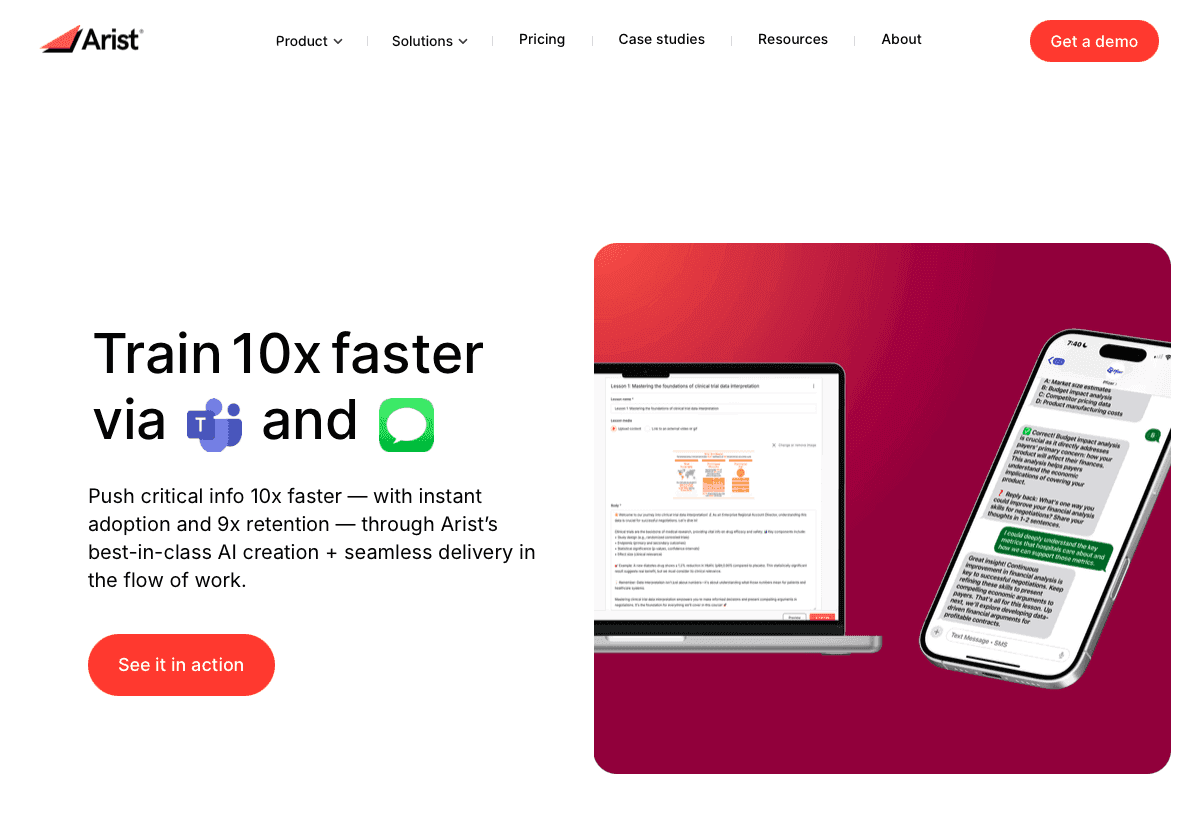
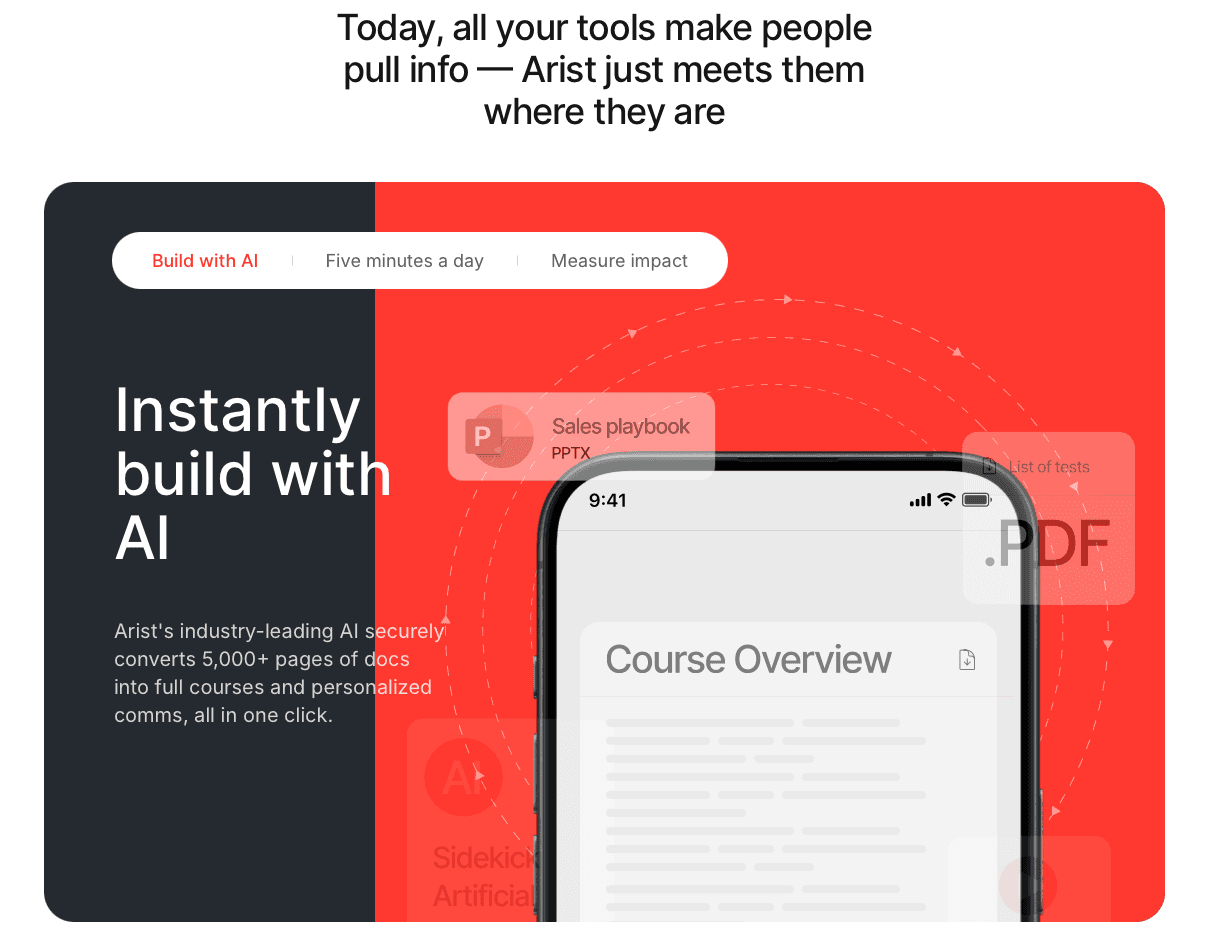
Arist converts product docs, battle cards, and playbooks into spaced learning delivered through SMS, Slack, or Teams. Its AI can work through as many as 5,000 pages and turn that material into clear, multi-week courses spaced at intervals proven to support steady skill growth.
When Gong flags a positioning issue or Salesforce shows a deal slowing down, Arist sends targeted learning to the exact rep who needs it. This keeps coaching timely, specific, and tied to real activity in the pipeline. Sales teams report 84% completion rates, 95% adoption within the first six minutes, and retention gains reaching 50% that continue for up to two years. These results give leaders a practical way to keep teams sharp and aligned with current messaging without adding extra meetings or manual follow-ups.
Axonify
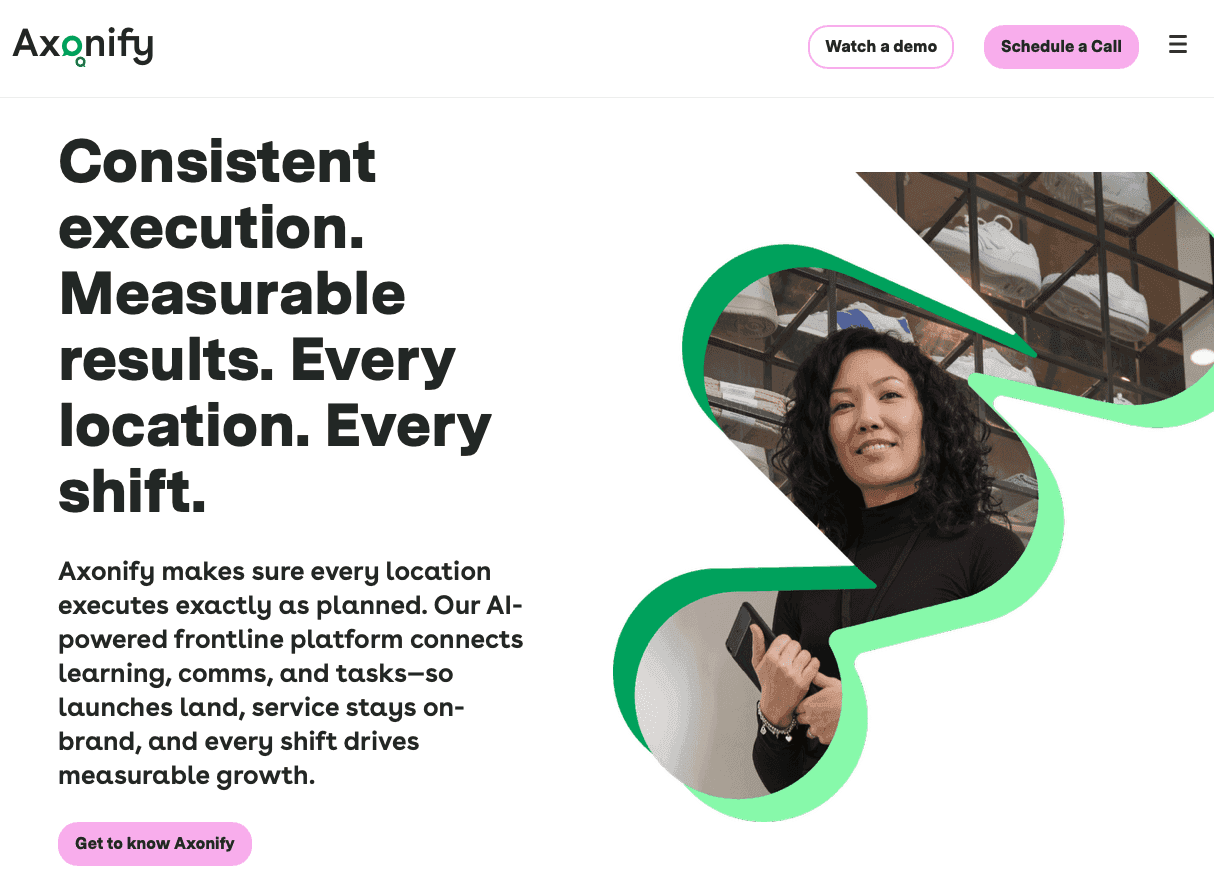
Axonify delivers 3–5 minute daily training sessions for frontline workforces. Their system adapts content based on individual performance, using spaced repetition to reinforce concepts over time.
What They Offer
AI-powered adaptive learning engine that personalizes content paths
Gamification with points, badges, and leaderboards
Mobile-first design for frontline worker access
Real-time analytics and ROI measurement
Axonify works well for large frontline teams in retail or manufacturing where daily micro-training builds team consistency. Their frontline focus means advanced sales methodologies and complex B2B scenarios receive less sophisticated treatment than dedicated sales enablement requires.
The system excels at building daily learning habits but falls short on sales-specific intelligence and deep workflow integration that complex selling environments need.
SC Training
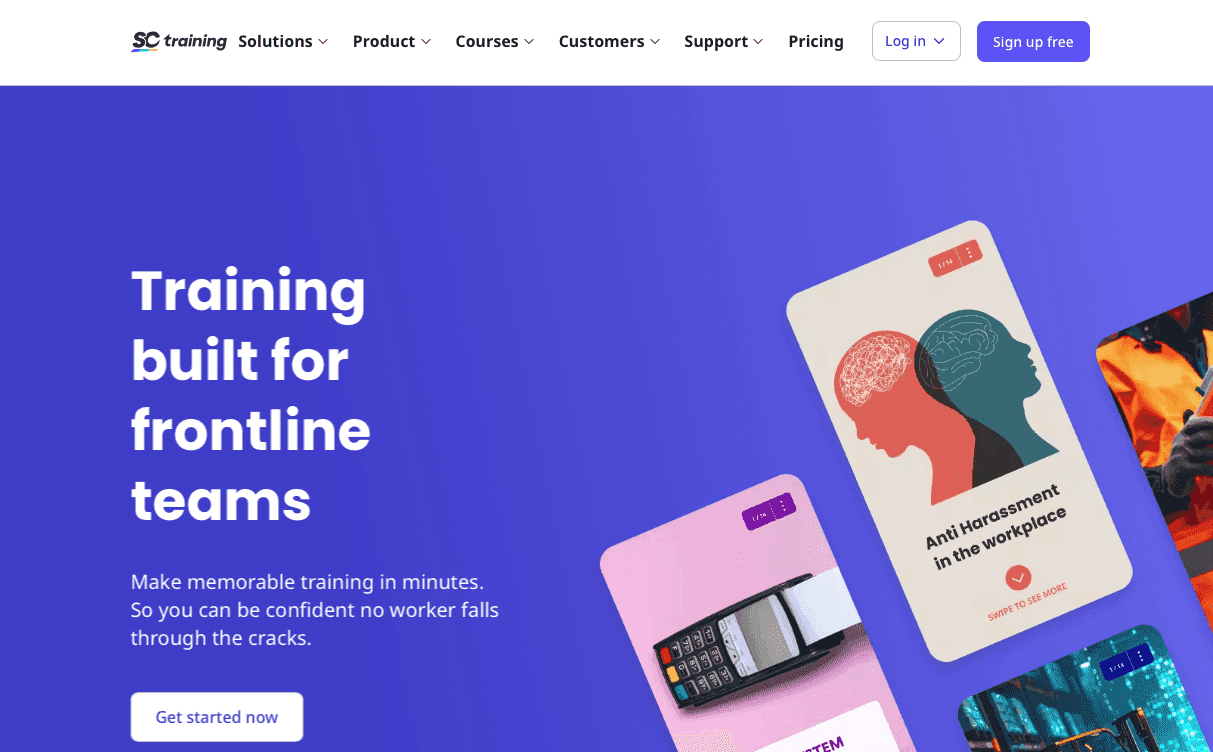
SC Training operates as a mobile-first LMS built around microlearning and gamification. Their Brain Boost feature uses the SM-2 algorithm for spaced repetition, automatically reintroducing content at calculated intervals.
What They Offer
Brain Boost spaced repetition using SM-2 algorithm
Template-based course creation with gamification elements
Mobile-optimized delivery across devices
Free tier with extensive course library access
SC Training works for small to medium teams needing quick deployment on tight budgets, particularly for straightforward onboarding or compliance training. Brain Boost requires enterprise plans, and the system lacks sophisticated AI personalization for complex sales scenarios and adaptive learning paths that respond to individual performance gaps.
Highspot
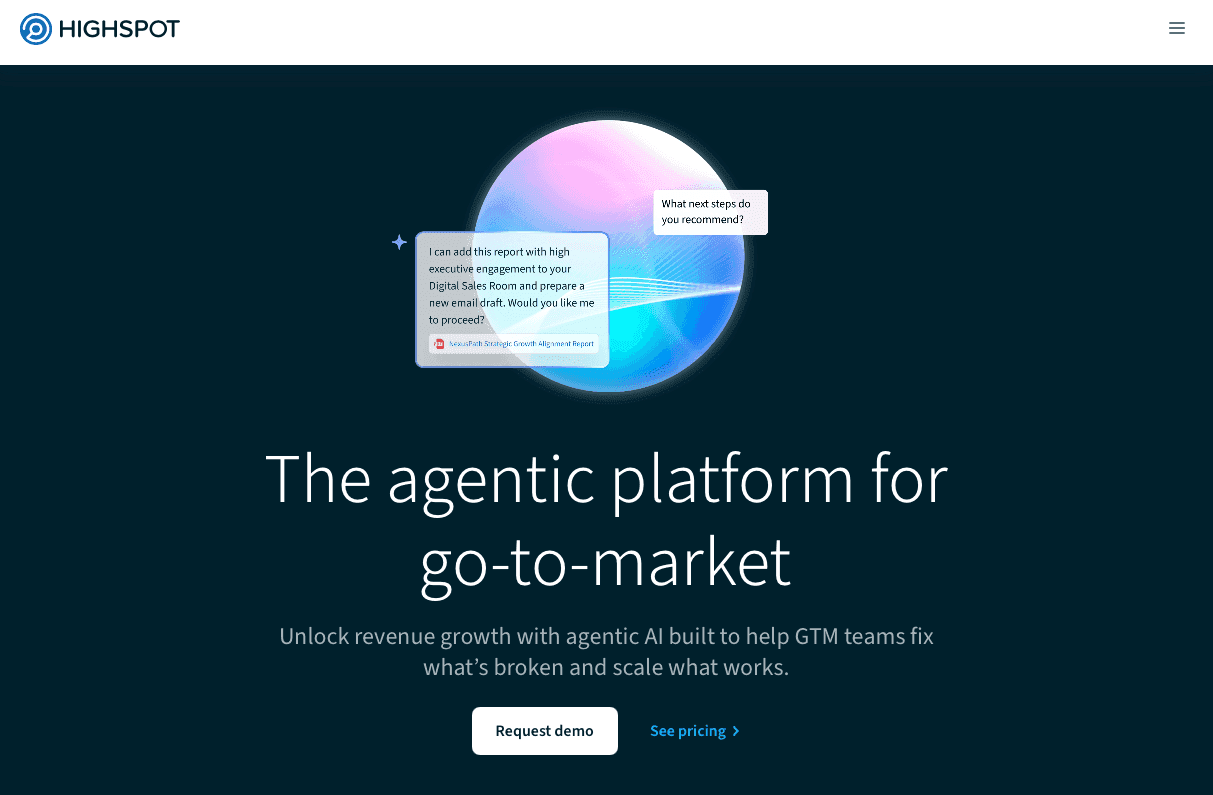
Highspot is a sales enablement system that combines content management, training tools, and buyer engagement tracking. The focus is on content optimization and sales process support instead of just dedicated learning experiences.
What They Offer
Content management and optimization for sales materials
Sales training features that work alongside content delivery
Analytics on content performance and engagement
Integration with major CRM systems and sales tools
Highspot works well for organizations that focus on content management and sales asset optimization. Training functions as a secondary feature to content delivery and buyer engagement tracking.
The limitation appears in how the system handles learning. Training capabilities remain secondary to content management functions, without dedicated spaced repetition algorithms or cognitive science-based learning approaches. The system treats training as content delivery instead of scientifically-optimized learning experiences with retention measurement.
Highspot excels at sales content management but provides limited learning science applications compared to dedicated spaced learning systems designed for knowledge retention.
Absorb LMS
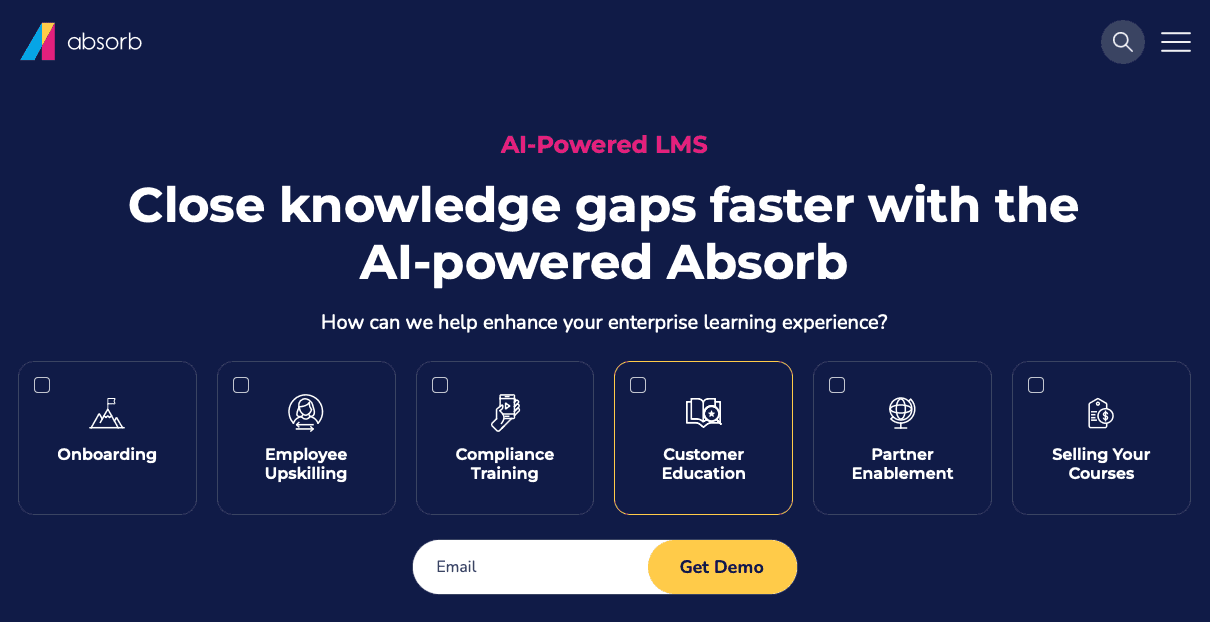
Absorb LMS is a learning management system that has added microlearning features to its core course delivery and compliance tracking functions.
What They Offer
Course management with mobile learning access and basic microlearning modules
Reporting and compliance tracking features
Integration options with enterprise systems
Absorb works for large enterprises needing LMS functionality for diverse training needs beyond sales, where learning management infrastructure takes priority over sales knowledge retention.
The limitation is its foundation as a traditional LMS instead of a spaced learning system. It lacks the cognitive science foundations and automated spaced repetition that drive sales knowledge retention. Training follows conventional course-completion models instead of continuous reinforcement patterns that combat knowledge decay.
TalentLMS
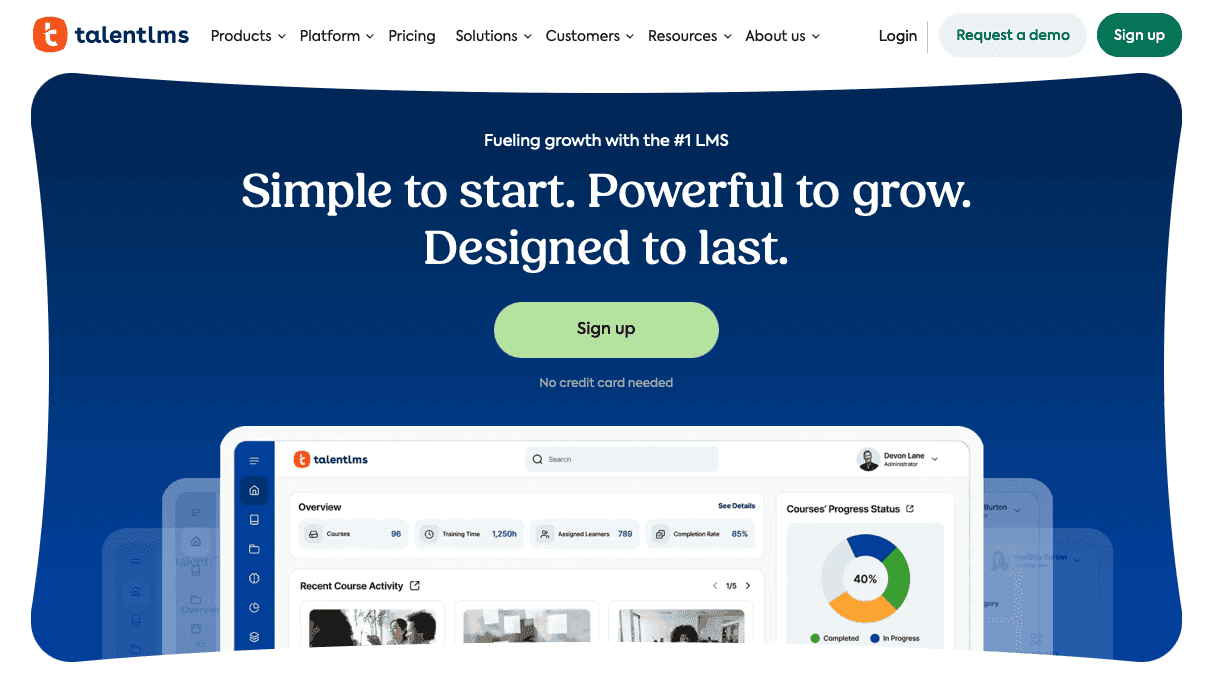
TalentLMS is a cloud-based LMS built for quick deployment and straightforward course delivery. The system works for small to medium organizations that need basic training without complex learning requirements.
What They Offer
Course creation tools with pre-built templates for faster setup
Mobile learning access for training on the go
Basic reporting that tracks user progress and course completion
Lower-cost pricing tiers that fit smaller team budgets
TalentLMS fits small businesses where simplicity and cost outweigh advanced retention features or sales-specific training methods.
The system lacks spaced repetition capabilities and AI-driven personalization for sales knowledge retention. It focuses on course completion instead of long-term retention measurement or reinforcement scheduling that sales teams need.
Why Arist Is the Best Spaced Learning System for Sales Teams
84% of sales training vanishes within three months. Arist's spaced repetition algorithms counter this by boosting retention up to 50% over two years.
The system connects to tools like Gong and Salesforce to identify performance gaps. When a rep struggles with discovery questions or has stalled deals, Arist sends targeted reinforcement automatically.
Personalized Reinforcement Based on Performance Data
Each rep receives different content based on their specific gaps. Someone weak on pricing gets different lessons than a rep who needs competitive positioning help.
Lessons arrive through SMS, Slack, or Teams in five-minute segments. This achieves 95% adoption without requiring app downloads or separate logins.
FAQs
How long does spaced learning take to improve sales knowledge retention?
Spaced learning spreads content across 1–2 months, with retention improvements of up to 50% measurable within weeks and lasting up to two years.
What's the difference between spaced learning and traditional sales training?
Traditional training delivers everything in one session where 70% is forgotten within 24 hours, while spaced learning breaks content into five-minute lessons delivered over weeks to reinforce memory at optimal intervals.
Can spaced learning systems trigger training based on actual sales performance?
Yes, systems like Arist connect with tools like Gong and Salesforce to automatically send targeted lessons when specific performance gaps appear, such as weak discovery questions or stalled deals.
Do sales reps need to download separate apps for spaced learning?
Not necessarily. Some systems deliver training directly through SMS, Slack, or Teams where reps already work, achieving 95% adoption without requiring app downloads or separate logins.
How do you measure if spaced learning actually works for your sales team?
Look beyond completion rates to knowledge gap analytics that show per-learner, per-question performance, and track how training impacts quota attainment and deal velocity over time.
Final thoughts on building lasting sales knowledge
Building lasting sales knowledge requires more than one-off training; it demands continuous reinforcement delivered at the moments when memory is most likely to fade. Spaced learning systems handle this by resurfacing critical concepts over time, making sure reps stay sharp on product details, competitive positioning, and objection handling long after the initial lesson. The solutions we reviewed range from traditional LMS platforms to adaptive, AI-driven tools like Arist that trigger targeted learning based on real performance gaps.
Building lasting sales knowledge requires more than delivering training; it demands reinforcing it at the exact moments when memory begins to fade. Spaced learning platforms make this possible by resurfacing critical concepts over time, making sure reps stay sharp on product details, competitive positioning, and objection handling long after the initial lesson. The solutions we reviewed span from classic LMS systems to adaptive, AI-driven tools that identify and handle individual knowledge gaps, but the most effective ones focus on measurable retention and integrate smoothly into a rep’s daily workflow.
TLDR:
Spaced learning boosts sales knowledge retention by up to 50% for two years vs. one-time training
Some of the best tools deliver microlearning through SMS, Slack, or Teams without separate app downloads
Best systems integrate with Gong and Salesforce to trigger training when performance gaps appear
Modern AI tools can automatically convert 5,000+ pages into spaced courses with 84% completion and 95% adoption in 6 minutes
Adaptive systems use AI-powered personalization to target individual knowledge gaps instead of sending generic training paths
What Are Spaced Learning Systems for Sales Training?
Spaced learning systems deliver training content in bite-sized chunks spread across days or weeks. This approach revisits key concepts at strategic intervals to reinforce memory pathways.
For sales teams, product knowledge, objection handling, and competitive positioning fade quickly without reinforcement. The forgetting curve shows that we lose roughly 70% of new information within 24 hours without repetition. Spaced learning reintroduces critical concepts just as they're about to be forgotten.
Instead of a three-hour product training that reps forget by next week, spaced learning breaks that content into five-minute lessons delivered over several weeks. Each lesson builds on the previous one while reinforcing core concepts, helping sales teams retain what they learn when they need it in live conversations with prospects.
How We Assessed These Spaced Learning Systems
We assessed these systems based on what actually moves the needle for sales teams:
Spaced repetition capabilities: How well does each system space out content delivery over time? Can it automatically schedule reinforcement at optimal intervals, or does it require manual setup?
Microlearning delivery: Does the system break content into digestible chunks that fit into a rep's day, or does it rely on longer training sessions that pull them away from selling?
AI-powered personalization: Can the system adapt content based on individual knowledge gaps and performance, or does everyone get the same generic training path?
Mobile accessibility: Do reps need to log into a separate app or portal, or does training meet them where they already work in tools like Slack, SMS, or Teams?
Sales workflow integration: Does it connect with CRM and conversation intelligence tools to trigger learning when gaps appear, or is it disconnected from daily selling activities?
Knowledge retention analytics: Can you identify specific knowledge gaps by rep, team, or concept, or are you stuck with basic completion metrics?
Measurable impact: Do you get data showing how training affects quota attainment and deal velocity, or just course completion rates?
Arist
Arist converts product docs, battle cards, and playbooks into spaced learning delivered through SMS, Slack, or Teams. Its AI can work through as many as 5,000 pages and turn that material into clear, multi-week courses spaced at intervals proven to support steady skill growth.
When Gong flags a positioning issue or Salesforce shows a deal slowing down, Arist sends targeted learning to the exact rep who needs it. This keeps coaching timely, specific, and tied to real activity in the pipeline. Sales teams report 84% completion rates, 95% adoption within the first six minutes, and retention gains reaching 50% that continue for up to two years. These results give leaders a practical way to keep teams sharp and aligned with current messaging without adding extra meetings or manual follow-ups.
Axonify
Axonify delivers 3–5 minute daily training sessions for frontline workforces. Their system adapts content based on individual performance, using spaced repetition to reinforce concepts over time.
What They Offer
AI-powered adaptive learning engine that personalizes content paths
Gamification with points, badges, and leaderboards
Mobile-first design for frontline worker access
Real-time analytics and ROI measurement
Axonify works well for large frontline teams in retail or manufacturing where daily micro-training builds team consistency. Their frontline focus means advanced sales methodologies and complex B2B scenarios receive less sophisticated treatment than dedicated sales enablement requires.
The system excels at building daily learning habits but falls short on sales-specific intelligence and deep workflow integration that complex selling environments need.
SC Training
SC Training operates as a mobile-first LMS built around microlearning and gamification. Their Brain Boost feature uses the SM-2 algorithm for spaced repetition, automatically reintroducing content at calculated intervals.
What They Offer
Brain Boost spaced repetition using SM-2 algorithm
Template-based course creation with gamification elements
Mobile-optimized delivery across devices
Free tier with extensive course library access
SC Training works for small to medium teams needing quick deployment on tight budgets, particularly for straightforward onboarding or compliance training. Brain Boost requires enterprise plans, and the system lacks sophisticated AI personalization for complex sales scenarios and adaptive learning paths that respond to individual performance gaps.
Highspot
Highspot is a sales enablement system that combines content management, training tools, and buyer engagement tracking. The focus is on content optimization and sales process support instead of just dedicated learning experiences.
What They Offer
Content management and optimization for sales materials
Sales training features that work alongside content delivery
Analytics on content performance and engagement
Integration with major CRM systems and sales tools
Highspot works well for organizations that focus on content management and sales asset optimization. Training functions as a secondary feature to content delivery and buyer engagement tracking.
The limitation appears in how the system handles learning. Training capabilities remain secondary to content management functions, without dedicated spaced repetition algorithms or cognitive science-based learning approaches. The system treats training as content delivery instead of scientifically-optimized learning experiences with retention measurement.
Highspot excels at sales content management but provides limited learning science applications compared to dedicated spaced learning systems designed for knowledge retention.
Absorb LMS
Absorb LMS is a learning management system that has added microlearning features to its core course delivery and compliance tracking functions.
What They Offer
Course management with mobile learning access and basic microlearning modules
Reporting and compliance tracking features
Integration options with enterprise systems
Absorb works for large enterprises needing LMS functionality for diverse training needs beyond sales, where learning management infrastructure takes priority over sales knowledge retention.
The limitation is its foundation as a traditional LMS instead of a spaced learning system. It lacks the cognitive science foundations and automated spaced repetition that drive sales knowledge retention. Training follows conventional course-completion models instead of continuous reinforcement patterns that combat knowledge decay.
TalentLMS
TalentLMS is a cloud-based LMS built for quick deployment and straightforward course delivery. The system works for small to medium organizations that need basic training without complex learning requirements.
What They Offer
Course creation tools with pre-built templates for faster setup
Mobile learning access for training on the go
Basic reporting that tracks user progress and course completion
Lower-cost pricing tiers that fit smaller team budgets
TalentLMS fits small businesses where simplicity and cost outweigh advanced retention features or sales-specific training methods.
The system lacks spaced repetition capabilities and AI-driven personalization for sales knowledge retention. It focuses on course completion instead of long-term retention measurement or reinforcement scheduling that sales teams need.
Why Arist Is the Best Spaced Learning System for Sales Teams
84% of sales training vanishes within three months. Arist's spaced repetition algorithms counter this by boosting retention up to 50% over two years.
The system connects to tools like Gong and Salesforce to identify performance gaps. When a rep struggles with discovery questions or has stalled deals, Arist sends targeted reinforcement automatically.
Personalized Reinforcement Based on Performance Data
Each rep receives different content based on their specific gaps. Someone weak on pricing gets different lessons than a rep who needs competitive positioning help.
Lessons arrive through SMS, Slack, or Teams in five-minute segments. This achieves 95% adoption without requiring app downloads or separate logins.
FAQs
How long does spaced learning take to improve sales knowledge retention?
Spaced learning spreads content across 1–2 months, with retention improvements of up to 50% measurable within weeks and lasting up to two years.
What's the difference between spaced learning and traditional sales training?
Traditional training delivers everything in one session where 70% is forgotten within 24 hours, while spaced learning breaks content into five-minute lessons delivered over weeks to reinforce memory at optimal intervals.
Can spaced learning systems trigger training based on actual sales performance?
Yes, systems like Arist connect with tools like Gong and Salesforce to automatically send targeted lessons when specific performance gaps appear, such as weak discovery questions or stalled deals.
Do sales reps need to download separate apps for spaced learning?
Not necessarily. Some systems deliver training directly through SMS, Slack, or Teams where reps already work, achieving 95% adoption without requiring app downloads or separate logins.
How do you measure if spaced learning actually works for your sales team?
Look beyond completion rates to knowledge gap analytics that show per-learner, per-question performance, and track how training impacts quota attainment and deal velocity over time.
Final thoughts on building lasting sales knowledge
Building lasting sales knowledge requires more than one-off training; it demands continuous reinforcement delivered at the moments when memory is most likely to fade. Spaced learning systems handle this by resurfacing critical concepts over time, making sure reps stay sharp on product details, competitive positioning, and objection handling long after the initial lesson. The solutions we reviewed range from traditional LMS platforms to adaptive, AI-driven tools like Arist that trigger targeted learning based on real performance gaps.
Related Resources

Article
AI Upskilling: A Practical Guide for Building Your Team in June 2026
Learn how to build AI upskilling programs that drive behavior change. Practical guide with frameworks, metrics, and proven strategies for June 2026.
Read more
Article
Salesforce Training for Beginners: Complete June 2026 Guide
Complete Salesforce training for beginners in June 2026. Learn Trailhead, certifications, admin paths, and career options with this full overview.
Read more
Bring real impact to your people
We care about solving meaningful problems and being thought partners first and foremost. Arist is used and loved by the Fortune 500 — and we'd love to support your goals.
Curious to get a demo or free trial? We'd love to chat:

Bring real impact to your people
We care about solving meaningful problems and being thought partners first and foremost. Arist is used and loved by the Fortune 500 — and we'd love to support your goals.
Curious to get a demo or free trial? We'd love to chat:
Bring real impact to your people
We care about solving meaningful problems and being thought partners first and foremost. Arist is used and loved by the Fortune 500 — and we'd love to support your goals.
Curious to get a demo or free trial? We'd love to chat: