Internal Newsletter Best Practices and Ideas for January 2026: The Complete Guide
Internal Newsletter Best Practices and Ideas for January 2026: The Complete Guide

Learn internal newsletter best practices for Jan. 2026. Get content ideas, design tips, & metrics to boost employee engagement across office & deskless teams.
Most internal newsletters struggle to earn attention because they feel generic, overloaded, or out of touch with how employees actually work. In 2026, an internal newsletter has to do more than share updates; it needs to deliver timely, relevant information in formats people actually open, read, and act on. Teams that treat newsletters as part of a broader workplace communication strategy see higher engagement, better alignment, and fewer messages lost in crowded inboxes.
TLDR:
Internal newsletters work best when they are treated as a communication system, not a recurring email.
SMS and Teams delivery reach deskless workers with 90%+ adoption versus 10% satisfaction with email.
Segment content by role and department instead of sending identical updates to all employees.
Track open rates (64% average for internal emails) and click-through rates to measure engagement.
Some modern tools automate personalized internal communications through Teams, Slack, and SMS with AI-driven content.
What an Internal Newsletter Is and Why It Matters in 2026
Internal newsletters are recurring communications sent to employees with company updates, team wins, and cultural content. Unlike external newsletters targeting customers, these keep your workforce informed and connected.
Email newsletters remain the most relied-upon channel, with 45% of internal communicators depending on them above other methods. They serve as a central hub for policy changes, training reminders, team spotlights, and upcoming events.
Regular newsletters build trust, reduce information silos, and help employees feel connected beyond daily tasks.
Core Benefits of Internal Company Newsletters
Internal newsletters drive retention, engagement, and alignment. Regular updates keep employees informed and connected to company goals, reducing turnover.
For distributed teams, newsletters are critical. Deskless workers represent over 80% of the global workforce, but only 10% are satisfied with workplace communication. Delivering newsletters through SMS, Teams, or Slack reaches employees where they work and closes communication gaps.
Internal Newsletter Best Practices That Drive Results
Start with clear goals. Are you driving training completion, announcing policy updates, or building culture? Define success metrics before writing.
Know your audience. Segment by role, department, or location when possible. Sales teams need different information than warehouse staff. Tailor tone and content accordingly.
Pick a schedule and stick to it, whether weekly or monthly. Over 70% of emails open on phones, so use single-column layouts and short paragraphs.
Subject lines determine open rates. Keep them under 50 characters and benefit-driven. "Q1 Training Deadline Friday" beats "Important Update."
Include employee voices through team spotlights and peer recognition. Content from colleagues drives higher engagement than corporate messaging alone.
Content Ideas for Engaging Internal Newsletters
Company news and updates keep teams aligned on strategy changes, product launches, and quarterly results. Share the reasoning behind decisions to build trust.
Employee spotlights celebrate wins and create visibility across departments. Feature different teams each month to give broad representation across the organization.
Leadership messages clarify priorities in conversational language under 200 words, tackling questions employees actually ask.
Department updates break down silos by showcasing cross-functional work. Marketing shares campaign results, operations explains process improvements, IT previews new tools.
Professional development opportunities promote internal training, mentorship programs, and skill-building resources with direct enrollment links.
Wellness tips cover mental health, work-life balance, and physical health. Short, actionable advice outperforms lengthy articles.
Culture stories reinforce values through real examples of teams living company principles.
Upcoming events with registration links, dates, times, and clear calls-to-action drive attendance.
How to Measure Internal Newsletter Success
Track open rates to gauge engagement. Internal emails average 64% open rates versus 20% for external marketing emails, reflecting workplace relevance and employee trust.
Click-through rates reveal which topics drive action. Monitor engagement with training links, policy documents, and event registrations.
Read time and scroll depth indicate whether employees skim or fully consume content. Short read times suggest content may be too long or unfocused.
Response rates for surveys and polls signal fatigue or unclear calls-to-action when low.
Compare performance across channels. SMS and Teams messages outperform email for time-sensitive updates, while email suits longer monthly digests.
Design and Format Considerations for Internal Newsletters
Single-column layouts work best for mobile devices where most employees read newsletters. Avoid dense paragraphs longer than three sentences, and use white space between sections to guide the eye.
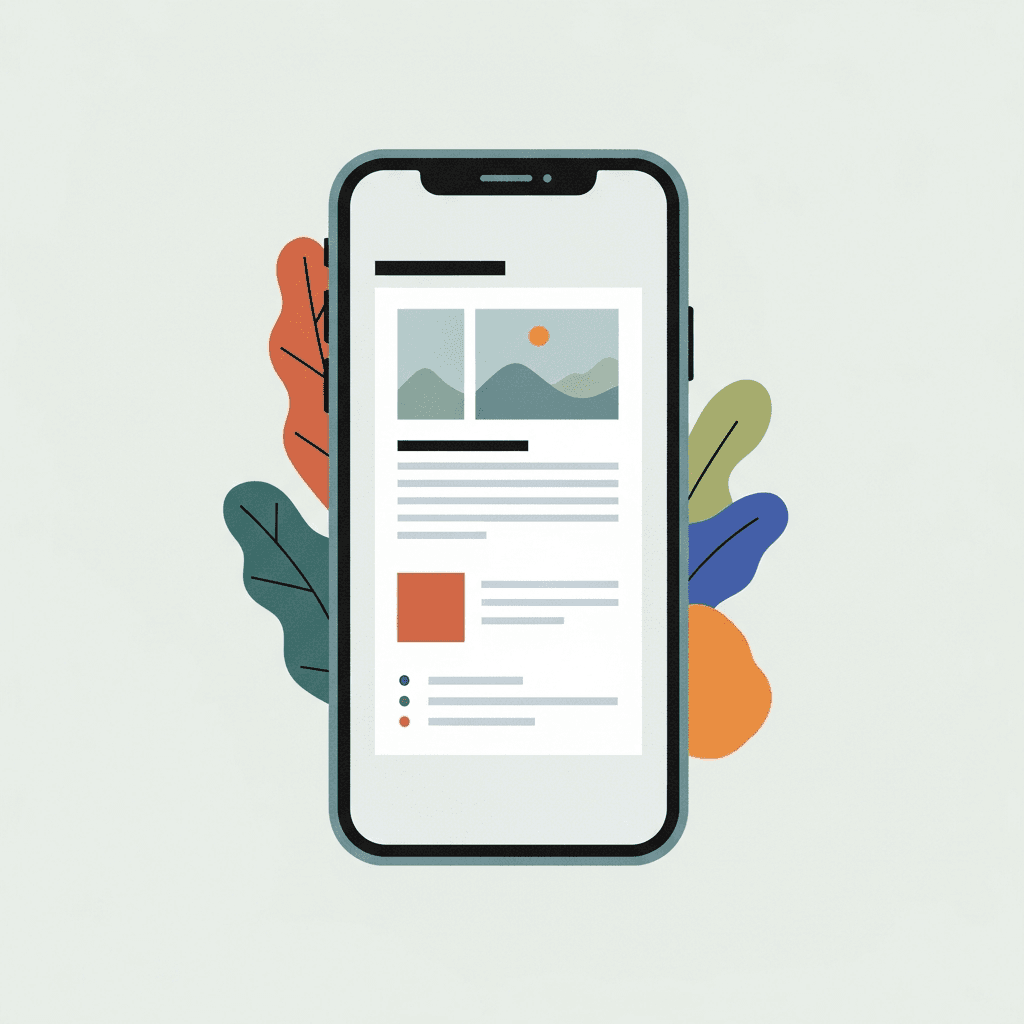
Headers and bullet points create scannable content. Employees skim before deciding whether to read fully, so frontload key information and use descriptive subheads.
Multimedia adds variety but shouldn't slow load times. Compress images, use alt text for accessibility, and include captions for videos. Color contrast ratios of at least 4.5:1 meet accessibility standards for text readability.
Common Internal Newsletter Mistakes to Avoid
Newsletters fail when they cover too many topics. Dense, multi-subject emails get skipped. Keep each newsletter to three to five focused items.
Irregular schedules kill readership. Skipping weeks trains employees to ignore your emails. Pick a cadence and maintain it.
Generic subject lines like "Monthly Update" give readers no reason to open. State the value upfront.
Desktop-only formatting alienates mobile readers. Most employees check email on phones during breaks and commutes.
Corporate jargon creates distance. Write conversationally instead.
One-size-fits-all content wastes attention. Warehouse staff don't need finance updates. Segment by audience.
Requesting feedback without acting breeds cynicism. Acknowledge survey results and explain changes made.
Tools and Technology for Internal Newsletter Distribution
Email works for desk workers through Outlook, Gmail, or dedicated internal comms tools that track open rates and clicks. Teams and Slack deliver newsletters where employees already spend time. SMS reaches 90% of workers within minutes, making it ideal for frontline staff without computer access. Employee apps need download adoption, while intranets limit mobile use. Match delivery to your workforce: deskless teams need SMS or messaging apps, office workers respond to Teams or email, and multi-channel approaches maximize reach.
Reaching Deskless and Frontline Employees Through Internal Communications
Deskless employees rarely check email during shifts. Warehouse workers, retail staff, and field technicians need communication where they are. According to reports, only 10% of deskless workers report satisfaction with workplace communication, and 40% rate quality as fair or poor.
SMS delivers messages directly to personal phones during breaks without requiring logins. Teams and Slack work when employees have company devices. Print materials in break rooms with QR codes link to video content or policy documents. Send updates before or after shifts, keeping messages under 160 characters when possible.
Internal Newsletters for Remote and Hybrid Workforces
Remote teams need newsletters to build connection when physical distance prevents casual interaction. Feature distributed employees through home office spotlights and monthly profiles to prevent visibility gaps.
Async content keeps everyone informed regardless of timezone. Record video updates and share meeting recaps with key decisions so remote staff stay aligned without attending every call.
Replace water cooler moments with weekend plans, book recommendations, and personal milestones. Acknowledge timezone sacrifices and rotate meeting schedules quarterly to show distributed work is valued.
How Arist Expands What Internal Newsletters Can Do
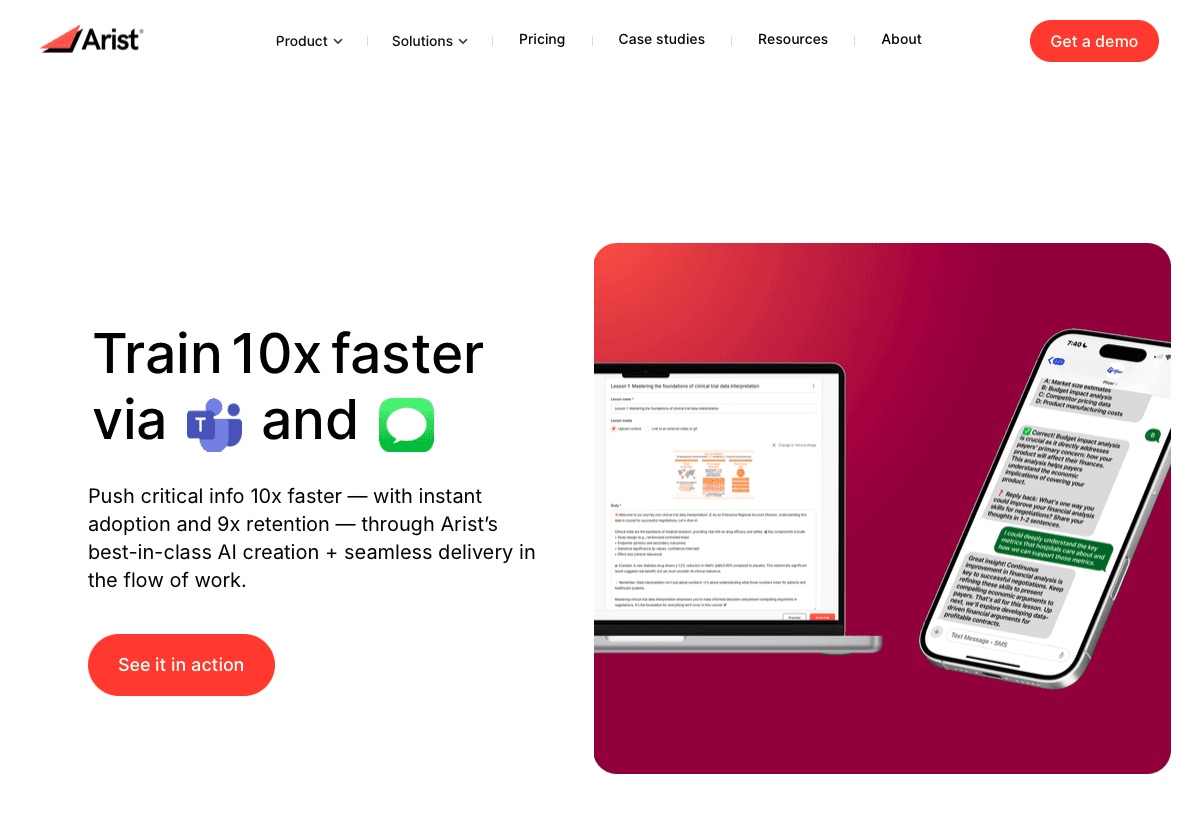
Internal newsletters are effective at sharing information, but they often fall short when follow-through is concerned. Arist extends the value of an internal newsletter by delivering key updates, learning, surveys, and reminders directly through SMS, WhatsApp, Teams, and Slack, channels employees already check throughout the day. Using Arist, teams can break long newsletter content into short, conversational messages that are easier to read and act on in the moment.
This approach is especially useful for organizations with deskless, remote, or globally distributed workforces. Arist reaches frontline employees without requiring email access, logins, or app downloads, while still supporting office teams through native integrations with collaboration tools. Content can be tailored by role, department, or location, allowing internal newsletter messages to stay relevant instead of feeling like one-size-fits-all broadcasts.
Arist also turns internal newsletters into interactive communication. Built-in AI agents generate quizzes, pulse surveys, and follow-ups tied to each message, then adjust delivery based on engagement and responses. Real-time analytics show what employees read, understand, and complete, helping HR, L&D, and internal communications teams improve clarity, retention, and participation over time.
FAQs
How often should you send an internal newsletter?
Pick a consistent schedule (weekly, biweekly, or monthly) and maintain it without skipping. Irregular delivery trains employees to ignore your messages, while predictable timing builds readership habits.
What's the best way to reach deskless employees with internal newsletters?
SMS delivers messages directly to personal phones during breaks without requiring logins, reaching 90% of workers within minutes. Teams and Slack work when employees have company devices, while print materials with QR codes in break rooms provide offline access.
What open rate should you expect for internal newsletters?
Internal emails average 64% open rates compared to 20% for external marketing emails. If your rates fall below 50%, review your subject lines, delivery timing, and content relevance.
How long should an internal newsletter be?
Keep newsletters to three to five focused items that employees can read in under five minutes. Dense, multi-subject emails get skipped, and most employees skim before deciding whether to read fully.
Can you use the same newsletter for office and frontline workers?
No. Warehouse staff don't need finance updates, and sales teams require different information than IT. Segment content by role, department, or location to respect employee time and attention.
Final Thoughts on Employee Newsletters That Work
Employee newsletters work when they respect attention, fit into daily workflows, and deliver information people can actually use. Writing for mobile, tailoring content by role, and featuring real employee perspectives turns updates into something teams look forward to opening. With tools like Arist, organizations extend the internal newsletter beyond email by delivering timely messages, learning, and follow-ups through the channels employees already rely on, making communication easier to absorb and act on. Start small, improve one element at a time, and let engagement guide what you build next.
Most internal newsletters struggle to earn attention because they feel generic, overloaded, or out of touch with how employees actually work. In 2026, an internal newsletter has to do more than share updates; it needs to deliver timely, relevant information in formats people actually open, read, and act on. Teams that treat newsletters as part of a broader workplace communication strategy see higher engagement, better alignment, and fewer messages lost in crowded inboxes.
TLDR:
Internal newsletters work best when they are treated as a communication system, not a recurring email.
SMS and Teams delivery reach deskless workers with 90%+ adoption versus 10% satisfaction with email.
Segment content by role and department instead of sending identical updates to all employees.
Track open rates (64% average for internal emails) and click-through rates to measure engagement.
Some modern tools automate personalized internal communications through Teams, Slack, and SMS with AI-driven content.
What an Internal Newsletter Is and Why It Matters in 2026
Internal newsletters are recurring communications sent to employees with company updates, team wins, and cultural content. Unlike external newsletters targeting customers, these keep your workforce informed and connected.
Email newsletters remain the most relied-upon channel, with 45% of internal communicators depending on them above other methods. They serve as a central hub for policy changes, training reminders, team spotlights, and upcoming events.
Regular newsletters build trust, reduce information silos, and help employees feel connected beyond daily tasks.
Core Benefits of Internal Company Newsletters
Internal newsletters drive retention, engagement, and alignment. Regular updates keep employees informed and connected to company goals, reducing turnover.
For distributed teams, newsletters are critical. Deskless workers represent over 80% of the global workforce, but only 10% are satisfied with workplace communication. Delivering newsletters through SMS, Teams, or Slack reaches employees where they work and closes communication gaps.
Internal Newsletter Best Practices That Drive Results
Start with clear goals. Are you driving training completion, announcing policy updates, or building culture? Define success metrics before writing.
Know your audience. Segment by role, department, or location when possible. Sales teams need different information than warehouse staff. Tailor tone and content accordingly.
Pick a schedule and stick to it, whether weekly or monthly. Over 70% of emails open on phones, so use single-column layouts and short paragraphs.
Subject lines determine open rates. Keep them under 50 characters and benefit-driven. "Q1 Training Deadline Friday" beats "Important Update."
Include employee voices through team spotlights and peer recognition. Content from colleagues drives higher engagement than corporate messaging alone.
Content Ideas for Engaging Internal Newsletters
Company news and updates keep teams aligned on strategy changes, product launches, and quarterly results. Share the reasoning behind decisions to build trust.
Employee spotlights celebrate wins and create visibility across departments. Feature different teams each month to give broad representation across the organization.
Leadership messages clarify priorities in conversational language under 200 words, tackling questions employees actually ask.
Department updates break down silos by showcasing cross-functional work. Marketing shares campaign results, operations explains process improvements, IT previews new tools.
Professional development opportunities promote internal training, mentorship programs, and skill-building resources with direct enrollment links.
Wellness tips cover mental health, work-life balance, and physical health. Short, actionable advice outperforms lengthy articles.
Culture stories reinforce values through real examples of teams living company principles.
Upcoming events with registration links, dates, times, and clear calls-to-action drive attendance.
How to Measure Internal Newsletter Success
Track open rates to gauge engagement. Internal emails average 64% open rates versus 20% for external marketing emails, reflecting workplace relevance and employee trust.
Click-through rates reveal which topics drive action. Monitor engagement with training links, policy documents, and event registrations.
Read time and scroll depth indicate whether employees skim or fully consume content. Short read times suggest content may be too long or unfocused.
Response rates for surveys and polls signal fatigue or unclear calls-to-action when low.
Compare performance across channels. SMS and Teams messages outperform email for time-sensitive updates, while email suits longer monthly digests.
Design and Format Considerations for Internal Newsletters
Single-column layouts work best for mobile devices where most employees read newsletters. Avoid dense paragraphs longer than three sentences, and use white space between sections to guide the eye.
Headers and bullet points create scannable content. Employees skim before deciding whether to read fully, so frontload key information and use descriptive subheads.
Multimedia adds variety but shouldn't slow load times. Compress images, use alt text for accessibility, and include captions for videos. Color contrast ratios of at least 4.5:1 meet accessibility standards for text readability.
Common Internal Newsletter Mistakes to Avoid
Newsletters fail when they cover too many topics. Dense, multi-subject emails get skipped. Keep each newsletter to three to five focused items.
Irregular schedules kill readership. Skipping weeks trains employees to ignore your emails. Pick a cadence and maintain it.
Generic subject lines like "Monthly Update" give readers no reason to open. State the value upfront.
Desktop-only formatting alienates mobile readers. Most employees check email on phones during breaks and commutes.
Corporate jargon creates distance. Write conversationally instead.
One-size-fits-all content wastes attention. Warehouse staff don't need finance updates. Segment by audience.
Requesting feedback without acting breeds cynicism. Acknowledge survey results and explain changes made.
Tools and Technology for Internal Newsletter Distribution
Email works for desk workers through Outlook, Gmail, or dedicated internal comms tools that track open rates and clicks. Teams and Slack deliver newsletters where employees already spend time. SMS reaches 90% of workers within minutes, making it ideal for frontline staff without computer access. Employee apps need download adoption, while intranets limit mobile use. Match delivery to your workforce: deskless teams need SMS or messaging apps, office workers respond to Teams or email, and multi-channel approaches maximize reach.
Reaching Deskless and Frontline Employees Through Internal Communications
Deskless employees rarely check email during shifts. Warehouse workers, retail staff, and field technicians need communication where they are. According to reports, only 10% of deskless workers report satisfaction with workplace communication, and 40% rate quality as fair or poor.
SMS delivers messages directly to personal phones during breaks without requiring logins. Teams and Slack work when employees have company devices. Print materials in break rooms with QR codes link to video content or policy documents. Send updates before or after shifts, keeping messages under 160 characters when possible.
Internal Newsletters for Remote and Hybrid Workforces
Remote teams need newsletters to build connection when physical distance prevents casual interaction. Feature distributed employees through home office spotlights and monthly profiles to prevent visibility gaps.
Async content keeps everyone informed regardless of timezone. Record video updates and share meeting recaps with key decisions so remote staff stay aligned without attending every call.
Replace water cooler moments with weekend plans, book recommendations, and personal milestones. Acknowledge timezone sacrifices and rotate meeting schedules quarterly to show distributed work is valued.
How Arist Expands What Internal Newsletters Can Do
Internal newsletters are effective at sharing information, but they often fall short when follow-through is concerned. Arist extends the value of an internal newsletter by delivering key updates, learning, surveys, and reminders directly through SMS, WhatsApp, Teams, and Slack, channels employees already check throughout the day. Using Arist, teams can break long newsletter content into short, conversational messages that are easier to read and act on in the moment.
This approach is especially useful for organizations with deskless, remote, or globally distributed workforces. Arist reaches frontline employees without requiring email access, logins, or app downloads, while still supporting office teams through native integrations with collaboration tools. Content can be tailored by role, department, or location, allowing internal newsletter messages to stay relevant instead of feeling like one-size-fits-all broadcasts.
Arist also turns internal newsletters into interactive communication. Built-in AI agents generate quizzes, pulse surveys, and follow-ups tied to each message, then adjust delivery based on engagement and responses. Real-time analytics show what employees read, understand, and complete, helping HR, L&D, and internal communications teams improve clarity, retention, and participation over time.
FAQs
How often should you send an internal newsletter?
Pick a consistent schedule (weekly, biweekly, or monthly) and maintain it without skipping. Irregular delivery trains employees to ignore your messages, while predictable timing builds readership habits.
What's the best way to reach deskless employees with internal newsletters?
SMS delivers messages directly to personal phones during breaks without requiring logins, reaching 90% of workers within minutes. Teams and Slack work when employees have company devices, while print materials with QR codes in break rooms provide offline access.
What open rate should you expect for internal newsletters?
Internal emails average 64% open rates compared to 20% for external marketing emails. If your rates fall below 50%, review your subject lines, delivery timing, and content relevance.
How long should an internal newsletter be?
Keep newsletters to three to five focused items that employees can read in under five minutes. Dense, multi-subject emails get skipped, and most employees skim before deciding whether to read fully.
Can you use the same newsletter for office and frontline workers?
No. Warehouse staff don't need finance updates, and sales teams require different information than IT. Segment content by role, department, or location to respect employee time and attention.
Final Thoughts on Employee Newsletters That Work
Employee newsletters work when they respect attention, fit into daily workflows, and deliver information people can actually use. Writing for mobile, tailoring content by role, and featuring real employee perspectives turns updates into something teams look forward to opening. With tools like Arist, organizations extend the internal newsletter beyond email by delivering timely messages, learning, and follow-ups through the channels employees already rely on, making communication easier to absorb and act on. Start small, improve one element at a time, and let engagement guide what you build next.
Related Resources

Article
AI Upskilling: A Practical Guide for Building Your Team in June 2026
Learn how to build AI upskilling programs that drive behavior change. Practical guide with frameworks, metrics, and proven strategies for June 2026.
Read more
Article
Salesforce Training for Beginners: Complete June 2026 Guide
Complete Salesforce training for beginners in June 2026. Learn Trailhead, certifications, admin paths, and career options with this full overview.
Read more
Bring real impact to your people
We care about solving meaningful problems and being thought partners first and foremost. Arist is used and loved by the Fortune 500 — and we'd love to support your goals.
Curious to get a demo or free trial? We'd love to chat:

Bring real impact to your people
We care about solving meaningful problems and being thought partners first and foremost. Arist is used and loved by the Fortune 500 — and we'd love to support your goals.
Curious to get a demo or free trial? We'd love to chat:
Bring real impact to your people
We care about solving meaningful problems and being thought partners first and foremost. Arist is used and loved by the Fortune 500 — and we'd love to support your goals.
Curious to get a demo or free trial? We'd love to chat: