Modern Employee Training Methods That Work in 2026
Modern Employee Training Methods That Work in 2026
Modern employee training methods in 2026 don't look like the ones from 2020 because your workforce doesn't look the same either. They're mobile-first for distributed teams, asynchronous so people learn during downtime instead of blocking calendars, and built around continuous reinforcement instead of one-time events that create temporary awareness but zero lasting behavior change. The methods that move performance in 2026 meet employees in their workflow instead of pulling them away from it, use AI to personalize content by role and skill level, and measure behavior change instead of completion rates. Training either adapts to how work happens now or becomes another ignored software nobody opens.
TLDR:
Text-based training via SMS, Teams, and Slack hits 95% completion vs. 8% for traditional LMS.
AI voice agents analyze workforce gaps in 48 hours instead of months of consultant interviews.
Spaced reinforcement closes the 70% forgetting curve better than one-time workshops.
Some modern platforms automate needs analysis, content creation, delivery, and analytics in one system.
Certain integrated systems deliver training where employees work, achieving 8x faster launches with measurable ROI.
Why Traditional Training Approaches Are Failing the 2026 Workforce
Most training programs were built for a workforce that no longer exists. Employees gathered in conference rooms, worked from central offices, and stayed in roles long enough for annual training cycles to make sense.
That world is gone. Research suggests that 44% of workers' skills will be disrupted by 2030. Half your workforce is remote or hybrid. Product launches happen in weeks, not quarters.
Legacy systems can't keep up.
Aspect | Traditional Training | Modern Training Methods (2026) |
|---|---|---|
Delivery Location | Separate LMS software requiring login | Embedded in Teams, Slack, SMS where work happens |
Device Accessibility | Desktop-only, excludes frontline workers | Mobile-first, reaches all employees |
Scheduling | Scheduled sessions blocking calendars | Asynchronous, fits into natural downtime |
Content Approach | One-time workshops and annual courses | Continuous reinforcement with spaced repetition |
Personalization | One-size-fits-all content | AI-driven adaptation by role and skill level |
Engagement Rate | 8% average LMS completion | 95% completion with text-based delivery |
Needs Analysis | Months of consultant interviews ($75K+) | AI voice agents analyze gaps in 48 hours |
Success Metric | Completion rates and test scores | Behavioral outcomes and performance impact |
Time to Launch | Months end-to-end in many organizations | Days or weeks with automated systems |
Embedded Learning Delivered in Workflow Tools
Training that lives outside your workflow asks too much: pause everything, log into another system, and remember it all later when you're back at work.
Average LMS completion rates sit around 8%. Employees don't finish courses because the friction is too high. Every login requirement, every navigation menu, every system switch creates another reason to quit halfway through. The average knowledge worker toggles between 10 different apps more than 25 times per day. Adding another tool to that rotation means training gets deprioritized against everything else competing for attention.
Embedded learning arrives where work happens: Teams, Slack, SMS. No separate login. No context switch. Learning and doing occupy the same space, so employees apply lessons instantly. When a sales rep gets a product update via Teams during their morning coffee, they use it on their first call an hour later. When a manager receives a coaching reminder in Slack right before a 1:1, they apply the technique in real time.
Mobile-First Training for a Distributed Workforce
Your workforce isn't sitting at desks waiting for training. They're on factory floors, in customer homes, moving between locations, traveling between sites. Desktop-only training excludes the majority of workers who never touch a laptop during their shift. Field technicians, retail associates, healthcare workers, delivery drivers, and construction crews need training designed for the devices they actually carry.
Three out of four employees now use mobile devices for job-related learning. Training via SMS, Teams mobile, or Slack reaches people during transit, breaks, or downtime. Frontline workers without desk access get the same enablement as headquarters staff. Mobile delivery also respects attention spans. Short, focused messages fit naturally into 2-3 minute windows between tasks instead of demanding 45-minute blocks nobody has.
Asynchronous Training That Respects Time Constraints
Nobody has time for training. 48% of professionals cite time as the biggest barrier to creating and delivering content. Scheduled training sessions force employees to choose between learning and doing their actual job. Live workshops pull people away from customer calls, project deadlines, and functional work. When training competes directly with productivity, productivity wins.
Asynchronous delivery removes the scheduling problem. Employees access training during downtime: morning commutes, between meetings, after work. Learning happens when they're ready, not when a calendar demands it. A regional manager in one time zone doesn't wait for headquarters to schedule a session. A night shift worker gets the same content as the day shift without requiring duplicate live sessions. Asynchronous formats also let employees control their pace, revisiting complex topics without holding up an entire group or rushing through material they already know.
Continuous Reinforcement over One-Time Events
One-time workshops don't stick. People forget 70% of new information within 24 hours without reinforcement.
Spaced learning revisits core ideas across days or weeks. Each touchpoint deepens retention and moves knowledge from short-term memory to applied behavior.
Regular reinforcement turns training from an event into a system that follows employees through real work scenarios until new skills become habit.
AI-Driven Personalization at Scale
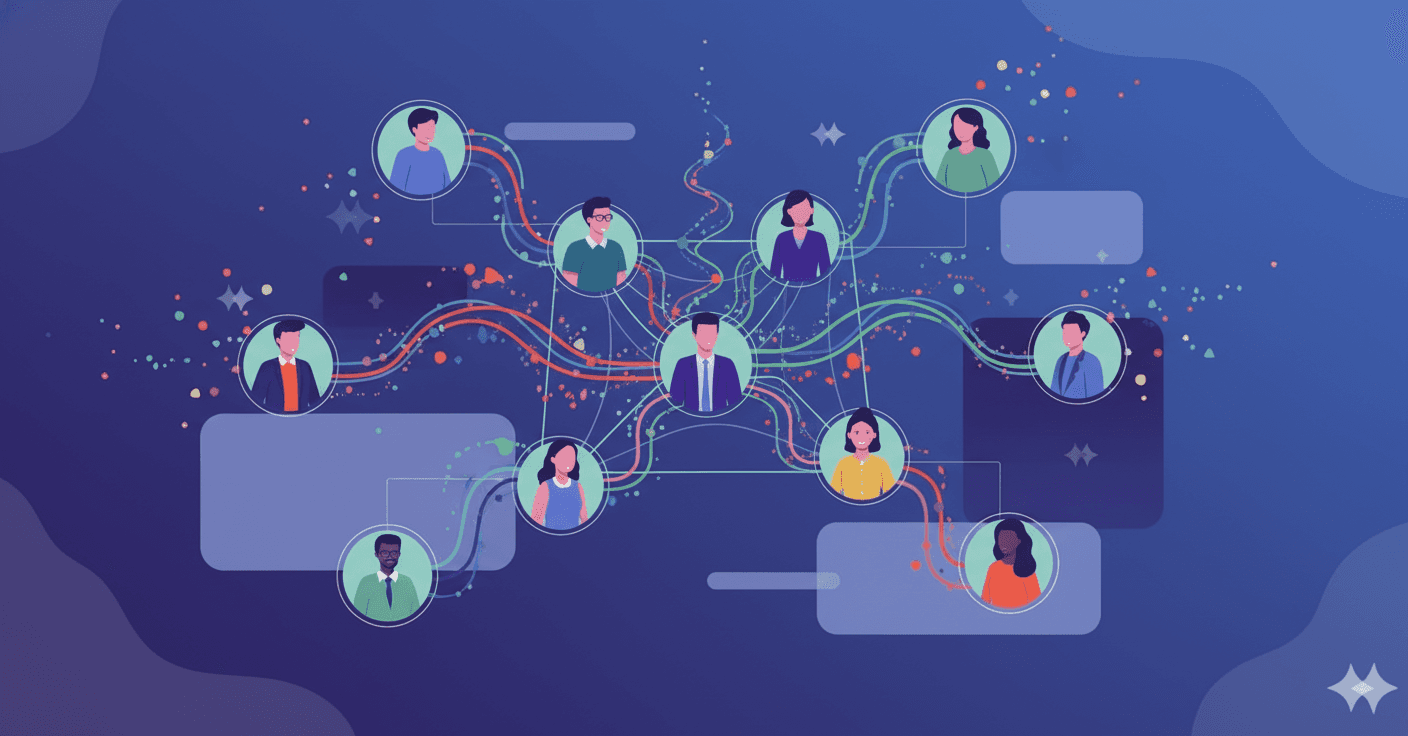
Generic training wastes time. A frontline sales rep needs different content than a regional director. A new hire shouldn't get the same material as a ten-year veteran. One-size-fits-all courses force employees to sit through content that's either too basic or too advanced. Relevance drops, engagement disappears, and learning stops happening.
30% of organizations now use AI to adapt content based on role, performance data, and skill gaps without building multiple versions manually. AI analyzes job function, tenure, past performance scores, and current skill levels to serve the right content to each person. A sales rep struggling with objection handling gets different reinforcement than one who excels at discovery but needs help closing. Personalization at scale used to require armies of instructional designers building separate tracks. Now it happens automatically.
Behavioral Nudges for Just-in-Time Support
Knowing something doesn't mean doing it. Training creates awareness. Behavior change requires consistent prompts at the moments that matter. The gap between knowing and doing is where most training investments disappear. Employees complete courses, pass assessments, and then revert to old habits the moment they face real work pressure.
Nudges arrive when decisions happen: before a sales call, during customer interactions, ahead of quarterly reviews. They remind employees to apply what they learned when the context demands it. A manager gets a coaching checklist 10 minutes before a performance conversation. A rep receives a competitive positioning reminder when a specific competitor appears in their CRM opportunity. These just-in-time prompts bridge the intention-action gap by reducing the cognitive load of remembering everything at the exact moment it's needed.
Rapid Needs Analysis through AI Voice and Data Integration
Traditional needs analysis takes months: survey design, interviews, transcription, synthesis. By the time recommendations arrive, priorities have shifted.
AI voice agents interview hundreds of employees at once while pulling performance data from CRM and HRIS systems. Work that traditionally took weeks of consultant interviews and incurred considerable cost can now happen in 48 hours.
Training starts while the need still matters.
Inclusive Design for Accessibility and Global Teams
Training that only works for English speakers at desks excludes most workforces. When one company trained 30,000 employees across 13 languages in three weeks, engagement stayed consistent. Text-based delivery works on any device, survives weak connectivity, and reaches frontline staff without separate versions.
Measuring Impact through Behavioral Outcomes
Completion rates tell you who clicked through. They don't tell you who changed how they work.
Track what happens after training ends. Application rates measure on-the-job skill usage. Behavior change tracking connects training to performance data: call conversions, customer satisfaction scores, process adherence, error rates. One sales team moved from 21% methodology adherence to 100% after targeted reinforcement.
How Arist Brings All 9 Methods Together
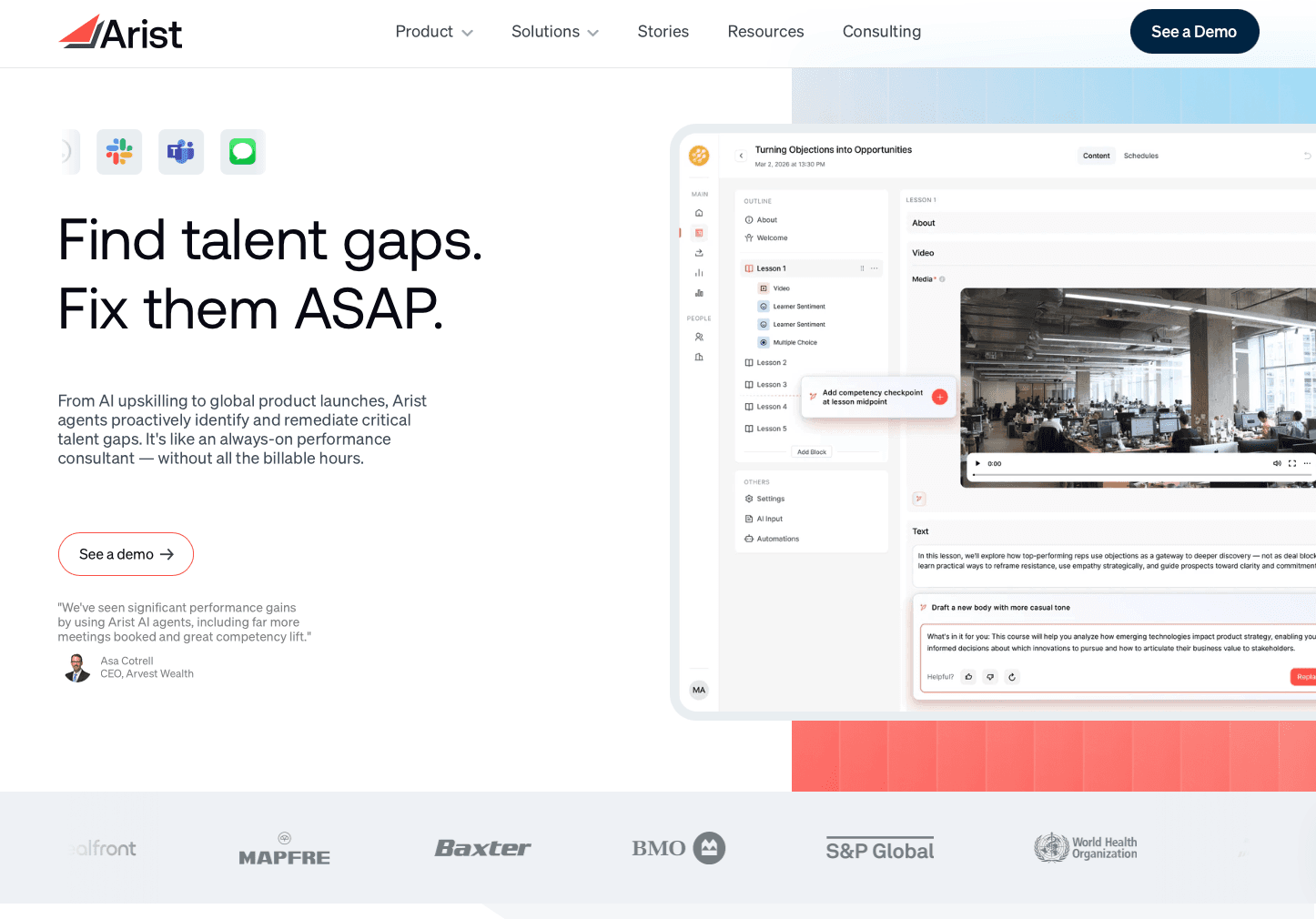
Each of these training methods only works if you can execute them at scale. Most organizations patch together separate tools for analysis, content, and delivery. That fragmentation kills speed and creates gaps where training efforts fail. One system handles needs analysis, another builds content, a third manages delivery, and analytics live somewhere else entirely. By the time you connect the pieces, the business need has shifted or the window for impact has closed.
Arist automates the full flow where work already happens. AI voice agents interview employees and analyze performance data to surface gaps in hours instead of months. The Creator Agent builds personalized content across roles and languages, while the Smart Routing Agent delivers training directly in Teams, Slack, or SMS during natural workflow breaks. Spaced reinforcement happens automatically. Behavioral nudges trigger at the right moments. The Analytics Agent ties every interaction back to business outcomes and recommends what to do next. You get embedded learning, mobile-first delivery, asynchronous access, continuous reinforcement, AI personalization, behavioral nudges, and rapid needs analysis in one system.
Organizations using Arist launch training 8x faster than traditional methods while cutting costs by 40% or more. One pharmaceutical company trained 30,000 employees across 13 languages in three weeks. A sales team moved from 21% methodology adherence to 100% within 90 days. Another enterprise saw 120% lift in AI tool adoption after rolling out enablement through Arist. The software replaces the fragmented legacy stack costing millions annually and delivers measurable performance gains because training reaches people where they work, when they need it, in formats they actually complete.
FAQs
What's the difference between completion rates and behavioral outcomes?
Completion rates track who finished a course, while behavioral outcomes measure whether employees actually changed how they work. Track application during real job tasks through CRM data, quality scores, and process adherence instead of clicks.
How do you measure the effectiveness of employee training methods?
Measure on-the-job application rates and behavioral changes tied to performance metrics: call conversions, customer satisfaction scores, process adherence, and error rates. One sales team moved from 21% methodology adherence to 100% after targeted reinforcement.
When should training be delivered asynchronously instead of in scheduled sessions?
Asynchronous delivery works best when employees have unpredictable schedules, work across time zones, or lack consistent desk access. It removes the scheduling barrier and lets people learn during commutes, between meetings, or after work when they're actually ready.
Final Thoughts on Training for a Workforce That Won't Sit Still
Static training programs assume employees have time, attention, and desk access. Most don't. Modern employee training methods in 2026 work because they abandon those assumptions entirely and meet reality head-on: distributed teams working across time zones, frontline staff without desk access, and knowledge workers drowning in competing priorities. Arist automates the full training flow from needs analysis through delivery and analytics, embedding learning directly in Teams, Slack, and SMS where employees already spend their day. The system combines AI-driven personalization, spaced reinforcement, and behavioral nudges into one system that replaces the fragmented legacy stack costing enterprises millions annually.
Modern employee training methods in 2026 don't look like the ones from 2020 because your workforce doesn't look the same either. They're mobile-first for distributed teams, asynchronous so people learn during downtime instead of blocking calendars, and built around continuous reinforcement instead of one-time events that create temporary awareness but zero lasting behavior change. The methods that move performance in 2026 meet employees in their workflow instead of pulling them away from it, use AI to personalize content by role and skill level, and measure behavior change instead of completion rates. Training either adapts to how work happens now or becomes another ignored software nobody opens.
TLDR:
Text-based training via SMS, Teams, and Slack hits 95% completion vs. 8% for traditional LMS.
AI voice agents analyze workforce gaps in 48 hours instead of months of consultant interviews.
Spaced reinforcement closes the 70% forgetting curve better than one-time workshops.
Some modern platforms automate needs analysis, content creation, delivery, and analytics in one system.
Certain integrated systems deliver training where employees work, achieving 8x faster launches with measurable ROI.
Why Traditional Training Approaches Are Failing the 2026 Workforce
Most training programs were built for a workforce that no longer exists. Employees gathered in conference rooms, worked from central offices, and stayed in roles long enough for annual training cycles to make sense.
That world is gone. Research suggests that 44% of workers' skills will be disrupted by 2030. Half your workforce is remote or hybrid. Product launches happen in weeks, not quarters.
Legacy systems can't keep up.
Aspect | Traditional Training | Modern Training Methods (2026) |
|---|---|---|
Delivery Location | Separate LMS software requiring login | Embedded in Teams, Slack, SMS where work happens |
Device Accessibility | Desktop-only, excludes frontline workers | Mobile-first, reaches all employees |
Scheduling | Scheduled sessions blocking calendars | Asynchronous, fits into natural downtime |
Content Approach | One-time workshops and annual courses | Continuous reinforcement with spaced repetition |
Personalization | One-size-fits-all content | AI-driven adaptation by role and skill level |
Engagement Rate | 8% average LMS completion | 95% completion with text-based delivery |
Needs Analysis | Months of consultant interviews ($75K+) | AI voice agents analyze gaps in 48 hours |
Success Metric | Completion rates and test scores | Behavioral outcomes and performance impact |
Time to Launch | Months end-to-end in many organizations | Days or weeks with automated systems |
Embedded Learning Delivered in Workflow Tools
Training that lives outside your workflow asks too much: pause everything, log into another system, and remember it all later when you're back at work.
Average LMS completion rates sit around 8%. Employees don't finish courses because the friction is too high. Every login requirement, every navigation menu, every system switch creates another reason to quit halfway through. The average knowledge worker toggles between 10 different apps more than 25 times per day. Adding another tool to that rotation means training gets deprioritized against everything else competing for attention.
Embedded learning arrives where work happens: Teams, Slack, SMS. No separate login. No context switch. Learning and doing occupy the same space, so employees apply lessons instantly. When a sales rep gets a product update via Teams during their morning coffee, they use it on their first call an hour later. When a manager receives a coaching reminder in Slack right before a 1:1, they apply the technique in real time.
Mobile-First Training for a Distributed Workforce
Your workforce isn't sitting at desks waiting for training. They're on factory floors, in customer homes, moving between locations, traveling between sites. Desktop-only training excludes the majority of workers who never touch a laptop during their shift. Field technicians, retail associates, healthcare workers, delivery drivers, and construction crews need training designed for the devices they actually carry.
Three out of four employees now use mobile devices for job-related learning. Training via SMS, Teams mobile, or Slack reaches people during transit, breaks, or downtime. Frontline workers without desk access get the same enablement as headquarters staff. Mobile delivery also respects attention spans. Short, focused messages fit naturally into 2-3 minute windows between tasks instead of demanding 45-minute blocks nobody has.
Asynchronous Training That Respects Time Constraints
Nobody has time for training. 48% of professionals cite time as the biggest barrier to creating and delivering content. Scheduled training sessions force employees to choose between learning and doing their actual job. Live workshops pull people away from customer calls, project deadlines, and functional work. When training competes directly with productivity, productivity wins.
Asynchronous delivery removes the scheduling problem. Employees access training during downtime: morning commutes, between meetings, after work. Learning happens when they're ready, not when a calendar demands it. A regional manager in one time zone doesn't wait for headquarters to schedule a session. A night shift worker gets the same content as the day shift without requiring duplicate live sessions. Asynchronous formats also let employees control their pace, revisiting complex topics without holding up an entire group or rushing through material they already know.
Continuous Reinforcement over One-Time Events
One-time workshops don't stick. People forget 70% of new information within 24 hours without reinforcement.
Spaced learning revisits core ideas across days or weeks. Each touchpoint deepens retention and moves knowledge from short-term memory to applied behavior.
Regular reinforcement turns training from an event into a system that follows employees through real work scenarios until new skills become habit.
AI-Driven Personalization at Scale
Generic training wastes time. A frontline sales rep needs different content than a regional director. A new hire shouldn't get the same material as a ten-year veteran. One-size-fits-all courses force employees to sit through content that's either too basic or too advanced. Relevance drops, engagement disappears, and learning stops happening.
30% of organizations now use AI to adapt content based on role, performance data, and skill gaps without building multiple versions manually. AI analyzes job function, tenure, past performance scores, and current skill levels to serve the right content to each person. A sales rep struggling with objection handling gets different reinforcement than one who excels at discovery but needs help closing. Personalization at scale used to require armies of instructional designers building separate tracks. Now it happens automatically.
Behavioral Nudges for Just-in-Time Support
Knowing something doesn't mean doing it. Training creates awareness. Behavior change requires consistent prompts at the moments that matter. The gap between knowing and doing is where most training investments disappear. Employees complete courses, pass assessments, and then revert to old habits the moment they face real work pressure.
Nudges arrive when decisions happen: before a sales call, during customer interactions, ahead of quarterly reviews. They remind employees to apply what they learned when the context demands it. A manager gets a coaching checklist 10 minutes before a performance conversation. A rep receives a competitive positioning reminder when a specific competitor appears in their CRM opportunity. These just-in-time prompts bridge the intention-action gap by reducing the cognitive load of remembering everything at the exact moment it's needed.
Rapid Needs Analysis through AI Voice and Data Integration
Traditional needs analysis takes months: survey design, interviews, transcription, synthesis. By the time recommendations arrive, priorities have shifted.
AI voice agents interview hundreds of employees at once while pulling performance data from CRM and HRIS systems. Work that traditionally took weeks of consultant interviews and incurred considerable cost can now happen in 48 hours.
Training starts while the need still matters.
Inclusive Design for Accessibility and Global Teams
Training that only works for English speakers at desks excludes most workforces. When one company trained 30,000 employees across 13 languages in three weeks, engagement stayed consistent. Text-based delivery works on any device, survives weak connectivity, and reaches frontline staff without separate versions.
Measuring Impact through Behavioral Outcomes
Completion rates tell you who clicked through. They don't tell you who changed how they work.
Track what happens after training ends. Application rates measure on-the-job skill usage. Behavior change tracking connects training to performance data: call conversions, customer satisfaction scores, process adherence, error rates. One sales team moved from 21% methodology adherence to 100% after targeted reinforcement.
How Arist Brings All 9 Methods Together
Each of these training methods only works if you can execute them at scale. Most organizations patch together separate tools for analysis, content, and delivery. That fragmentation kills speed and creates gaps where training efforts fail. One system handles needs analysis, another builds content, a third manages delivery, and analytics live somewhere else entirely. By the time you connect the pieces, the business need has shifted or the window for impact has closed.
Arist automates the full flow where work already happens. AI voice agents interview employees and analyze performance data to surface gaps in hours instead of months. The Creator Agent builds personalized content across roles and languages, while the Smart Routing Agent delivers training directly in Teams, Slack, or SMS during natural workflow breaks. Spaced reinforcement happens automatically. Behavioral nudges trigger at the right moments. The Analytics Agent ties every interaction back to business outcomes and recommends what to do next. You get embedded learning, mobile-first delivery, asynchronous access, continuous reinforcement, AI personalization, behavioral nudges, and rapid needs analysis in one system.
Organizations using Arist launch training 8x faster than traditional methods while cutting costs by 40% or more. One pharmaceutical company trained 30,000 employees across 13 languages in three weeks. A sales team moved from 21% methodology adherence to 100% within 90 days. Another enterprise saw 120% lift in AI tool adoption after rolling out enablement through Arist. The software replaces the fragmented legacy stack costing millions annually and delivers measurable performance gains because training reaches people where they work, when they need it, in formats they actually complete.
FAQs
What's the difference between completion rates and behavioral outcomes?
Completion rates track who finished a course, while behavioral outcomes measure whether employees actually changed how they work. Track application during real job tasks through CRM data, quality scores, and process adherence instead of clicks.
How do you measure the effectiveness of employee training methods?
Measure on-the-job application rates and behavioral changes tied to performance metrics: call conversions, customer satisfaction scores, process adherence, and error rates. One sales team moved from 21% methodology adherence to 100% after targeted reinforcement.
When should training be delivered asynchronously instead of in scheduled sessions?
Asynchronous delivery works best when employees have unpredictable schedules, work across time zones, or lack consistent desk access. It removes the scheduling barrier and lets people learn during commutes, between meetings, or after work when they're actually ready.
Final Thoughts on Training for a Workforce That Won't Sit Still
Static training programs assume employees have time, attention, and desk access. Most don't. Modern employee training methods in 2026 work because they abandon those assumptions entirely and meet reality head-on: distributed teams working across time zones, frontline staff without desk access, and knowledge workers drowning in competing priorities. Arist automates the full training flow from needs analysis through delivery and analytics, embedding learning directly in Teams, Slack, and SMS where employees already spend their day. The system combines AI-driven personalization, spaced reinforcement, and behavioral nudges into one system that replaces the fragmented legacy stack costing enterprises millions annually.
Related Resources

Article
AI Upskilling: A Practical Guide for Building Your Team in June 2026
Learn how to build AI upskilling programs that drive behavior change. Practical guide with frameworks, metrics, and proven strategies for June 2026.
Read more
Article
Salesforce Training for Beginners: Complete June 2026 Guide
Complete Salesforce training for beginners in June 2026. Learn Trailhead, certifications, admin paths, and career options with this full overview.
Read more
Bring real impact to your people
We care about solving meaningful problems and being thought partners first and foremost. Arist is used and loved by the Fortune 500 — and we'd love to support your goals.
Curious to get a demo or free trial? We'd love to chat:

Bring real impact to your people
We care about solving meaningful problems and being thought partners first and foremost. Arist is used and loved by the Fortune 500 — and we'd love to support your goals.
Curious to get a demo or free trial? We'd love to chat:
Bring real impact to your people
We care about solving meaningful problems and being thought partners first and foremost. Arist is used and loved by the Fortune 500 — and we'd love to support your goals.
Curious to get a demo or free trial? We'd love to chat: