Best Platforms for Flow-of-Work Learning Delivery (February 2026)
Best Platforms for Flow-of-Work Learning Delivery (February 2026)

Compare the best flow-of-work learning delivery platforms in February 2026. See which tools deliver training via Teams, Slack, SMS without logins.
Your employees are learning in the flow of work every day, whether your systems capture it or not. Yet most training still lives in portals that require people to stop working, log in, and search for a course they may never finish. Flow of work learning changes that by delivering training directly through SMS, Teams, Slack, and WhatsApp, meeting employees in the same channels where work already happens. Instead of asking your team to leave their workflow, modern messaging-based systems bring training to them, pairing no-login access with built-in analytics and AI-driven course creation. We reviewed the leading options in this category to understand which tools remove friction, drive real engagement, and support enterprise-wide enablement.
TLDR:
Flow of work learning delivers training in Teams, Slack, SMS, and WhatsApp without logins.
Traditional LMS platforms achieve under 30% engagement; messaging-native delivery hits 95%+.
AI-powered systems now automate content creation, deployment, and analytics in one workflow.
Some modern solutions deliver end-to-end enablement via messaging and trained 30,000 employees in three weeks.
Training reaches deskless and distributed workers directly on personal devices, eliminating portal friction and boosting completion rates
What Is Flow of Work Learning?
Flow of work learning delivers training inside the tools your team already uses: Teams, Slack, SMS, WhatsApp. Instead of forcing employees to log into a separate portal, courses arrive as messages in their everyday communication channels.
Traditional learning management systems require people to stop what they're doing, switch to a different app, and hunt for the right module. That friction kills engagement.
But here's the reality: many employees pick up skills by figuring things out while they work. Flow of work learning meets people in that moment of need. A sales rep preparing for a call gets a quick refresher via text. A frontline worker clocks in and receives a safety reminder through WhatsApp.
The difference is access and timing. When learning shows up where work happens, you remove the barriers that cause training to fail.
How We Ranked Flow of Work Learning Delivery Solutions
We assessed these solutions based on how well they deliver training where work actually happens.
Here's what mattered in our ranking:
Delivery channel flexibility: Can you reach employees via SMS, WhatsApp, Teams, and Slack, or are you locked into a single method?
No-login access: Does training require a separate portal, or does it show up directly in communication tools people already open dozens of times per day?
AI content creation: How quickly can you build and update courses without a full production team?
Analytics depth: Can you measure behavior change and business outcomes, or just track completions?
Deployment speed: How fast can you launch new training when priorities shift?
Frontline readiness: Does the solution work for deskless and distributed teams, or just desk workers?
This evaluation draws from publicly available product information, customer reviews, and documented vendor capabilities.
Solution | Delivery Channels | Login Required | AI Content Creation | Best For |
|---|---|---|---|---|
Arist | SMS, WhatsApp, Teams, Slack | No | Yes, AI-driven automation across creation, delivery, and analytics | Enterprise-wide enablement, frontline workers |
Axonify | Mobile and desktop app | Yes | No native AI-driven course generation | Frontline teams with corporate devices |
Qstream | Mobile app | Yes | No native AI-driven course generation | Sales reinforcement and retention testing |
Seismic Learning | Web portal with CRM integration | Yes | No native AI-driven course generation | Sales content management and coaching |
LinkedIn Learning | Web portal and mobile app | Yes | No | Individual self-directed skill development |
Firstup | Email, mobile app, intranet | Yes | No native AI-driven course generation | Corporate communications and announcements |
Arist
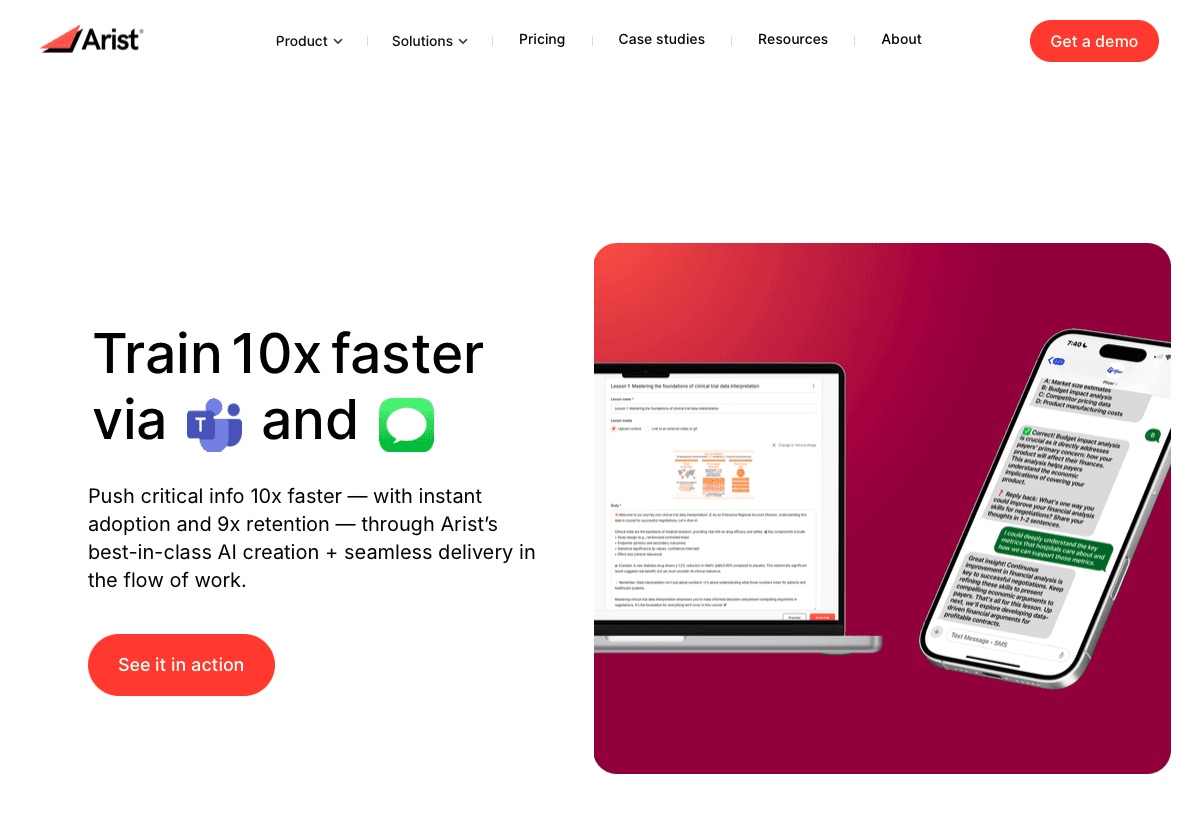
We built Arist to act as an enablement team in your pocket, managing the full people enablement flow for large enterprises. Training arrives directly in SMS, Slack, Teams, and WhatsApp without app downloads or logins.
Our AI Agent Suite automates needs analysis through voice and text interviews, generates courses in minutes from existing source materials, and delivers personalized learning journeys. Everything happens 1:1 in the tools your team already opens daily.
We manage the entire enablement cycle end-to-end. Wolters Kluwer trained 30,000 employees in under three weeks, increasing AI adoption by 120%. Completion rates consistently exceed 95% compared to typical sub-30% LMS engagement.
Axonify
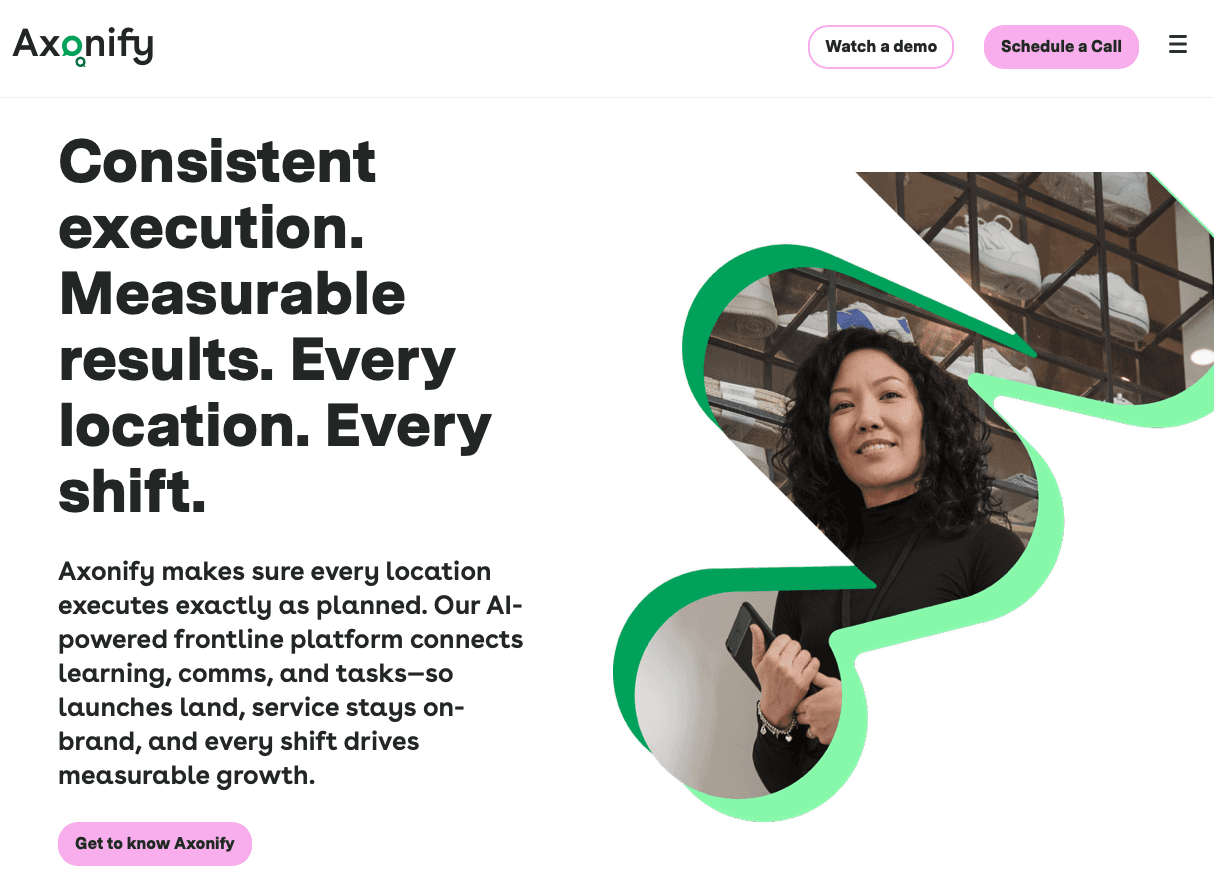
Axonify is a frontline learning system offering app-based training with gamification and reinforcement features. The solution targets retail, manufacturing, and other industries with large deskless workforces, delivering daily training through mobile and desktop applications.
Axonify provides gamified daily training sessions with leaderboards and point systems, spaced repetition quizzes to reinforce knowledge retention, mobile app access for frontline workers, and communication tools for company announcements. The solution works for organizations with corporate-managed devices where employees can access a dedicated training app, and where gamification aligns with company culture.
The limitation: Axonify requires app installation and login, which creates adoption friction for distributed workforces. Training happens in a separate portal instead of existing workflow channels like Slack, Teams, or SMS.
Qstream
Qstream is a spaced repetition system that reinforces sales readiness through timed quizzes. The solution delivers scenario-based questions over days or weeks to improve retention through repeated testing.
Qstream provides spaced repetition methodology for knowledge reinforcement, scenario-based assessments and challenge questions, performance analytics showing retention scores, and mobile-accessible quiz delivery. Qstream works for sales teams with existing training content who need a reinforcement layer focused on retention through quiz-based practice.
The limitation: Qstream focuses on reinforcement and assessments instead of full course creation or end-to-end training development. You must manually format pre-existing materials. The solution is not messaging-native and lacks integration with SMS, Slack, Teams, or WhatsApp. The quiz-heavy experience does not support full employee journey pathways or behavior change initiatives beyond reinforcement testing.
Seismic Learning (Sales Enablement Platform)
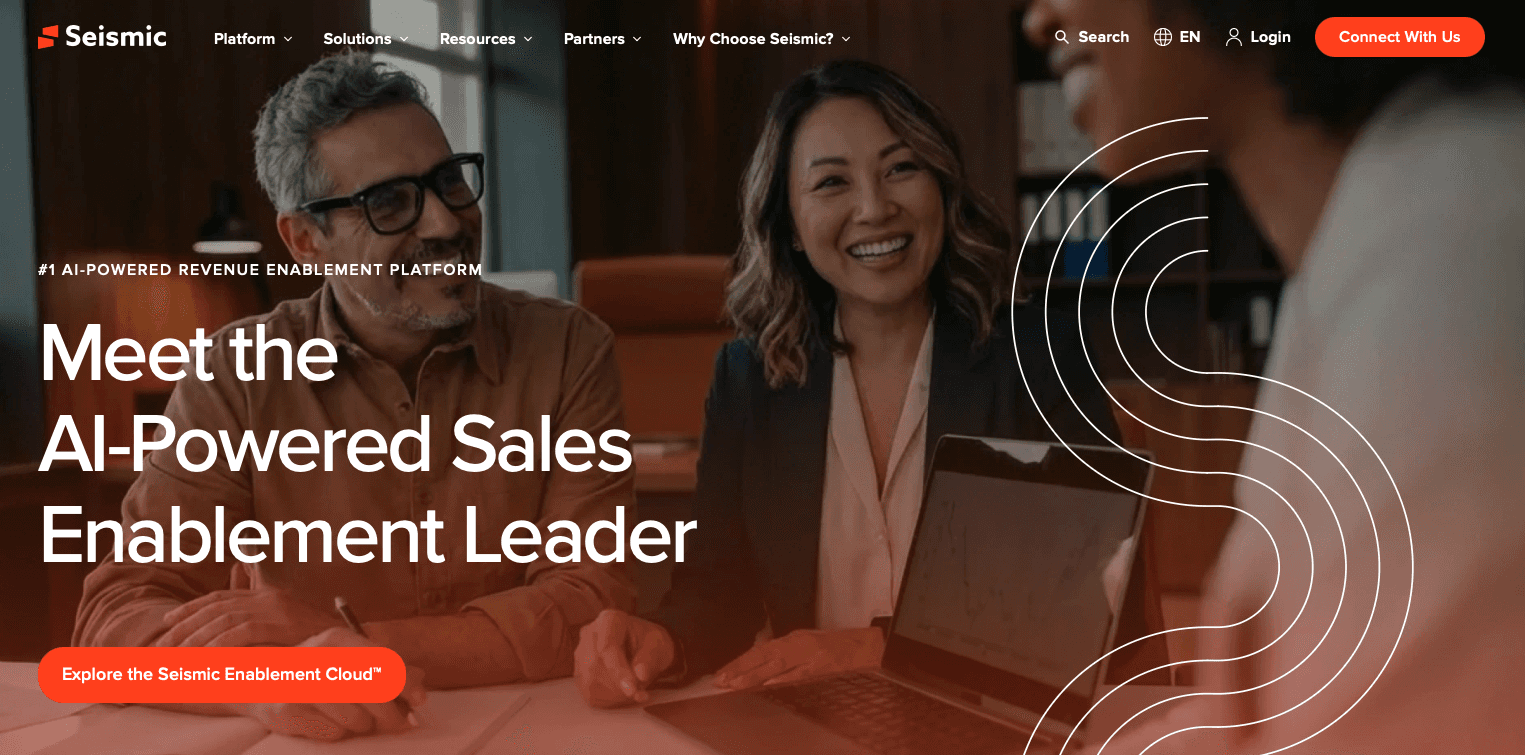
Seismic Learning is a sales enablement system focused on content management, coaching, and buyer engagement analytics. The solution provides a centralized repository for sales materials with tools to track content usage and buyer interactions.
The platform offers content management and version control for sales collateral, buyer engagement tracking showing how prospects interact with shared materials, sales coaching workflows and learning paths, and integration with CRM systems like Salesforce.
This solution works for sales organizations needing centralized content management and visibility into how reps share materials with buyers.
The limitation: The platform is primarily built for sales enablement use cases with heavy implementation requirements for non-sales scenarios like compliance, onboarding, or frontline training. Content must be manually accessed instead of being pushed to employees in workflow channels. The solution lacks AI-native training generation or messaging delivery across SMS, Teams, or Slack.
LinkedIn Learning
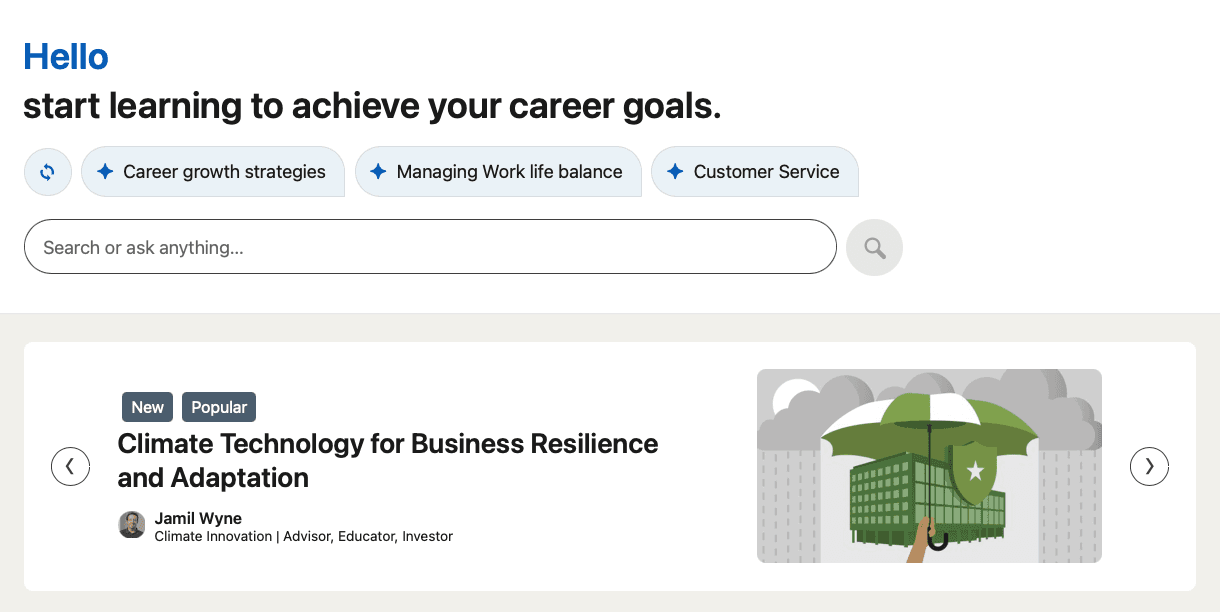
LinkedIn Learning is a video course library offering self-directed professional development. The catalog includes thousands of pre-built courses covering business, tech, and creative skills, organized into learning paths by job role. Courses can be displayed as credentials on LinkedIn profiles.
The solution works for individual employees seeking generic skill development during dedicated learning time.
The limitation: Long-form video content requires separate portal login and is not built for frontline or busy workers. Courses lack company-specific context and cannot be customized for proprietary processes or rapid launches. Training does not reach employees through SMS, Slack, Teams, or WhatsApp where work happens.
Firstup
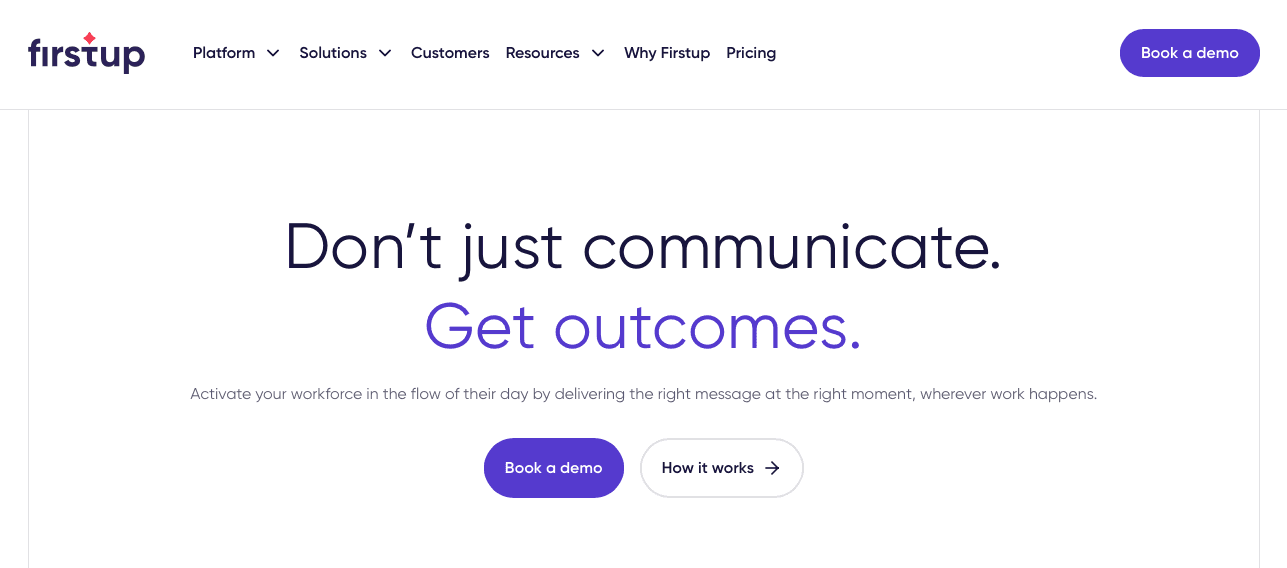
Firstup is an employee communication tool for broadcast messaging and company announcements. Organizations can reach employees through email, mobile app, and intranet with segmented content delivery, scheduling workflows, and analytics on message reach and open rates.
The solution works for corporate communications teams broadcasting announcements to large employee populations.
The limitation: Firstup focuses on broadcast communication and does not provide structured training pathways or competency measurement. It lacks interactive training pathways, reinforcement loops, or behavior change measurement beyond message opens. No AI-driven content creation exists for building multi-step training journeys tied to skill development, and communication remains one-way without creating learning outcomes.
Why Arist Is the Best Solution for Flow of Work Learning Delivery
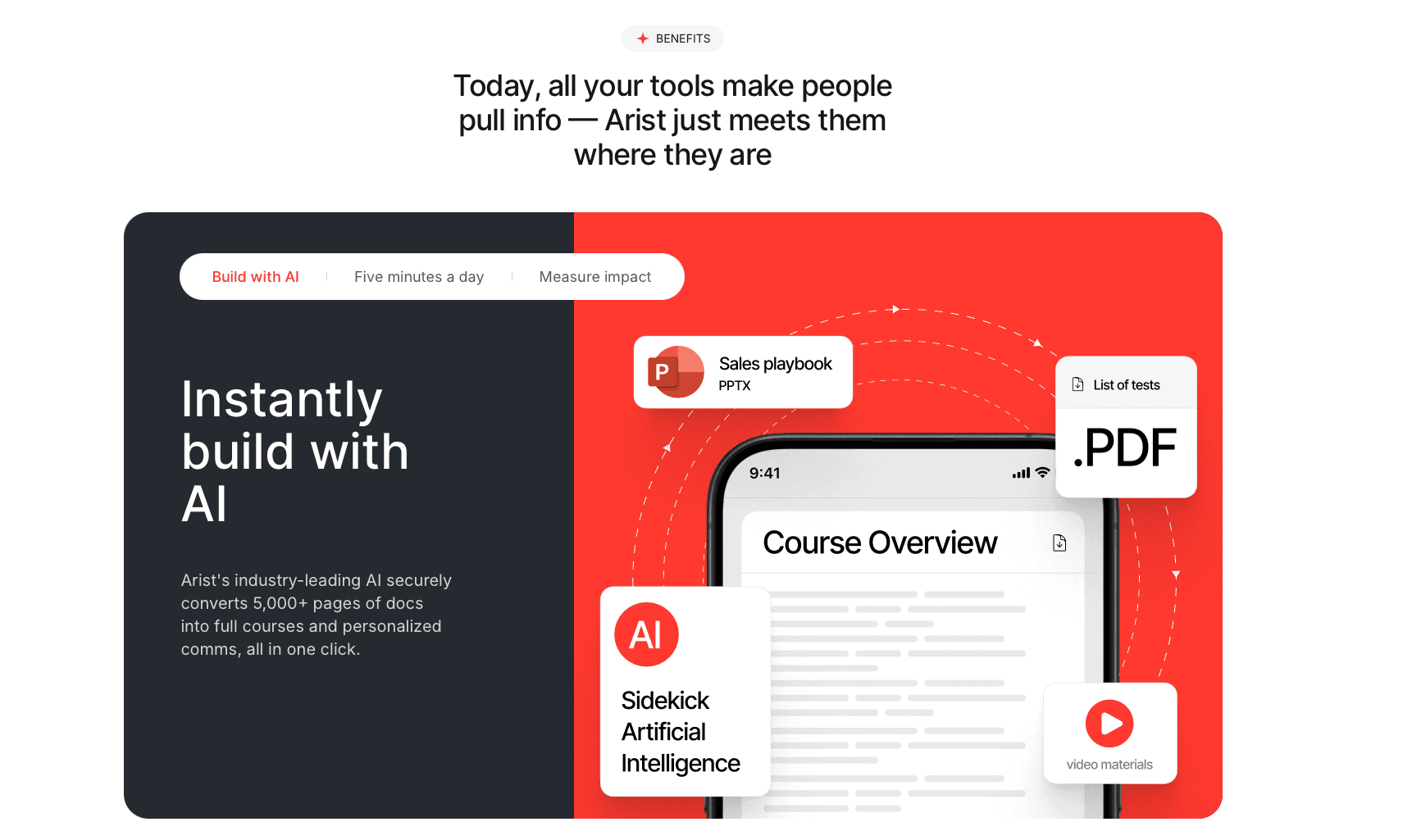
Flow of work learning succeeds when training shows up inside the tools employees already use and launches quickly enough to keep up with business change. Arist was built for that reality. As an AI-driven Enablement Agent Suite, Arist automates needs analysis, content creation, and delivery through SMS, WhatsApp, Teams, and Slack, tying engagement directly to business outcomes. Instead of sending employees to rarely used portals, Arist brings training into their daily workflow for both desk and frontline teams.
The Arist Agent Suite replaces surveys, consultants, authoring tools, and LMS systems with one coordinated system. AI-supported interviews help uncover skill gaps, generate multi-format courses in hours, personalize delivery by role, and connect learning to metrics like revenue, adoption, and time to productivity. Teams can move from identifying a gap to live training in as little as 48 hours.
Results at scale back it up. Wolters Kluwer trained 30,000 employees in three weeks and lifted AI adoption by 120 percent. Novartis cut content development from six weeks to four hours. Global brands use Arist to power product launches, compliance, and sales enablement inside the flow of work, with completion rates often exceeding 95 percent.
FAQs
Which flow of work learning solution is best for frontline workers without company email?
Arist delivers training via SMS and WhatsApp, reaching deskless employees directly on personal phones without requiring logins or app downloads. Axonify requires app installation on corporate devices, making it less practical for distributed teams.
How do I choose between a messaging-based system and an app-based training solution?
If your team works across Slack, Teams, or has limited device access, messaging-based delivery removes login friction and drives higher completion. App-based systems work better when employees use company-managed devices and already check multiple work applications regularly.
Can I create training content quickly without hiring an authoring team?
Arist's AI generates courses, videos, and quizzes in minutes from existing materials, eliminating manual production cycles. Traditional tools like LinkedIn Learning offer pre-built libraries but lack customization, while Qstream requires you to manually format all quiz content yourself.
What's the difference between sales enablement tools and full employee enablement systems?
Sales enablement tools focus on content management and rep coaching but lack delivery mechanisms for compliance, onboarding, or frontline training. Full enablement systems deliver training across all roles through workflow channels and measure behavior change beyond sales metrics.
When should I consider switching from my current LMS to a flow of work solution?
If completion rates fall below 30%, employees rarely log into your portal, or you need weeks to launch new training, flow of work delivery removes those barriers by meeting people where they already work.
Final Thoughts on Training without Logins or Portals
Flow of work learning works because it meets employees where work is already happening and removes the friction that causes traditional training to stall. When lessons arrive through SMS, Teams, Slack, or WhatsApp with no portal to open and no password to remember, participation rises and skills are applied faster on the job. That is the gap between the sub-30% completion rates common in legacy LMS systems and the 95%+ engagement modern messaging delivery can reach. Arist brings this model to life with AI-powered course creation, no-login delivery, and behavior change analytics in one system. If you want to see how flow of work learning can drive higher adoption across your organization, take a closer look at Arist.
Your employees are learning in the flow of work every day, whether your systems capture it or not. Yet most training still lives in portals that require people to stop working, log in, and search for a course they may never finish. Flow of work learning changes that by delivering training directly through SMS, Teams, Slack, and WhatsApp, meeting employees in the same channels where work already happens. Instead of asking your team to leave their workflow, modern messaging-based systems bring training to them, pairing no-login access with built-in analytics and AI-driven course creation. We reviewed the leading options in this category to understand which tools remove friction, drive real engagement, and support enterprise-wide enablement.
TLDR:
Flow of work learning delivers training in Teams, Slack, SMS, and WhatsApp without logins.
Traditional LMS platforms achieve under 30% engagement; messaging-native delivery hits 95%+.
AI-powered systems now automate content creation, deployment, and analytics in one workflow.
Some modern solutions deliver end-to-end enablement via messaging and trained 30,000 employees in three weeks.
Training reaches deskless and distributed workers directly on personal devices, eliminating portal friction and boosting completion rates
What Is Flow of Work Learning?
Flow of work learning delivers training inside the tools your team already uses: Teams, Slack, SMS, WhatsApp. Instead of forcing employees to log into a separate portal, courses arrive as messages in their everyday communication channels.
Traditional learning management systems require people to stop what they're doing, switch to a different app, and hunt for the right module. That friction kills engagement.
But here's the reality: many employees pick up skills by figuring things out while they work. Flow of work learning meets people in that moment of need. A sales rep preparing for a call gets a quick refresher via text. A frontline worker clocks in and receives a safety reminder through WhatsApp.
The difference is access and timing. When learning shows up where work happens, you remove the barriers that cause training to fail.
How We Ranked Flow of Work Learning Delivery Solutions
We assessed these solutions based on how well they deliver training where work actually happens.
Here's what mattered in our ranking:
Delivery channel flexibility: Can you reach employees via SMS, WhatsApp, Teams, and Slack, or are you locked into a single method?
No-login access: Does training require a separate portal, or does it show up directly in communication tools people already open dozens of times per day?
AI content creation: How quickly can you build and update courses without a full production team?
Analytics depth: Can you measure behavior change and business outcomes, or just track completions?
Deployment speed: How fast can you launch new training when priorities shift?
Frontline readiness: Does the solution work for deskless and distributed teams, or just desk workers?
This evaluation draws from publicly available product information, customer reviews, and documented vendor capabilities.
Solution | Delivery Channels | Login Required | AI Content Creation | Best For |
|---|---|---|---|---|
Arist | SMS, WhatsApp, Teams, Slack | No | Yes, AI-driven automation across creation, delivery, and analytics | Enterprise-wide enablement, frontline workers |
Axonify | Mobile and desktop app | Yes | No native AI-driven course generation | Frontline teams with corporate devices |
Qstream | Mobile app | Yes | No native AI-driven course generation | Sales reinforcement and retention testing |
Seismic Learning | Web portal with CRM integration | Yes | No native AI-driven course generation | Sales content management and coaching |
LinkedIn Learning | Web portal and mobile app | Yes | No | Individual self-directed skill development |
Firstup | Email, mobile app, intranet | Yes | No native AI-driven course generation | Corporate communications and announcements |
Arist
We built Arist to act as an enablement team in your pocket, managing the full people enablement flow for large enterprises. Training arrives directly in SMS, Slack, Teams, and WhatsApp without app downloads or logins.
Our AI Agent Suite automates needs analysis through voice and text interviews, generates courses in minutes from existing source materials, and delivers personalized learning journeys. Everything happens 1:1 in the tools your team already opens daily.
We manage the entire enablement cycle end-to-end. Wolters Kluwer trained 30,000 employees in under three weeks, increasing AI adoption by 120%. Completion rates consistently exceed 95% compared to typical sub-30% LMS engagement.
Axonify
Axonify is a frontline learning system offering app-based training with gamification and reinforcement features. The solution targets retail, manufacturing, and other industries with large deskless workforces, delivering daily training through mobile and desktop applications.
Axonify provides gamified daily training sessions with leaderboards and point systems, spaced repetition quizzes to reinforce knowledge retention, mobile app access for frontline workers, and communication tools for company announcements. The solution works for organizations with corporate-managed devices where employees can access a dedicated training app, and where gamification aligns with company culture.
The limitation: Axonify requires app installation and login, which creates adoption friction for distributed workforces. Training happens in a separate portal instead of existing workflow channels like Slack, Teams, or SMS.
Qstream
Qstream is a spaced repetition system that reinforces sales readiness through timed quizzes. The solution delivers scenario-based questions over days or weeks to improve retention through repeated testing.
Qstream provides spaced repetition methodology for knowledge reinforcement, scenario-based assessments and challenge questions, performance analytics showing retention scores, and mobile-accessible quiz delivery. Qstream works for sales teams with existing training content who need a reinforcement layer focused on retention through quiz-based practice.
The limitation: Qstream focuses on reinforcement and assessments instead of full course creation or end-to-end training development. You must manually format pre-existing materials. The solution is not messaging-native and lacks integration with SMS, Slack, Teams, or WhatsApp. The quiz-heavy experience does not support full employee journey pathways or behavior change initiatives beyond reinforcement testing.
Seismic Learning (Sales Enablement Platform)
Seismic Learning is a sales enablement system focused on content management, coaching, and buyer engagement analytics. The solution provides a centralized repository for sales materials with tools to track content usage and buyer interactions.
The platform offers content management and version control for sales collateral, buyer engagement tracking showing how prospects interact with shared materials, sales coaching workflows and learning paths, and integration with CRM systems like Salesforce.
This solution works for sales organizations needing centralized content management and visibility into how reps share materials with buyers.
The limitation: The platform is primarily built for sales enablement use cases with heavy implementation requirements for non-sales scenarios like compliance, onboarding, or frontline training. Content must be manually accessed instead of being pushed to employees in workflow channels. The solution lacks AI-native training generation or messaging delivery across SMS, Teams, or Slack.
LinkedIn Learning
LinkedIn Learning is a video course library offering self-directed professional development. The catalog includes thousands of pre-built courses covering business, tech, and creative skills, organized into learning paths by job role. Courses can be displayed as credentials on LinkedIn profiles.
The solution works for individual employees seeking generic skill development during dedicated learning time.
The limitation: Long-form video content requires separate portal login and is not built for frontline or busy workers. Courses lack company-specific context and cannot be customized for proprietary processes or rapid launches. Training does not reach employees through SMS, Slack, Teams, or WhatsApp where work happens.
Firstup
Firstup is an employee communication tool for broadcast messaging and company announcements. Organizations can reach employees through email, mobile app, and intranet with segmented content delivery, scheduling workflows, and analytics on message reach and open rates.
The solution works for corporate communications teams broadcasting announcements to large employee populations.
The limitation: Firstup focuses on broadcast communication and does not provide structured training pathways or competency measurement. It lacks interactive training pathways, reinforcement loops, or behavior change measurement beyond message opens. No AI-driven content creation exists for building multi-step training journeys tied to skill development, and communication remains one-way without creating learning outcomes.
Why Arist Is the Best Solution for Flow of Work Learning Delivery
Flow of work learning succeeds when training shows up inside the tools employees already use and launches quickly enough to keep up with business change. Arist was built for that reality. As an AI-driven Enablement Agent Suite, Arist automates needs analysis, content creation, and delivery through SMS, WhatsApp, Teams, and Slack, tying engagement directly to business outcomes. Instead of sending employees to rarely used portals, Arist brings training into their daily workflow for both desk and frontline teams.
The Arist Agent Suite replaces surveys, consultants, authoring tools, and LMS systems with one coordinated system. AI-supported interviews help uncover skill gaps, generate multi-format courses in hours, personalize delivery by role, and connect learning to metrics like revenue, adoption, and time to productivity. Teams can move from identifying a gap to live training in as little as 48 hours.
Results at scale back it up. Wolters Kluwer trained 30,000 employees in three weeks and lifted AI adoption by 120 percent. Novartis cut content development from six weeks to four hours. Global brands use Arist to power product launches, compliance, and sales enablement inside the flow of work, with completion rates often exceeding 95 percent.
FAQs
Which flow of work learning solution is best for frontline workers without company email?
Arist delivers training via SMS and WhatsApp, reaching deskless employees directly on personal phones without requiring logins or app downloads. Axonify requires app installation on corporate devices, making it less practical for distributed teams.
How do I choose between a messaging-based system and an app-based training solution?
If your team works across Slack, Teams, or has limited device access, messaging-based delivery removes login friction and drives higher completion. App-based systems work better when employees use company-managed devices and already check multiple work applications regularly.
Can I create training content quickly without hiring an authoring team?
Arist's AI generates courses, videos, and quizzes in minutes from existing materials, eliminating manual production cycles. Traditional tools like LinkedIn Learning offer pre-built libraries but lack customization, while Qstream requires you to manually format all quiz content yourself.
What's the difference between sales enablement tools and full employee enablement systems?
Sales enablement tools focus on content management and rep coaching but lack delivery mechanisms for compliance, onboarding, or frontline training. Full enablement systems deliver training across all roles through workflow channels and measure behavior change beyond sales metrics.
When should I consider switching from my current LMS to a flow of work solution?
If completion rates fall below 30%, employees rarely log into your portal, or you need weeks to launch new training, flow of work delivery removes those barriers by meeting people where they already work.
Final Thoughts on Training without Logins or Portals
Flow of work learning works because it meets employees where work is already happening and removes the friction that causes traditional training to stall. When lessons arrive through SMS, Teams, Slack, or WhatsApp with no portal to open and no password to remember, participation rises and skills are applied faster on the job. That is the gap between the sub-30% completion rates common in legacy LMS systems and the 95%+ engagement modern messaging delivery can reach. Arist brings this model to life with AI-powered course creation, no-login delivery, and behavior change analytics in one system. If you want to see how flow of work learning can drive higher adoption across your organization, take a closer look at Arist.
Related Resources

Article
AI Upskilling: A Practical Guide for Building Your Team in June 2026
Learn how to build AI upskilling programs that drive behavior change. Practical guide with frameworks, metrics, and proven strategies for June 2026.
Read more
Article
Salesforce Training for Beginners: Complete June 2026 Guide
Complete Salesforce training for beginners in June 2026. Learn Trailhead, certifications, admin paths, and career options with this full overview.
Read more
Bring real impact to your people
We care about solving meaningful problems and being thought partners first and foremost. Arist is used and loved by the Fortune 500 — and we'd love to support your goals.
Curious to get a demo or free trial? We'd love to chat:

Bring real impact to your people
We care about solving meaningful problems and being thought partners first and foremost. Arist is used and loved by the Fortune 500 — and we'd love to support your goals.
Curious to get a demo or free trial? We'd love to chat:
Bring real impact to your people
We care about solving meaningful problems and being thought partners first and foremost. Arist is used and loved by the Fortune 500 — and we'd love to support your goals.
Curious to get a demo or free trial? We'd love to chat: