How to Take a Human-Centered Approach to Learning in February 2026
How to Take a Human-Centered Approach to Learning in February 2026
You can spend months building a polished training program and still lose learners after week one, not because the material is weak, but because it lives outside the reality of how people work. Most training asks employees to step away from their day, log into another system, and care enough to finish. A human-centered approach to learning flips that logic by starting with real moments of friction: the questions people repeat, the tasks that slow them down, and the small windows of time they actually have to learn. When learning is designed around those moments, and delivered inside the flow of work, it stops feeling like an obligation and starts becoming useful. That’s the philosophy behind modern workforce learning solutions, which focus on meeting people where work already happens.
TLDR:
Human-centered learning starts by understanding daily friction learners face, not demographics.
Deliver training in Teams, Slack, or SMS where work happens to achieve up to 95% completion rates.
Personalize content by role and context; 91% of employees want training relevant to their job.
Track behavior change and business outcomes like time saved or revenue impact, not completion rates.
Some tools automate learner interviews, content creation, and delivery across thousands of employees.
Start with Empathy to Understand Your Learners
Empathy is the starting point. If you don't understand what your learners face daily, you're building training in a vacuum.
Most L&D teams start with demographics like job titles, departments, and tenure. But that data shows who people are, not what they're struggling with. Real empathy means asking why a sales rep avoids your LMS, or what prevents a frontline worker from finishing compliance training during their shift.
You need to understand the friction. Is it time? Access? Relevance? Confidence? The answers shape what comes next.
Teams that skip this step and jump straight to content creation end up with training that technically covers material but doesn't change behavior. Learners check the box and move on.
Before building a single course, spend time in your learners' world. Observe their workflows. Ask about their biggest challenges. That's where real learning design begins.
Conduct Learner Observations and Needs Assessments
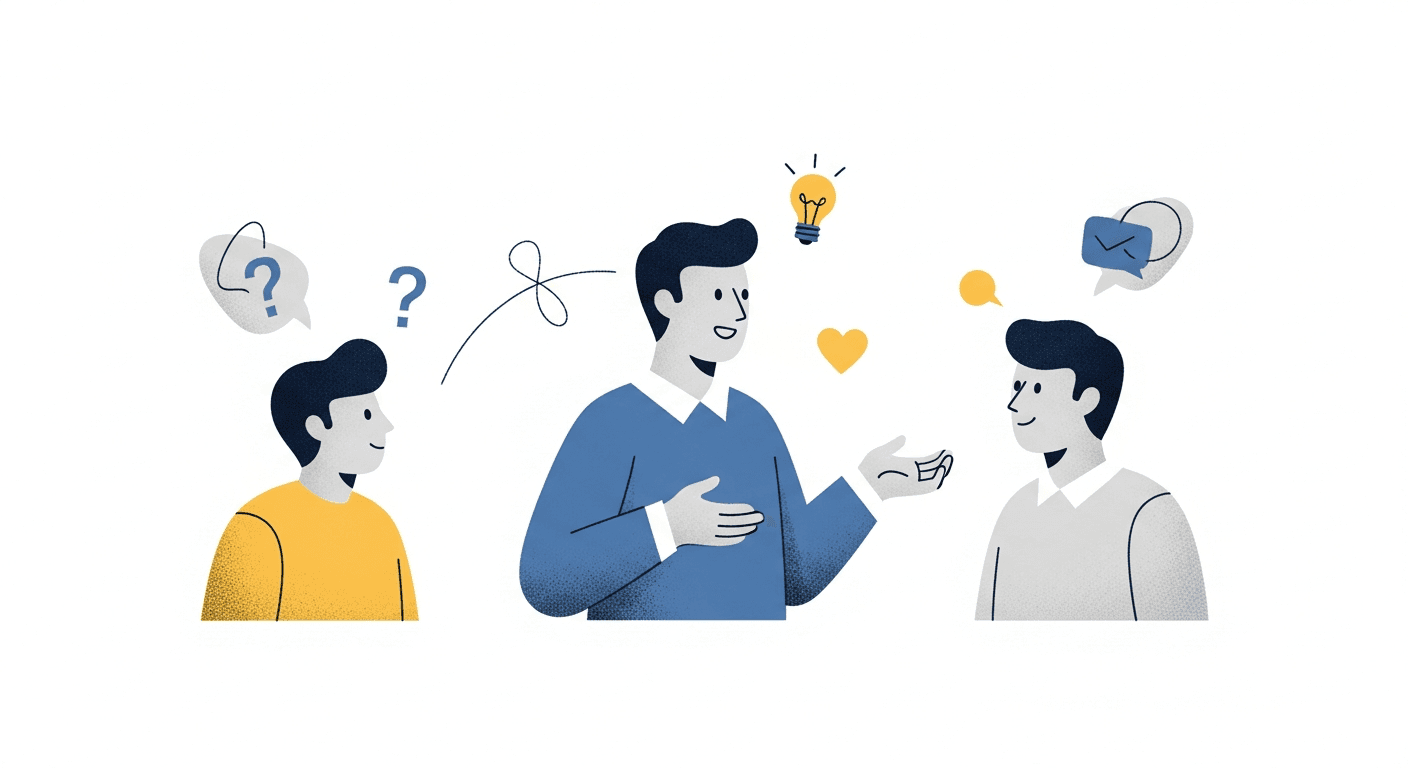
Start by watching people work. Shadow employees in their actual environment. What tools do they toggle between? When do they get stuck? What questions do they ask colleagues repeatedly? Write it down.
Next, conduct structured interviews. Don't rely on surveys with low response rates. Have real conversations. Ask open-ended questions: What's the hardest part of your role right now? What training would actually help you do your job better? When do you have time to learn?
Interview managers too. They see patterns across their teams and can identify skill gaps that employees might not articulate themselves.
Make this process repeatable. Create a simple interview template. Schedule recurring check-ins across different roles and regions. The goal is ongoing intelligence, not a one-time assessment.
AI can automate much of this work. A Needs Analysis Agent can conduct voice or text interviews at scale, then synthesize responses into actionable reports. It can interview hundreds of employees in days and identify patterns across departments, replacing what used to require months of consultant time.
The output should be clear: specific skill gaps, workflow barriers, and recommended interventions. Not "sales needs product training," but "reps struggle to identify our solution in competitive deals because they lack hands-on objection handling practice."
That level of specificity changes how you design learning.
Design Learning That Fits Workflow, Not the Other Way Around
Learning happens best where work already happens. When you force employees to log into a separate LMS or leave their daily tools, you create friction that most people avoid.
Your team is already in Teams, Slack, or checking SMS between meetings. That's where training should live, not in a portal they visit once every six weeks.
Organizations see up to 95% completion rates when they deliver content directly inside the tools employees use daily. The reason is simple: you're removing the barrier between learning and doing.
For frontline workers, this matters even more. A warehouse employee on a shift can't easily access a desktop LMS. But they can receive a quick training message on their phone between tasks. A field sales rep can review competitive positioning in Teams right before a client call.
Design your learning to interrupt workflow minimally. Short, actionable content delivered in existing channels. No context switching required.
Personalize Learning Paths by Role and Context
One-size-fits-all training wastes everyone's time. A sales rep preparing for client calls needs different content than a designer learning a new tool or a warehouse worker reviewing safety protocols.
91% of employees want training relevant to their role, and 93% prefer training that's easy to complete. The gap between what people want and what most L&D teams deliver remains wide.
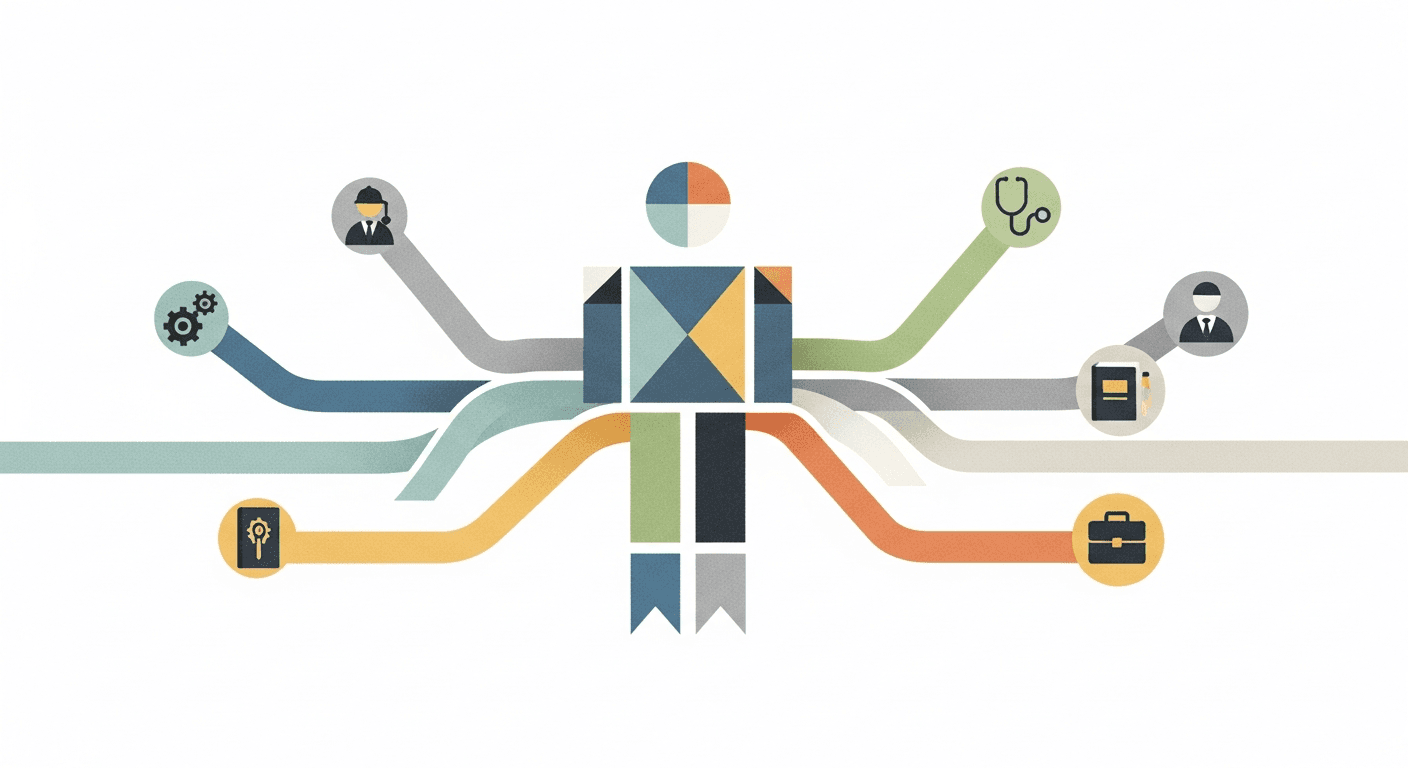
Role-based personalization starts with segmentation. Group learners by job function, tenure, location, and performance data. A new sales rep needs foundational product knowledge. A veteran rep needs advanced objection handling and competitive intelligence. Same team, completely different learning needs.
Context matters too. A manager rolling out a new CRM needs tactical how-to content. An executive sponsor needs strategic talking points. The same initiative requires different formats and depth depending on who's learning.
Build adaptive paths that adjust based on learner behavior. If someone already knows the basics, skip ahead. If they struggle with a concept, provide reinforcement.
Build Feedback Loops for Continuous Iteration
Training shouldn't be static. Every course you deploy needs refinement based on how learners actually respond.
Build feedback collection into your delivery. Ask learners what worked, what didn't, and what they'd change. Keep it short. A single question after each lesson generates more useful insight than a long survey sent weeks later.
Track behavioral signals too. Where do people drop off? Which modules get revisited? What questions come up in follow-up conversations? These patterns reveal what's confusing or missing.
Review feedback weekly, not quarterly. If multiple learners struggle with the same concept, revise that section immediately. If a topic generates low engagement, either improve it or cut it.
Your Analytics Agent can surface these patterns automatically, flagging content that underperforms and suggesting adjustments based on learner behavior across cohorts.
The best L&D teams treat learning like product teams treat software: ship quickly, gather data, iterate constantly. Each version gets better because you're listening to the people using it.
Measure What Matters to Learners and the Business
Stop measuring completion rates. They tell you who clicked through, not who changed behavior.
Track what actually matters: Can learners apply new skills on the job? Did safety incidents decrease? Did sales conversations improve? Are employees asking fewer repeat questions?
Link training to business KPIs. Map learning interventions to outcomes like revenue, retention, time to productivity, or error reduction. Your Analytics Agent can connect these dots automatically, showing which training moves specific business metrics.
Set up a simple framework:
Metric Type | What to Track |
|---|---|
Behavior | Skills applied in real scenarios, workflow changes |
Business | Revenue impact, incident reduction, time saved |
Learner | Confidence gains, self-reported usefulness |
Report results in language stakeholders understand. Instead of "95% completion," say "reduced onboarding time by three weeks" or "increased deal win rate by 12%."
Scale Human-Centered Learning with AI Orchestration
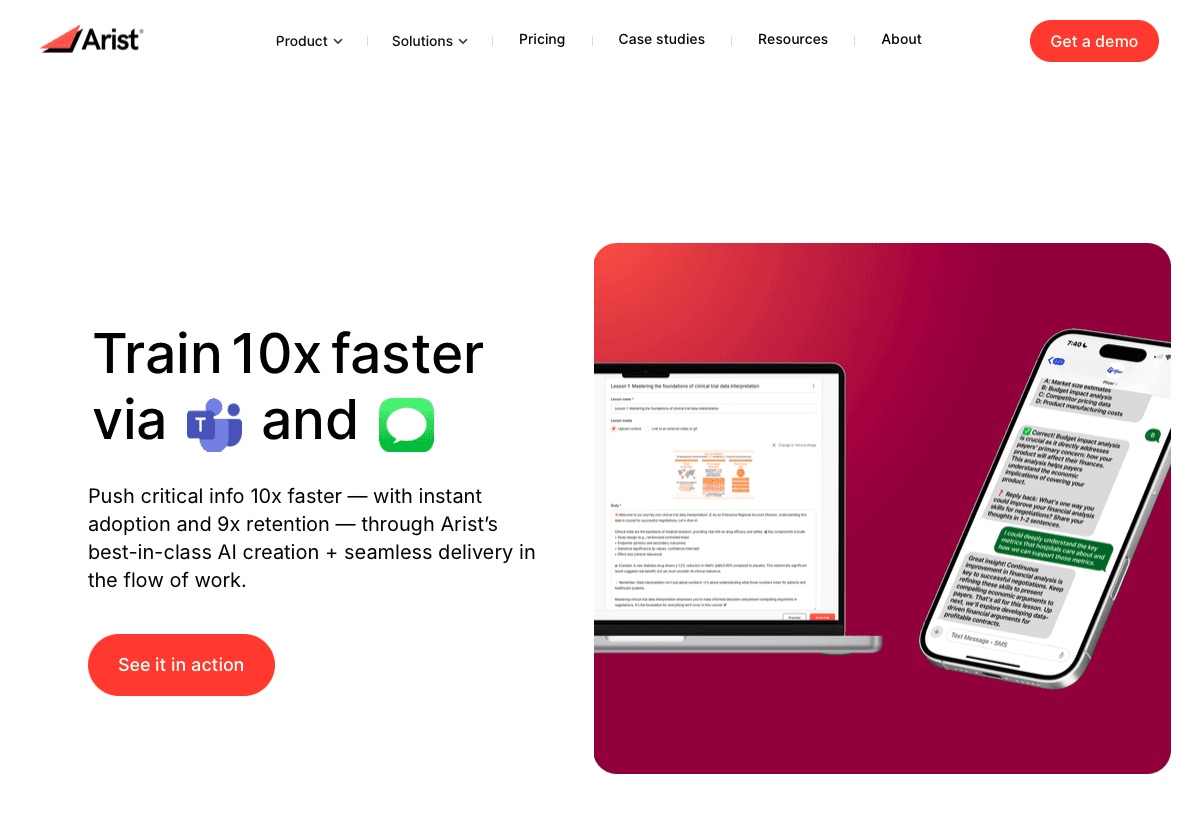
AI orchestration solves the scale problem that breaks most human-centered learning programs. Traditional approaches require interviewing hundreds of employees, creating personalized content for dozens of roles, and delivering training across global teams. That means huge L&D headcount or expensive consultants.
The Arist Agent Suite automates this work while keeping learning learner-first. The Needs Analysis Agent conducts voice or text interviews with employees, then synthesizes responses into actionable gap analyses in days instead of months. The Creator Agent generates role-specific content from your existing materials, ingesting thousands of pages to build tailored learning paths. A single product launch can produce separate training for sales reps, customer support, and executives without manual duplication.
Delivery happens where people already work: Teams, Slack, SMS, and WhatsApp. No separate logins or portal friction. The agents handle repetitive work while you focus on strategy and iteration, letting you reach thousands of learners simultaneously without losing the human-centered principles that drive behavior change.
FAQs
How do I identify real skill gaps without relying on low-response surveys?
Conduct structured one-on-one interviews with employees and managers using open-ended questions about daily challenges and workflow barriers. AI-powered needs analysis tools can now automate these interviews at scale, synthesizing hundreds of responses into actionable reports in days instead of months.
What's the difference between role-based and context-based personalization?
Role-based personalization segments content by job function (new sales rep vs. veteran rep), while context-based personalization adjusts content based on the specific situation (a manager implementing a new CRM needs tactical steps, while an executive needs strategic talking points). Both should work together to deliver relevant training.
When should I revise training content after launching it?
Review learner feedback and behavioral data weekly, not quarterly. If multiple learners struggle with the same section or drop off at a specific point, revise that content immediately instead of waiting for a formal review cycle.
How do I measure training impact beyond completion rates?
Track behavior change and business outcomes: Can learners apply skills on the job? Did safety incidents decrease? Did sales win rates improve? Link training interventions directly to KPIs like revenue impact, time to productivity, or error reduction.
Can I deliver training through SMS and Teams instead of an LMS?
Yes, and you should. Delivering content through tools employees already use (Teams, Slack, SMS, and WhatsApp) removes login friction and can increase completion rates to 95% compared to traditional LMS engagement of 30% or less.
Final Thoughts on Making Learning Work for Your People
Training breaks down when it ignores how work actually gets done. A human-centered approach to learning starts by fitting learning into daily tools and real problems, so people can apply new skills without stepping away from their responsibilities. Arist was built around this idea, combining learner insight, role-aware content, and delivery inside the flow of work so training feels useful instead of forced. With the right system handling interviews, content, and delivery behind the scenes, teams can scale learning while keeping it grounded in human needs. Start small, focus on one real challenge, and build from there with Arist.
You can spend months building a polished training program and still lose learners after week one, not because the material is weak, but because it lives outside the reality of how people work. Most training asks employees to step away from their day, log into another system, and care enough to finish. A human-centered approach to learning flips that logic by starting with real moments of friction: the questions people repeat, the tasks that slow them down, and the small windows of time they actually have to learn. When learning is designed around those moments, and delivered inside the flow of work, it stops feeling like an obligation and starts becoming useful. That’s the philosophy behind modern workforce learning solutions, which focus on meeting people where work already happens.
TLDR:
Human-centered learning starts by understanding daily friction learners face, not demographics.
Deliver training in Teams, Slack, or SMS where work happens to achieve up to 95% completion rates.
Personalize content by role and context; 91% of employees want training relevant to their job.
Track behavior change and business outcomes like time saved or revenue impact, not completion rates.
Some tools automate learner interviews, content creation, and delivery across thousands of employees.
Start with Empathy to Understand Your Learners
Empathy is the starting point. If you don't understand what your learners face daily, you're building training in a vacuum.
Most L&D teams start with demographics like job titles, departments, and tenure. But that data shows who people are, not what they're struggling with. Real empathy means asking why a sales rep avoids your LMS, or what prevents a frontline worker from finishing compliance training during their shift.
You need to understand the friction. Is it time? Access? Relevance? Confidence? The answers shape what comes next.
Teams that skip this step and jump straight to content creation end up with training that technically covers material but doesn't change behavior. Learners check the box and move on.
Before building a single course, spend time in your learners' world. Observe their workflows. Ask about their biggest challenges. That's where real learning design begins.
Conduct Learner Observations and Needs Assessments
Start by watching people work. Shadow employees in their actual environment. What tools do they toggle between? When do they get stuck? What questions do they ask colleagues repeatedly? Write it down.
Next, conduct structured interviews. Don't rely on surveys with low response rates. Have real conversations. Ask open-ended questions: What's the hardest part of your role right now? What training would actually help you do your job better? When do you have time to learn?
Interview managers too. They see patterns across their teams and can identify skill gaps that employees might not articulate themselves.
Make this process repeatable. Create a simple interview template. Schedule recurring check-ins across different roles and regions. The goal is ongoing intelligence, not a one-time assessment.
AI can automate much of this work. A Needs Analysis Agent can conduct voice or text interviews at scale, then synthesize responses into actionable reports. It can interview hundreds of employees in days and identify patterns across departments, replacing what used to require months of consultant time.
The output should be clear: specific skill gaps, workflow barriers, and recommended interventions. Not "sales needs product training," but "reps struggle to identify our solution in competitive deals because they lack hands-on objection handling practice."
That level of specificity changes how you design learning.
Design Learning That Fits Workflow, Not the Other Way Around
Learning happens best where work already happens. When you force employees to log into a separate LMS or leave their daily tools, you create friction that most people avoid.
Your team is already in Teams, Slack, or checking SMS between meetings. That's where training should live, not in a portal they visit once every six weeks.
Organizations see up to 95% completion rates when they deliver content directly inside the tools employees use daily. The reason is simple: you're removing the barrier between learning and doing.
For frontline workers, this matters even more. A warehouse employee on a shift can't easily access a desktop LMS. But they can receive a quick training message on their phone between tasks. A field sales rep can review competitive positioning in Teams right before a client call.
Design your learning to interrupt workflow minimally. Short, actionable content delivered in existing channels. No context switching required.
Personalize Learning Paths by Role and Context
One-size-fits-all training wastes everyone's time. A sales rep preparing for client calls needs different content than a designer learning a new tool or a warehouse worker reviewing safety protocols.
91% of employees want training relevant to their role, and 93% prefer training that's easy to complete. The gap between what people want and what most L&D teams deliver remains wide.
Role-based personalization starts with segmentation. Group learners by job function, tenure, location, and performance data. A new sales rep needs foundational product knowledge. A veteran rep needs advanced objection handling and competitive intelligence. Same team, completely different learning needs.
Context matters too. A manager rolling out a new CRM needs tactical how-to content. An executive sponsor needs strategic talking points. The same initiative requires different formats and depth depending on who's learning.
Build adaptive paths that adjust based on learner behavior. If someone already knows the basics, skip ahead. If they struggle with a concept, provide reinforcement.
Build Feedback Loops for Continuous Iteration
Training shouldn't be static. Every course you deploy needs refinement based on how learners actually respond.
Build feedback collection into your delivery. Ask learners what worked, what didn't, and what they'd change. Keep it short. A single question after each lesson generates more useful insight than a long survey sent weeks later.
Track behavioral signals too. Where do people drop off? Which modules get revisited? What questions come up in follow-up conversations? These patterns reveal what's confusing or missing.
Review feedback weekly, not quarterly. If multiple learners struggle with the same concept, revise that section immediately. If a topic generates low engagement, either improve it or cut it.
Your Analytics Agent can surface these patterns automatically, flagging content that underperforms and suggesting adjustments based on learner behavior across cohorts.
The best L&D teams treat learning like product teams treat software: ship quickly, gather data, iterate constantly. Each version gets better because you're listening to the people using it.
Measure What Matters to Learners and the Business
Stop measuring completion rates. They tell you who clicked through, not who changed behavior.
Track what actually matters: Can learners apply new skills on the job? Did safety incidents decrease? Did sales conversations improve? Are employees asking fewer repeat questions?
Link training to business KPIs. Map learning interventions to outcomes like revenue, retention, time to productivity, or error reduction. Your Analytics Agent can connect these dots automatically, showing which training moves specific business metrics.
Set up a simple framework:
Metric Type | What to Track |
|---|---|
Behavior | Skills applied in real scenarios, workflow changes |
Business | Revenue impact, incident reduction, time saved |
Learner | Confidence gains, self-reported usefulness |
Report results in language stakeholders understand. Instead of "95% completion," say "reduced onboarding time by three weeks" or "increased deal win rate by 12%."
Scale Human-Centered Learning with AI Orchestration
AI orchestration solves the scale problem that breaks most human-centered learning programs. Traditional approaches require interviewing hundreds of employees, creating personalized content for dozens of roles, and delivering training across global teams. That means huge L&D headcount or expensive consultants.
The Arist Agent Suite automates this work while keeping learning learner-first. The Needs Analysis Agent conducts voice or text interviews with employees, then synthesizes responses into actionable gap analyses in days instead of months. The Creator Agent generates role-specific content from your existing materials, ingesting thousands of pages to build tailored learning paths. A single product launch can produce separate training for sales reps, customer support, and executives without manual duplication.
Delivery happens where people already work: Teams, Slack, SMS, and WhatsApp. No separate logins or portal friction. The agents handle repetitive work while you focus on strategy and iteration, letting you reach thousands of learners simultaneously without losing the human-centered principles that drive behavior change.
FAQs
How do I identify real skill gaps without relying on low-response surveys?
Conduct structured one-on-one interviews with employees and managers using open-ended questions about daily challenges and workflow barriers. AI-powered needs analysis tools can now automate these interviews at scale, synthesizing hundreds of responses into actionable reports in days instead of months.
What's the difference between role-based and context-based personalization?
Role-based personalization segments content by job function (new sales rep vs. veteran rep), while context-based personalization adjusts content based on the specific situation (a manager implementing a new CRM needs tactical steps, while an executive needs strategic talking points). Both should work together to deliver relevant training.
When should I revise training content after launching it?
Review learner feedback and behavioral data weekly, not quarterly. If multiple learners struggle with the same section or drop off at a specific point, revise that content immediately instead of waiting for a formal review cycle.
How do I measure training impact beyond completion rates?
Track behavior change and business outcomes: Can learners apply skills on the job? Did safety incidents decrease? Did sales win rates improve? Link training interventions directly to KPIs like revenue impact, time to productivity, or error reduction.
Can I deliver training through SMS and Teams instead of an LMS?
Yes, and you should. Delivering content through tools employees already use (Teams, Slack, SMS, and WhatsApp) removes login friction and can increase completion rates to 95% compared to traditional LMS engagement of 30% or less.
Final Thoughts on Making Learning Work for Your People
Training breaks down when it ignores how work actually gets done. A human-centered approach to learning starts by fitting learning into daily tools and real problems, so people can apply new skills without stepping away from their responsibilities. Arist was built around this idea, combining learner insight, role-aware content, and delivery inside the flow of work so training feels useful instead of forced. With the right system handling interviews, content, and delivery behind the scenes, teams can scale learning while keeping it grounded in human needs. Start small, focus on one real challenge, and build from there with Arist.
Related Resources

Article
AI Upskilling: A Practical Guide for Building Your Team in June 2026
Learn how to build AI upskilling programs that drive behavior change. Practical guide with frameworks, metrics, and proven strategies for June 2026.
Read more
Article
Salesforce Training for Beginners: Complete June 2026 Guide
Complete Salesforce training for beginners in June 2026. Learn Trailhead, certifications, admin paths, and career options with this full overview.
Read more
Bring real impact to your people
We care about solving meaningful problems and being thought partners first and foremost. Arist is used and loved by the Fortune 500 — and we'd love to support your goals.
Curious to get a demo or free trial? We'd love to chat:

Bring real impact to your people
We care about solving meaningful problems and being thought partners first and foremost. Arist is used and loved by the Fortune 500 — and we'd love to support your goals.
Curious to get a demo or free trial? We'd love to chat:
Bring real impact to your people
We care about solving meaningful problems and being thought partners first and foremost. Arist is used and loved by the Fortune 500 — and we'd love to support your goals.
Curious to get a demo or free trial? We'd love to chat: