How to Track Employee Training Progress: Top Tools & Key Metrics for February 2026
How to Track Employee Training Progress: Top Tools & Key Metrics for February 2026
Learn how to track employee training progress with the best tools and metrics for February 2026. Measure engagement, retention, and behavior change effectively.
Your team completed training last month, yet performance gaps remain. The issue is not the effort invested in learning but how employee training progress is measured. Most systems report course completions and logins while missing retention, behavior change, and real business impact. When employee training progress is disconnected from on-the-job results, leaders lack visibility into what is actually improving performance. Here is how to track what truly matters and which tools make that possible. Approximately 80% of the global workforce is deskless, working in warehouses, hospitals, retail stores, and manufacturing floors without regular access to computers or corporate portals. This reality makes workflow-native tracking convenient and necessary for organizations seeking to measure training effectiveness across their entire workforce.
TLDR:
Track completion, knowledge retention, and behavior change, on top of course finishes.
Certain platforms deliver training via SMS, Teams, and Slack with 95% adoption and automated analytics.
Top tools include Axonify for gamification, Qstream for quizzes, and Mindtickle for sales.
Real-time dashboards linking training to business KPIs improve ROI visibility.
Workflow-native tracking removes app friction and increases engagement rates.
What Is Employee Training Progress Tracking?
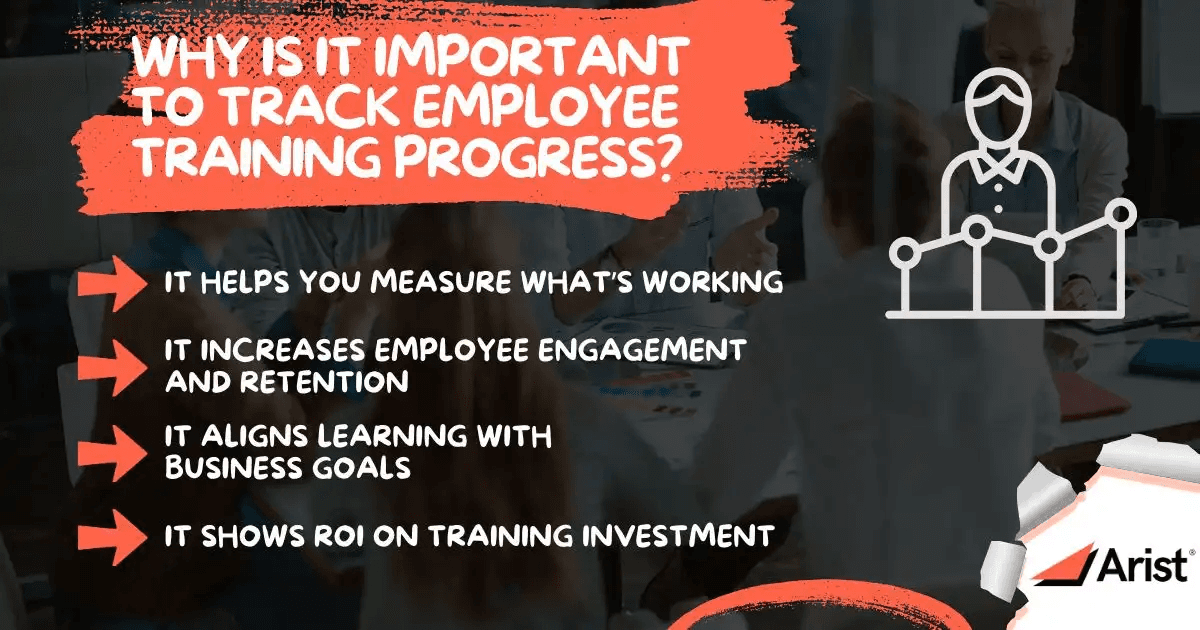
Employee training progress tracking measures how learners engage with training, retain knowledge, and apply new skills. It answers whether employees complete courses, remember what they learned, and change behavior in ways that affect business outcomes.
Many organizations track only completion rates as a compliance checkbox. Effective tracking connects learning activity to performance results like reduced time to proficiency, improved quality scores, or higher retention rates. The stakes are high: only 30% of sales reps feel confident hitting their targets, and the average B2B SaaS sales cycle now stretches to 134 days. Without this measurement, training programs operate without visibility into what drives impact or return on investment.
How We Ranked Employee Training Progress Tracking Solutions
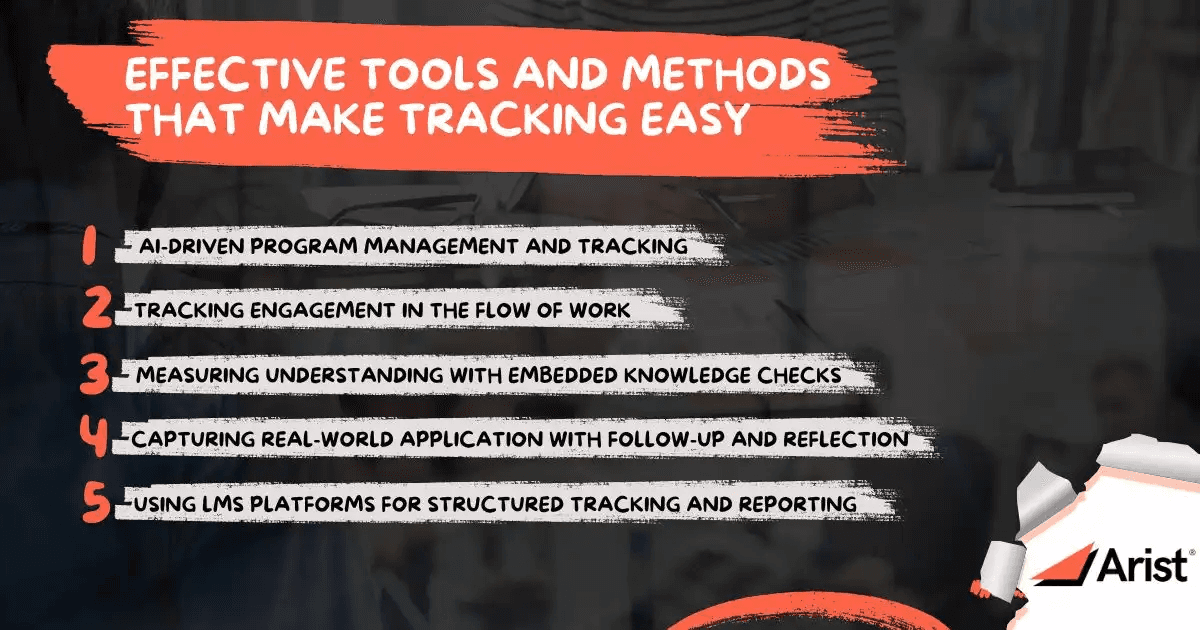
When assessing training progress tracking solutions, we focused on capabilities that actually drive training outcomes instead of just collecting data.
Here are the criteria that separate effective tracking from basic reporting:
Real-time engagement analytics that show who's participating, when they drop off, and where they need support
Retention and behavior measurement beyond completion rates, including knowledge checks weeks after training and on-the-job application tracking
Integration with existing workflow tools like Teams, Slack, or SMS so tracking happens where employees already work
Automated reporting that surfaces insights without manual data pulls or requiring analysts to interpret dashboards
Connection between training data and business KPIs like sales performance, safety incidents, or time-to-productivity
Flexibility to track distributed and frontline workers and desk-based employees with easy computer access
Solution | Delivery Method | Tracking Capabilities | Best For | Key Limitation |
|---|---|---|---|---|
Arist | SMS, Teams, Slack, WhatsApp - no app required | Real-time engagement, retention tracking, behavior change measurement, automated analytics, business KPI integration | All employee types across sales, frontline, compliance, and operations with 95% adoption rates | No major limitations for organizations seeking workflow-based tracking across engagement, retention, and behavior change |
Axonify | Dedicated mobile/desktop app with required login | Gamification-based engagement, daily reinforcement quizzes, assessment analytics within proprietary app | Frontline workers who can commit to daily app-based training with gamification preference | Requires app downloads and separate credentials, reducing adoption among distributed workers |
Qstream | Standalone platform with Microsoft Teams integration (primarily notifications); limited workflow-native delivery compared to SMS-first platforms | Quiz-based spaced repetition, recall tracking over time, completion rates and assessment scores | Teams with existing content needing quiz-driven knowledge checks for sales readiness | No content creation, no SMS/Slack/Teams delivery, limited to assessment scores without behavior tracking |
Mindtickle | Web tool with CRM integration - outside flow of work | Sales readiness tracking, certification management, role-play feedback, conversation intelligence with CRM data | Large sales organizations needing deep readiness tracking with coaching measurement | Primarily built for sales enablement; not typically used for enterprise-wide training across all departments; limited workflow-native messaging delivery for frontline/non-sales teams |
LinkedIn Learning | Typically accessed via LinkedIn Learning (often surfaced via LMS integrations); long-form video format | Course completion tracking, content recommendations, skill assessment quizzes, LinkedIn credential display | Self-paced professional development for desk workers with broad catalog access needs | No SMS/Slack/Teams delivery, separate portal reduces engagement, unsuitable for frontline or time-limited employees |
Articulate | Content creation tool requiring LMS export | SCORM-compliant content tracking, course completion and quiz results when paired with separate LMS | Organizations needing AI video and content authoring tools with existing LMS infrastructure | No built-in delivery, reinforcement, or analytics - cannot measure behavior change without additional systems |
Arist
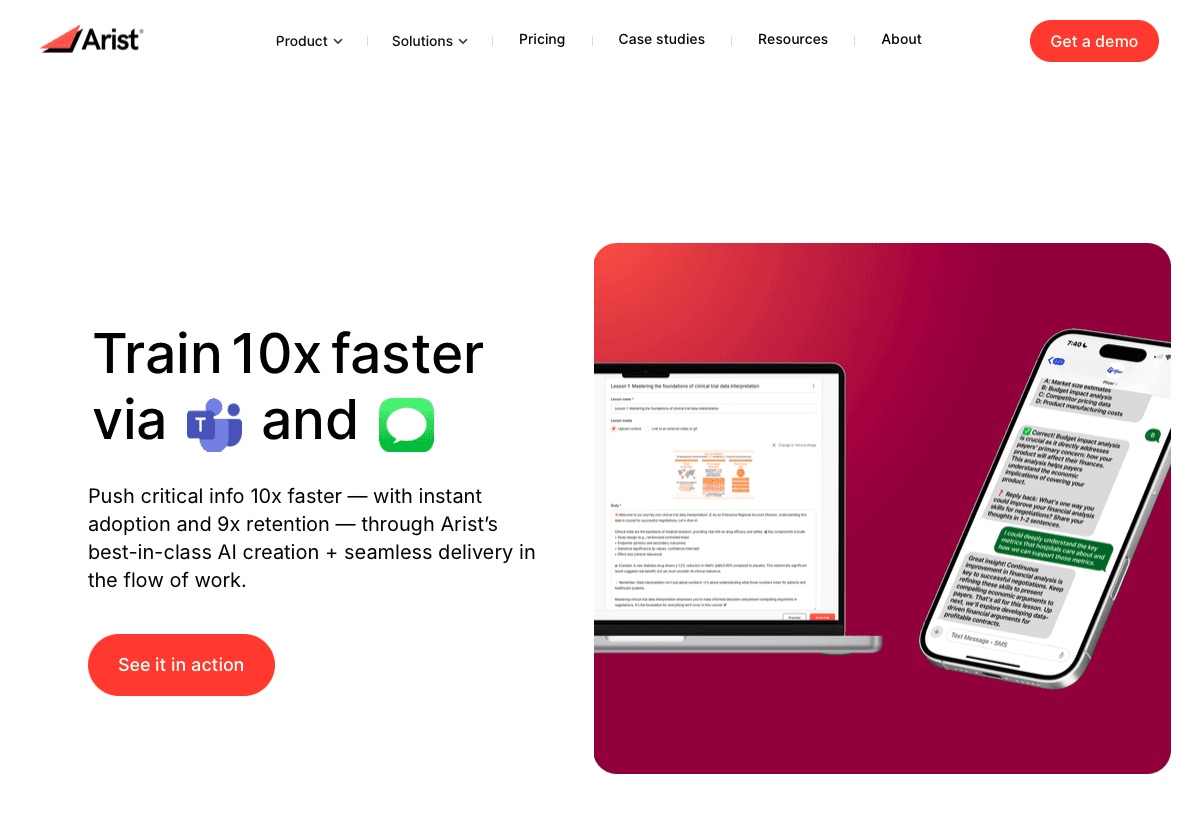
Arist is an AI-driven Enablement Agent Suite that automates the entire people enablement loop: needs analysis, content creation, delivery, and analytics. The platform delivers multi-format training (video, audio, interactive) through chat-based tools like SMS, Teams, and Slack, and can deploy training in 48 hours from identifying a skill gap to delivering targeted content with analytics that track engagement, retention, and behavior change in real time.
The Analytics Agent measures outcomes beyond completions and automatically connects training interventions to business outcomes, showing which training moves specific business metrics like revenue impact, incident reduction, time saved, time to productivity, or error reduction. You can query training data in plain English and get stakeholder-specific reports automatically. The system tracks reinforcement over time through spaced repetition and monitors behavioral lift by connecting training to on-the-job performance changes. Automated cohort dashboards show which groups are progressing and where gaps exist.
Wolters Kluwer trained 30,000 employees in under three weeks and saw a 120% lift in AI adoption. Novartis saved approximately $2.2M per year and achieved 80% immediate application of learning while reducing content creation time from 6 weeks to 4 hours. Arist achieves completion rates well above traditional training programs when delivering content directly inside tools employees use daily (Teams, Slack, SMS), compared to typical LMS engagement of 30% or less. Bite-sized training courses achieve 80% completion rates versus 20% for traditional training modules, showing considerably higher engagement with short-form learning formats. Employees typically check traditional LMS systems only once every six weeks, accentuating the engagement gap that flow-of-work delivery solves. Tracking happens passively inside the channels employees already use.
Axonify
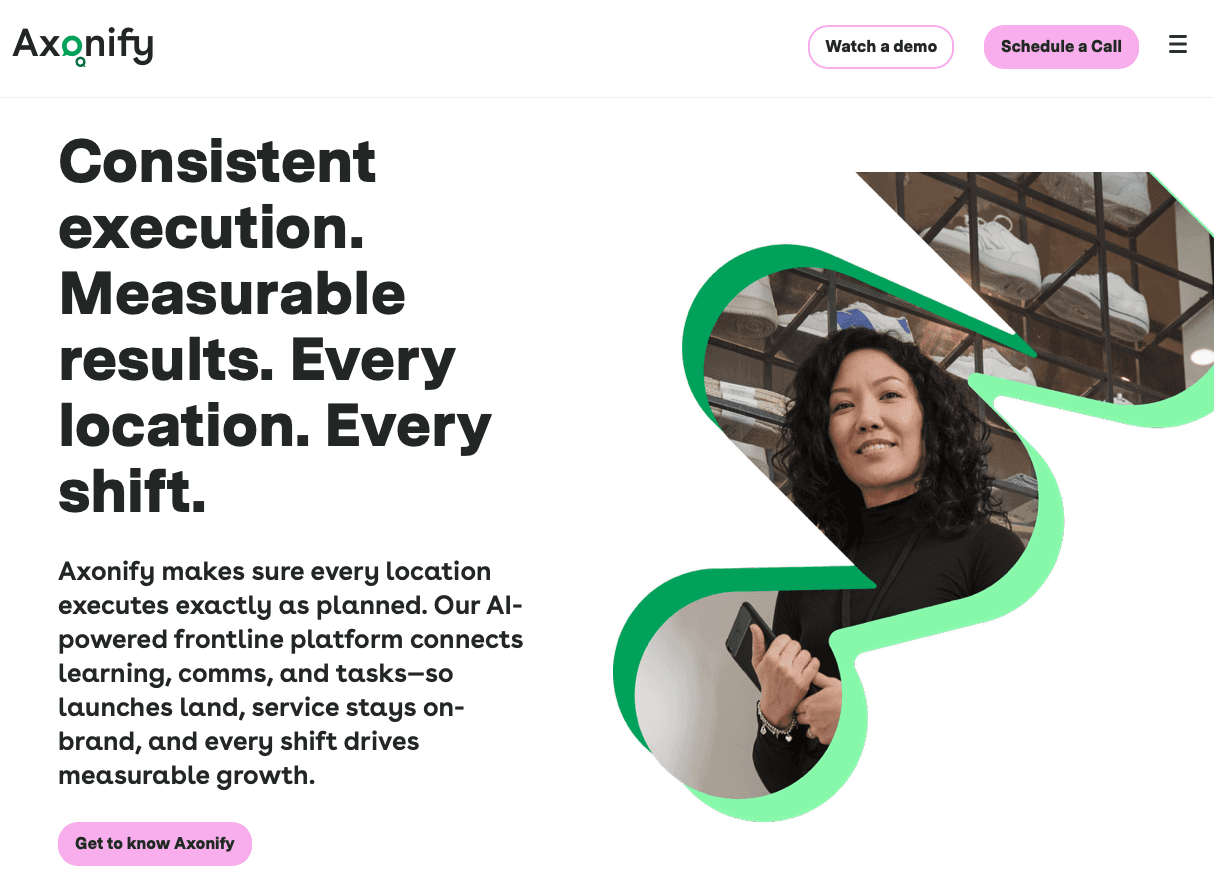
Axonify is a frontline learning solution offering reinforcement, gamification, and communication tools through its mobile and desktop app.
The solution includes gamification-based engagement tracking with leaderboards and points systems, daily reinforcement quizzes that measure knowledge retention, and assessment analytics within their proprietary app environment. It works for organizations with frontline workers who can commit to daily app-based training and prefer gamification as their primary engagement driver.
Axonify requires app downloads and separate login credentials, which can reduce adoption among distributed workers who aren't regularly using dedicated training apps.
Qstream
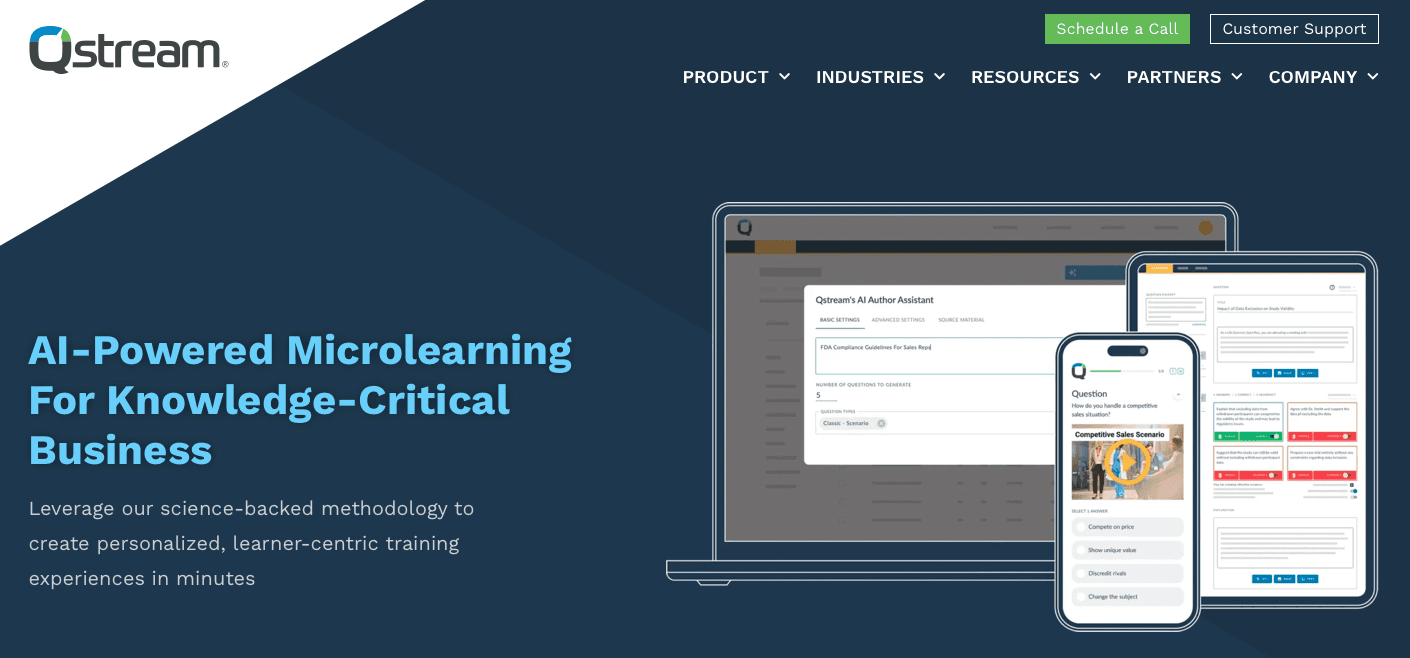
Qstream is a spaced repetition tool built around quiz-based reinforcement for sales readiness. It tracks recall over time through scheduled assessments and performance analytics focused on completion rates and scores.
The tool works well for teams with existing content who need quiz-driven knowledge checks. However, it requires pre-built training materials and doesn't create content. It does not natively deliver training via SMS or WhatsApp, and its Microsoft Teams integration is primarily notification-based instead of full in-chat training delivery. Progress tracking stays limited to assessment scores instead of tracking behavioral change across multiple dimensions.
Mindtickle
Mindtickle is a sales readiness solution that focuses on content management, coaching, and conversation intelligence for sales teams. The tool offers sales-specific readiness tracking with certification management, content delivery analytics for enablement materials, and role-play feedback tracking that integrates with CRM systems to match with sales performance.
The solution works well for large sales organizations that need deep readiness tracking with coaching measurement. However, it is primarily built for sales enablement teams and is not typically used for enterprise-wide training across all departments. Learning happens outside the flow of work and requires manual content access, with no native messaging delivery for frontline or non-sales employees.
LinkedIn Learning
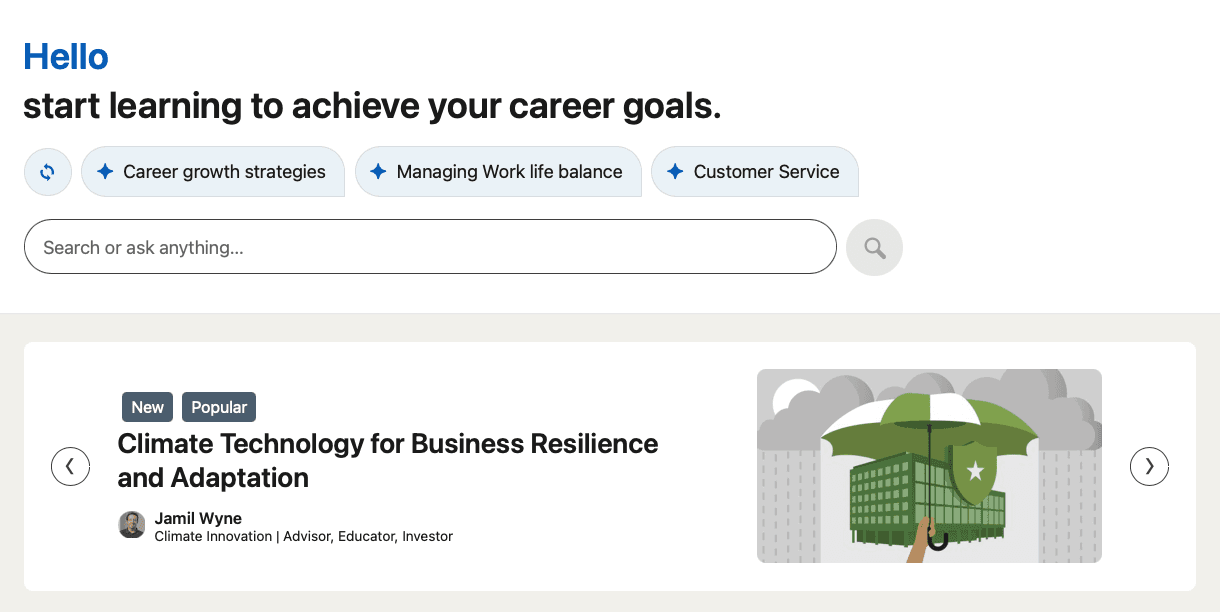
LinkedIn Learning is a video course library focused on self-directed learning with thousands of professional development courses.
The service tracks course completion across its video library, recommends content based on viewing history, and offers skill assessment quizzes with proficiency tracking. Integration with LinkedIn profiles allows credential display.
This works well for organizations seeking self-paced professional development tracking with broad catalog access and LinkedIn credential integration.
Long-form video format doesn't suit frontline or time-limited employees. LinkedIn Learning does not natively deliver full training experiences via SMS, Slack, or Teams. Employees must access a separate portal, which often results in low engagement rates and limited tracking data.
Articulate
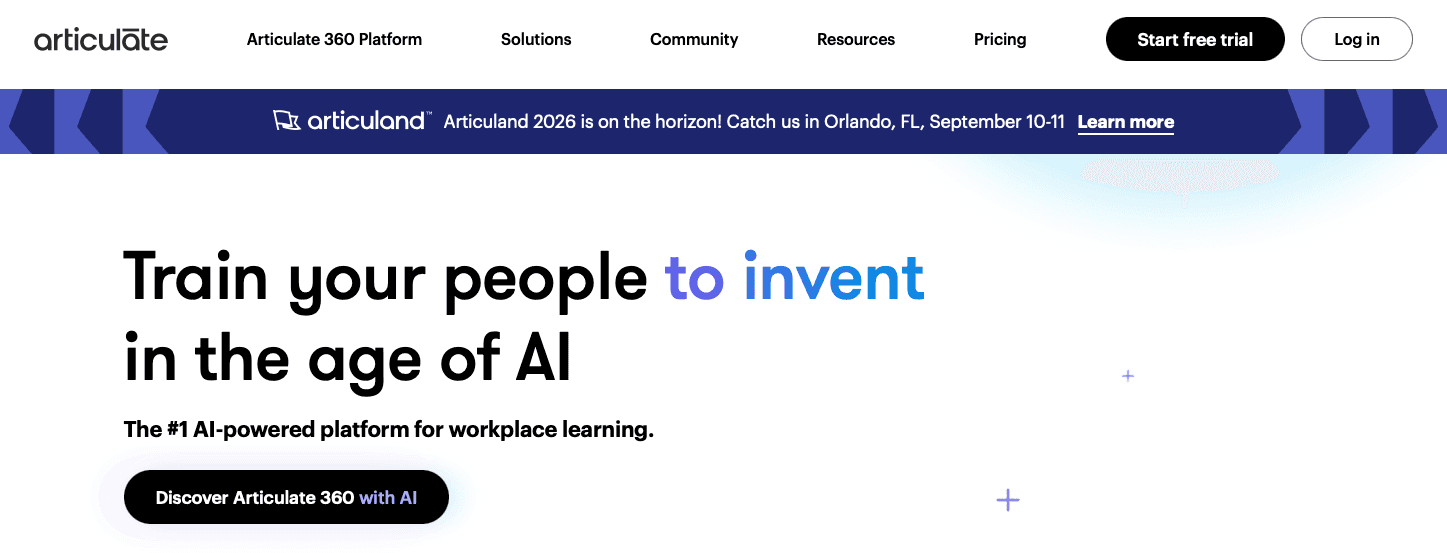
Articulate provides course authoring tools and has introduced AI-assisted content features for building training content. The service includes course authoring tools with tracking exports, AI-generated video content creation, SCORM-compliant content for LMS integration, and content completion with quiz result tracking when paired with an LMS.
This works for organizations that need content creation tools and plan to track progress through a separate LMS or learning infrastructure. The limitation: creation-only solution with no built-in delivery, reinforcement, or analytics capabilities. Requires export to LMS for any progress tracking. No integrated workflow delivery channels. Measuring behavior change or real-world application typically requires pairing Articulate content with additional systems such as an LMS or performance tools.
Why Arist Is the Best Employee Training Progress Tracking Solution
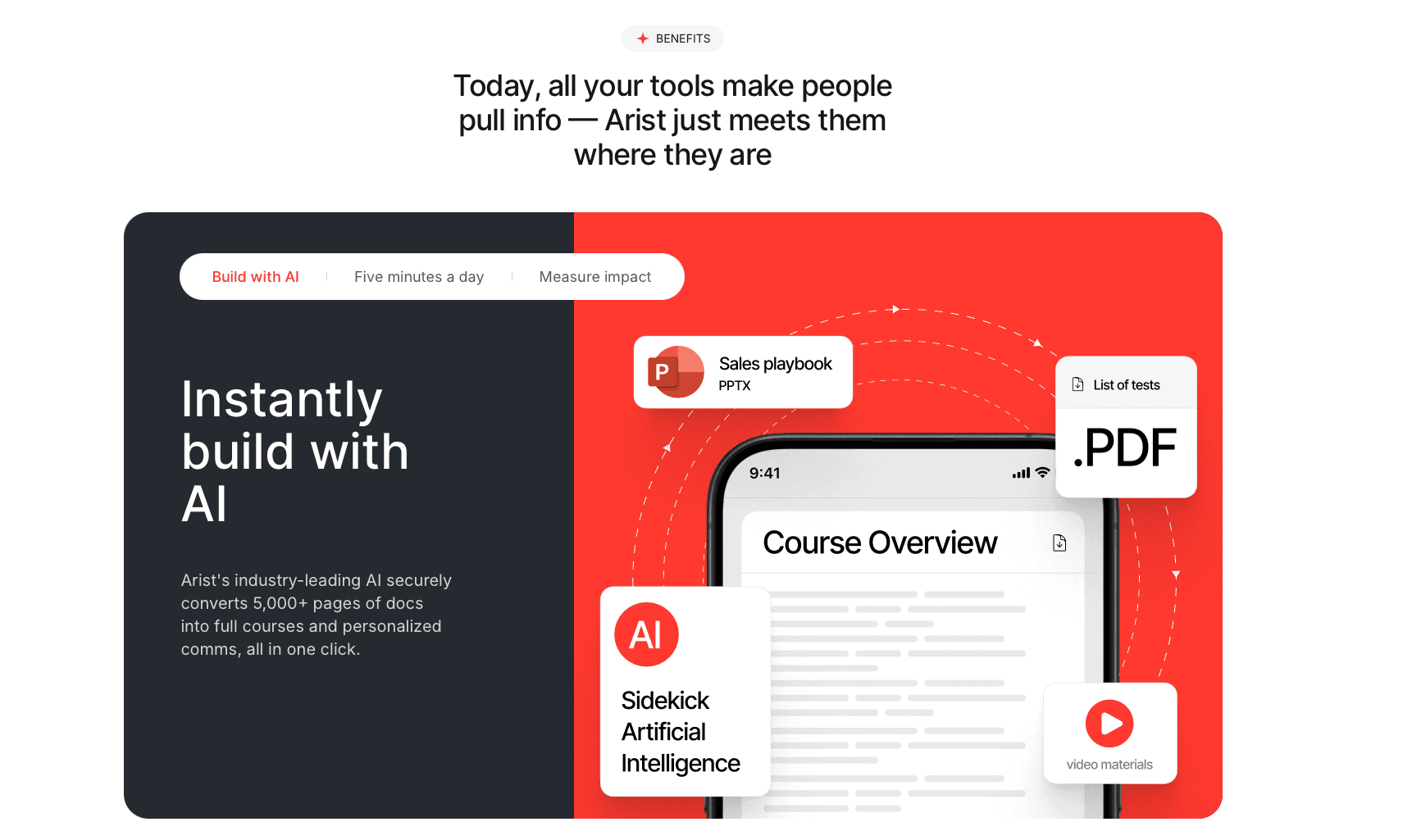
Arist tracks what counts: engagement, retention, and real behavior change. We automate tracking where employees work without separate logins or apps.
Text-based learning meets employees in SMS, WhatsApp, Slack, or Teams. Every interaction generates data on completion rates, response accuracy, and knowledge retention. Companies using SMS-based training see higher completion rates compared to traditional LMS approaches.
94% of employees stay longer at companies that invest in their learning, which saves recruitment costs and preserves institutional knowledge. Proper tracking shows which training investments drive retention and performance outcomes.
Analytics dashboards surface which topics need reinforcement and which employees need support. Managers get alerts when team members fall behind without micromanaging the process.
FAQs
Which training progress tracking tool works best for non-sales teams?
Arist works across all employee types (sales, frontline, compliance, and operations) with delivery through SMS, Teams, and Slack. LinkedIn Learning suits self-paced professional development for desk workers. Avoid Mindtickle unless you're tracking sales readiness particularly, as it's built only for sales teams.
What metrics should I track beyond course completion rates?
Track knowledge retention weeks after training ends, on-the-job behavior changes, and business outcomes like time-to-productivity or quality scores. Measuring only completion treats training as a checkbox instead of a performance driver. The best systems connect learning data to KPIs like safety incidents, sales performance, or customer satisfaction.
Can I track training progress without requiring employees to download apps?
Yes. Arist delivers and tracks training through existing messaging tools like SMS, Teams, Slack, and WhatsApp without app downloads. This removes adoption barriers that reduce engagement. Traditional solutions like Axonify require dedicated app downloads and logins, which typically lower completion rates among distributed workers.
When should I replace my current training tracking system?
Consider switching if completion rates fall below 50%; you can't measure knowledge retention or behavior change, or tracking requires manual reporting. If your frontline or remote workers can't access training easily, or if you're spending a considerable amount of time pulling data for stakeholders, you need automated analytics that surface insights without manual work.
Final Thoughts on How to Track Employee Training Progress
Effective employee training progress tracking goes beyond completions and reveals whether learning sticks, influences daily behavior, and drives measurable business outcomes. When employee training progress is tied to KPIs like productivity, quality, or sales performance, training becomes a performance lever instead of a cost center. Arist brings this visibility into the flow of work by tracking engagement, reinforcement, and impact inside the tools employees already use, without extra logins or manual reporting. If you want clearer insight into how employee training progress connects to real results, see how Arist can help.
Your team completed training last month, yet performance gaps remain. The issue is not the effort invested in learning but how employee training progress is measured. Most systems report course completions and logins while missing retention, behavior change, and real business impact. When employee training progress is disconnected from on-the-job results, leaders lack visibility into what is actually improving performance. Here is how to track what truly matters and which tools make that possible. Approximately 80% of the global workforce is deskless, working in warehouses, hospitals, retail stores, and manufacturing floors without regular access to computers or corporate portals. This reality makes workflow-native tracking convenient and necessary for organizations seeking to measure training effectiveness across their entire workforce.
TLDR:
Track completion, knowledge retention, and behavior change, on top of course finishes.
Certain platforms deliver training via SMS, Teams, and Slack with 95% adoption and automated analytics.
Top tools include Axonify for gamification, Qstream for quizzes, and Mindtickle for sales.
Real-time dashboards linking training to business KPIs improve ROI visibility.
Workflow-native tracking removes app friction and increases engagement rates.
What Is Employee Training Progress Tracking?
Employee training progress tracking measures how learners engage with training, retain knowledge, and apply new skills. It answers whether employees complete courses, remember what they learned, and change behavior in ways that affect business outcomes.
Many organizations track only completion rates as a compliance checkbox. Effective tracking connects learning activity to performance results like reduced time to proficiency, improved quality scores, or higher retention rates. The stakes are high: only 30% of sales reps feel confident hitting their targets, and the average B2B SaaS sales cycle now stretches to 134 days. Without this measurement, training programs operate without visibility into what drives impact or return on investment.
How We Ranked Employee Training Progress Tracking Solutions
When assessing training progress tracking solutions, we focused on capabilities that actually drive training outcomes instead of just collecting data.
Here are the criteria that separate effective tracking from basic reporting:
Real-time engagement analytics that show who's participating, when they drop off, and where they need support
Retention and behavior measurement beyond completion rates, including knowledge checks weeks after training and on-the-job application tracking
Integration with existing workflow tools like Teams, Slack, or SMS so tracking happens where employees already work
Automated reporting that surfaces insights without manual data pulls or requiring analysts to interpret dashboards
Connection between training data and business KPIs like sales performance, safety incidents, or time-to-productivity
Flexibility to track distributed and frontline workers and desk-based employees with easy computer access
Solution | Delivery Method | Tracking Capabilities | Best For | Key Limitation |
|---|---|---|---|---|
Arist | SMS, Teams, Slack, WhatsApp - no app required | Real-time engagement, retention tracking, behavior change measurement, automated analytics, business KPI integration | All employee types across sales, frontline, compliance, and operations with 95% adoption rates | No major limitations for organizations seeking workflow-based tracking across engagement, retention, and behavior change |
Axonify | Dedicated mobile/desktop app with required login | Gamification-based engagement, daily reinforcement quizzes, assessment analytics within proprietary app | Frontline workers who can commit to daily app-based training with gamification preference | Requires app downloads and separate credentials, reducing adoption among distributed workers |
Qstream | Standalone platform with Microsoft Teams integration (primarily notifications); limited workflow-native delivery compared to SMS-first platforms | Quiz-based spaced repetition, recall tracking over time, completion rates and assessment scores | Teams with existing content needing quiz-driven knowledge checks for sales readiness | No content creation, no SMS/Slack/Teams delivery, limited to assessment scores without behavior tracking |
Mindtickle | Web tool with CRM integration - outside flow of work | Sales readiness tracking, certification management, role-play feedback, conversation intelligence with CRM data | Large sales organizations needing deep readiness tracking with coaching measurement | Primarily built for sales enablement; not typically used for enterprise-wide training across all departments; limited workflow-native messaging delivery for frontline/non-sales teams |
LinkedIn Learning | Typically accessed via LinkedIn Learning (often surfaced via LMS integrations); long-form video format | Course completion tracking, content recommendations, skill assessment quizzes, LinkedIn credential display | Self-paced professional development for desk workers with broad catalog access needs | No SMS/Slack/Teams delivery, separate portal reduces engagement, unsuitable for frontline or time-limited employees |
Articulate | Content creation tool requiring LMS export | SCORM-compliant content tracking, course completion and quiz results when paired with separate LMS | Organizations needing AI video and content authoring tools with existing LMS infrastructure | No built-in delivery, reinforcement, or analytics - cannot measure behavior change without additional systems |
Arist
Arist is an AI-driven Enablement Agent Suite that automates the entire people enablement loop: needs analysis, content creation, delivery, and analytics. The platform delivers multi-format training (video, audio, interactive) through chat-based tools like SMS, Teams, and Slack, and can deploy training in 48 hours from identifying a skill gap to delivering targeted content with analytics that track engagement, retention, and behavior change in real time.
The Analytics Agent measures outcomes beyond completions and automatically connects training interventions to business outcomes, showing which training moves specific business metrics like revenue impact, incident reduction, time saved, time to productivity, or error reduction. You can query training data in plain English and get stakeholder-specific reports automatically. The system tracks reinforcement over time through spaced repetition and monitors behavioral lift by connecting training to on-the-job performance changes. Automated cohort dashboards show which groups are progressing and where gaps exist.
Wolters Kluwer trained 30,000 employees in under three weeks and saw a 120% lift in AI adoption. Novartis saved approximately $2.2M per year and achieved 80% immediate application of learning while reducing content creation time from 6 weeks to 4 hours. Arist achieves completion rates well above traditional training programs when delivering content directly inside tools employees use daily (Teams, Slack, SMS), compared to typical LMS engagement of 30% or less. Bite-sized training courses achieve 80% completion rates versus 20% for traditional training modules, showing considerably higher engagement with short-form learning formats. Employees typically check traditional LMS systems only once every six weeks, accentuating the engagement gap that flow-of-work delivery solves. Tracking happens passively inside the channels employees already use.
Axonify
Axonify is a frontline learning solution offering reinforcement, gamification, and communication tools through its mobile and desktop app.
The solution includes gamification-based engagement tracking with leaderboards and points systems, daily reinforcement quizzes that measure knowledge retention, and assessment analytics within their proprietary app environment. It works for organizations with frontline workers who can commit to daily app-based training and prefer gamification as their primary engagement driver.
Axonify requires app downloads and separate login credentials, which can reduce adoption among distributed workers who aren't regularly using dedicated training apps.
Qstream
Qstream is a spaced repetition tool built around quiz-based reinforcement for sales readiness. It tracks recall over time through scheduled assessments and performance analytics focused on completion rates and scores.
The tool works well for teams with existing content who need quiz-driven knowledge checks. However, it requires pre-built training materials and doesn't create content. It does not natively deliver training via SMS or WhatsApp, and its Microsoft Teams integration is primarily notification-based instead of full in-chat training delivery. Progress tracking stays limited to assessment scores instead of tracking behavioral change across multiple dimensions.
Mindtickle
Mindtickle is a sales readiness solution that focuses on content management, coaching, and conversation intelligence for sales teams. The tool offers sales-specific readiness tracking with certification management, content delivery analytics for enablement materials, and role-play feedback tracking that integrates with CRM systems to match with sales performance.
The solution works well for large sales organizations that need deep readiness tracking with coaching measurement. However, it is primarily built for sales enablement teams and is not typically used for enterprise-wide training across all departments. Learning happens outside the flow of work and requires manual content access, with no native messaging delivery for frontline or non-sales employees.
LinkedIn Learning
LinkedIn Learning is a video course library focused on self-directed learning with thousands of professional development courses.
The service tracks course completion across its video library, recommends content based on viewing history, and offers skill assessment quizzes with proficiency tracking. Integration with LinkedIn profiles allows credential display.
This works well for organizations seeking self-paced professional development tracking with broad catalog access and LinkedIn credential integration.
Long-form video format doesn't suit frontline or time-limited employees. LinkedIn Learning does not natively deliver full training experiences via SMS, Slack, or Teams. Employees must access a separate portal, which often results in low engagement rates and limited tracking data.
Articulate
Articulate provides course authoring tools and has introduced AI-assisted content features for building training content. The service includes course authoring tools with tracking exports, AI-generated video content creation, SCORM-compliant content for LMS integration, and content completion with quiz result tracking when paired with an LMS.
This works for organizations that need content creation tools and plan to track progress through a separate LMS or learning infrastructure. The limitation: creation-only solution with no built-in delivery, reinforcement, or analytics capabilities. Requires export to LMS for any progress tracking. No integrated workflow delivery channels. Measuring behavior change or real-world application typically requires pairing Articulate content with additional systems such as an LMS or performance tools.
Why Arist Is the Best Employee Training Progress Tracking Solution
Arist tracks what counts: engagement, retention, and real behavior change. We automate tracking where employees work without separate logins or apps.
Text-based learning meets employees in SMS, WhatsApp, Slack, or Teams. Every interaction generates data on completion rates, response accuracy, and knowledge retention. Companies using SMS-based training see higher completion rates compared to traditional LMS approaches.
94% of employees stay longer at companies that invest in their learning, which saves recruitment costs and preserves institutional knowledge. Proper tracking shows which training investments drive retention and performance outcomes.
Analytics dashboards surface which topics need reinforcement and which employees need support. Managers get alerts when team members fall behind without micromanaging the process.
FAQs
Which training progress tracking tool works best for non-sales teams?
Arist works across all employee types (sales, frontline, compliance, and operations) with delivery through SMS, Teams, and Slack. LinkedIn Learning suits self-paced professional development for desk workers. Avoid Mindtickle unless you're tracking sales readiness particularly, as it's built only for sales teams.
What metrics should I track beyond course completion rates?
Track knowledge retention weeks after training ends, on-the-job behavior changes, and business outcomes like time-to-productivity or quality scores. Measuring only completion treats training as a checkbox instead of a performance driver. The best systems connect learning data to KPIs like safety incidents, sales performance, or customer satisfaction.
Can I track training progress without requiring employees to download apps?
Yes. Arist delivers and tracks training through existing messaging tools like SMS, Teams, Slack, and WhatsApp without app downloads. This removes adoption barriers that reduce engagement. Traditional solutions like Axonify require dedicated app downloads and logins, which typically lower completion rates among distributed workers.
When should I replace my current training tracking system?
Consider switching if completion rates fall below 50%; you can't measure knowledge retention or behavior change, or tracking requires manual reporting. If your frontline or remote workers can't access training easily, or if you're spending a considerable amount of time pulling data for stakeholders, you need automated analytics that surface insights without manual work.
Final Thoughts on How to Track Employee Training Progress
Effective employee training progress tracking goes beyond completions and reveals whether learning sticks, influences daily behavior, and drives measurable business outcomes. When employee training progress is tied to KPIs like productivity, quality, or sales performance, training becomes a performance lever instead of a cost center. Arist brings this visibility into the flow of work by tracking engagement, reinforcement, and impact inside the tools employees already use, without extra logins or manual reporting. If you want clearer insight into how employee training progress connects to real results, see how Arist can help.
Related Resources

Article
AI Upskilling: A Practical Guide for Building Your Team in June 2026
Learn how to build AI upskilling programs that drive behavior change. Practical guide with frameworks, metrics, and proven strategies for June 2026.
Read more
Article
Salesforce Training for Beginners: Complete June 2026 Guide
Complete Salesforce training for beginners in June 2026. Learn Trailhead, certifications, admin paths, and career options with this full overview.
Read more
Bring real impact to your people
We care about solving meaningful problems and being thought partners first and foremost. Arist is used and loved by the Fortune 500 — and we'd love to support your goals.
Curious to get a demo or free trial? We'd love to chat:

Bring real impact to your people
We care about solving meaningful problems and being thought partners first and foremost. Arist is used and loved by the Fortune 500 — and we'd love to support your goals.
Curious to get a demo or free trial? We'd love to chat:
Bring real impact to your people
We care about solving meaningful problems and being thought partners first and foremost. Arist is used and loved by the Fortune 500 — and we'd love to support your goals.
Curious to get a demo or free trial? We'd love to chat: